
AI-powered customer experience marketing (CXM) platform that helps local businesses win.


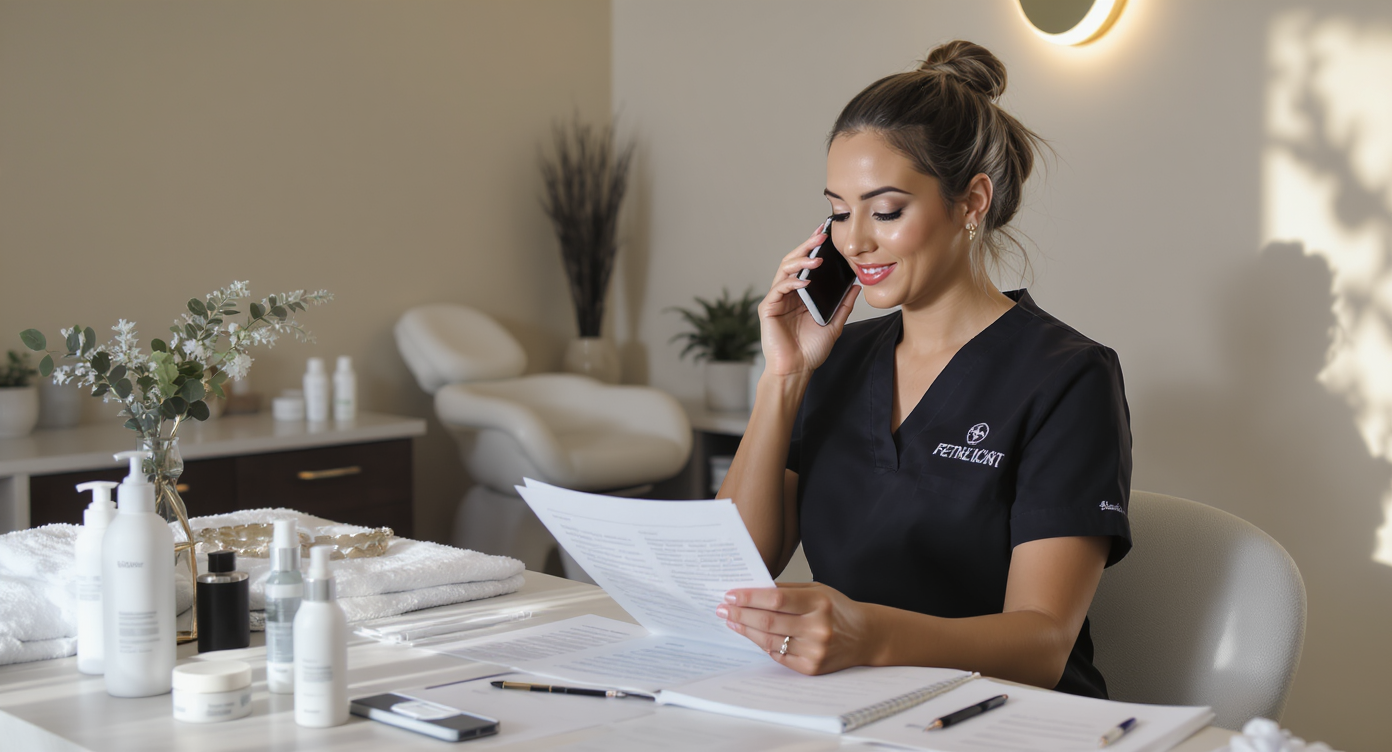
A client walks out of your treatment room glowing. You meant to text her a follow-up with aftercare tips and a rebooking link. But three more clients came in, the phone kept ringing, and by closing time, you forgot. Two weeks later, she’s booked with someone else. That scenario plays out constantly in esthetics practices. And it’s entirely preventable. Learning how to automate customer follow up for estheticians is one of the most impactful changes you can make for client retention, rebooking rates, and long-term revenue.Automating customer follow-up for estheticians means using software to send pre-planned messages automatically after appointments—without manual effort. These systems trigger texts or emails based on rules you set once, delivering aftercare tips, rebooking reminders, and review requests. This prevents forgotten follow-ups and significantly boosts client retention and rebooking rates.
Quick Answer
Estheticians can automate follow-ups by using scheduling software to send appointment reminders, post-service check-ins, and rebooking prompts via email or text at predetermined intervals. This approach reduces no-shows, keeps clients engaged after treatments, and frees up time spent on manual outreach. Integration with your booking system ensures timely, personalized messages that encourage repeat visits without requiring manual intervention.
Free weekly newsletter
Growth tips for service businesses
Every Tuesday — actionable ideas to get more leads, reviews, and repeat customers. No fluff.
What Is Automated Customer Follow-Up for Estheticians?
Automated customer follow-up is any system that sends pre-planned messages to clients after an appointment without you lifting a finger. These messages can include aftercare instructions, rebooking reminders, review requests, educational content, or check-ins on treatment results. Instead of relying on memory or sticky notes, the system triggers communication based on rules you set once. Set it and forget it.For estheticians specifically, follow-up isn’t just a nice-to-have. Facial treatments, chemical peels, microneedling, and injectables all require specific post-care guidance. Clients who don’t get that guidance may have poor outcomes, blame your practice, and never return. So automated follow-up serves a dual purpose: it protects your reputation and keeps your calendar full.Why Post-Visit Follow-Up Matters More Than Most Estheticians Realize
Client acquisition costs in the beauty and wellness industry are steep. You’re spending money on social media ads, referral incentives, and your online presence just to get someone through the door. Yet many practices invest almost nothing in keeping that client engaged after they leave. The gap between acquiring a client and retaining one is where most revenue leaks happen. This is where most money goes missing.The Revenue Impact of Missed Follow-Up
According to recent data on the revenue conversion gap, U.S. small businesses lose millions annually because they fail to convert initial interest into repeat business. Esthetics practices are especially vulnerable because treatments are recurring by nature. A facial client should return every four to six weeks. An injectable client needs touch-ups every three to six months. Without a structured follow-up system, you’re leaving those recurring appointments to chance. That’s where the money disappears.Missed calls compound the problem. When a client does try to rebook and can’t reach you, they often won’t call back. Research from CallSetter found that missed calls can cost businesses significant revenue per year, with beauty and wellness services among the hardest-hit categories. Automated follow-up reduces this risk by proactively keeping the client engaged before they even need to pick up the phone. You’re staying on their radar.Client Loyalty Starts After the Appointment
Think about your own experience as a consumer. When a business reaches out after a purchase to make sure everything went well, it feels personal. It builds trust. For estheticians, that post-visit window is especially powerful because clients are evaluating their results in real time. A well-timed text saying “Here’s what to expect over the next 48 hours after your peel” does more for loyalty than any discount code ever will. That’s connection, not sales.📺 Watch: How to Create a Lead Follow-Up Sequence
Six Strategies to Automate Follow-Up in Your Esthetics Practice
Knowing you should follow up is one thing. Building a system that does it for you is another. Here are the specific automation strategies that work best for estheticians, ordered by impact.1. Send a Personalized Follow-Up Within 24 to 48 Hours
The first message after an appointment is the most important one. It should reference the specific treatment the client received and include relevant aftercare instructions. A generic “Thanks for visiting!” text won’t cut it. Instead, you want something like: “Hi Sarah, thanks for coming in for your hydrafacial today. Avoid direct sun for 48 hours and skip retinol tonight. Reply here if you’ve any questions.” That feels real.With a workflow automation tool, you can create templates for each treatment type and trigger them automatically when an appointment is marked complete. No copy-pasting. No forgetting. It just happens.2. Deliver Clear Aftercare Instructions Automatically
Aftercare is where estheticians differentiate themselves from competitors. Clients who follow proper post-treatment protocols get better results, which means they come back. But handing someone a printed sheet as they walk out the door isn’t reliable. People lose paper. They forget details. What does that look like in practice?Automating aftercare delivery via text or email ensures clients have the information on their phone whenever they need it. You can even schedule a second message two or three days later asking if they have questions, which opens a natural conversation that often leads to rebooking. That follow-up sparks action.3. Time Your Rebooking Reminders to Treatment Cycles
Every treatment has an ideal rebooking window. For regular facials, it’s four to six weeks. For Botox, three to four months. And for laser treatments, the interval depends on the protocol. Your automation system should account for these cycles and send a rebooking reminder at exactly the right time. Timing is everything.A strong rebooking reminder includes:- A reference to their last treatment and approximate date
- A clear call-to-action to book their next session
- A direct link to your scheduling page or a prompt to reply and book
4. Request Reviews at Peak Satisfaction
The best time to ask for a review is when a client is happiest with their results. For most esthetic treatments, that’s about five to seven days post-appointment, once any redness or peeling has resolved and they’re seeing the glow. Automating a review request at this specific point dramatically increases the likelihood they’ll actually leave one. People review when they’re happy.According to Inkle’s guide on small business automation, review generation is one of the highest-ROI automations any small business can set up. For estheticians, positive Google and Yelp reviews directly influence whether new clients book with you or your competitor down the street. Reviews drive bookings.5. Share Educational Content That Builds Authority
Between appointments, your clients are scrolling social media and reading about skincare. If you’re not the one educating them, someone else is. Automated content sequences let you drip helpful information over time, such as seasonal skincare tips, ingredient spotlights, or treatment comparisons. You stay top of mind.These don’t need to be long. A two-sentence text linking to your latest blog post or Instagram reel keeps you top of mind without feeling salesy. You can set up a monthly educational message that rotates based on what treatments the client has received in the past. That’s smart marketing.6. Personalize the Experience Using Client Data
Generic messages get ignored. Personalized ones get replies. Your follow-up system should pull from client records to reference their name, treatment history, skin concerns, and preferences. As Forbes has noted, personalized communication significantly increases customer retention rates across service industries. People respond to personal touches.Even simple personalization, like using a first name and mentioning their specific treatment, makes automated messages feel human. Advanced personalization might include adjusting message content based on whether someone is a first-time client or a loyal regular. The difference is striking.Common Obstacles and How to Overcome Them
Most estheticians who try to automate follow-up run into a handful of predictable challenges. Recognizing them upfront saves frustration. Here’s what typically gets in the way.- Too many tools, too little integration. If your booking software, texting app, and CRM don’t talk to each other, automation breaks down. You need a platform where client data flows between channels without manual exports.
- “It feels impersonal.” This concern disappears once you write templates in your own voice. Automation handles the timing and delivery. Your personality handles the tone. You’re still you.
- Not enough time to set it up. The initial setup takes a few hours, but it saves dozens of hours every month. According to the Small Business & Entrepreneurship Council, AI-powered tools are now the most commonly adopted technology among small businesses specifically because the time savings are immediate and measurable. The ROI is obvious.
- Fear of over-messaging. Build in spacing rules. No client should receive more than two or three automated messages per month unless they’re in an active treatment series. Quality beats quantity every time. Less is more.
How SalesCaptain Helps
SalesCaptain was built specifically for service businesses like esthetics practices that need to communicate across multiple channels without hiring additional staff. Its drag-and-drop Workflow Automation builder lets you create follow-up sequences triggered by appointments, calls, or form submissions, no coding or technical background required. You don’t need to be tech-savvy.Here’s what makes the platform particularly well-suited for estheticians:- AI Chat Agents respond instantly via SMS, webchat, and Instagram DMs, so when a client replies to your automated follow-up at 10 PM, they get an answer right away instead of waiting until morning.
- AI Phone Agent answers calls 24/7, books appointments, and handles FAQs. If a client calls to rebook after receiving your automated reminder, the AI agent can complete the booking without you or your front desk involved.
- Unified Inbox pulls every conversation, whether it’s a text reply, a DM, a phone call, or a webchat message, into one place. You’ll never lose track of a client interaction again.
- Missed Call Text-Back automatically sends a text to any caller you can’t answer, keeping the conversation alive instead of losing it to voicemail.
Key Takeaways
Automating customer follow-up for estheticians isn’t about replacing the personal touch. It’s about making sure that personal touch actually happens, every time, for every client, without depending on your memory or your schedule. The practices that retain clients at the highest rates aren’t necessarily the most skilled. They’re the most consistent in their communication. Consistency wins.Here’s what to remember:- Send personalized follow-ups within 24 to 48 hours of every appointment.
- Automate aftercare delivery so clients always have instructions on hand.
- Time rebooking reminders to each treatment’s ideal cycle, not arbitrary intervals.
- Request reviews when client satisfaction peaks, usually five to seven days post-treatment.
- Use client data to personalize every message, even automated ones.
- Choose a platform that unifies calls, texts, chat, and social in one system.
Frequently Asked Questions
How many follow-up messages should I send after an esthetic treatment?
For most treatments, a three-message sequence works well: an aftercare message within 24 hours, a check-in at the five-to-seven-day mark (paired with a review request), and a rebooking reminder timed to the treatment cycle. Avoid sending more than three automated messages per month to any single client unless they’re in an active series. Three is the sweet spot.Won’t automated messages feel impersonal to my clients?
Only if you use generic templates. Write your messages in your own voice, reference specific treatments, and use the client’s first name. Most clients won’t know the message was automated, and frankly, they don’t care as long as the content is helpful and timely. They just care that you showed up.What’s the best channel for esthetician follow-up, text or email?
SMS consistently outperforms email for open rates in service businesses. Text messages are read within minutes, while emails often sit unopened. However, longer educational content or detailed aftercare guides can work well as email. Use text for time-sensitive messages like rebooking reminders, and email for supplementary content. Mix both.How do I automate follow-up if I use a separate booking system?
Look for a communication platform that integrates with your existing booking tool. SalesCaptain, for example, connects with Mindbody and supports Zapier for custom integrations, so appointment data can trigger follow-up workflows automatically without switching systems. You don’t have to change anything.Is automated follow-up worth it for a solo esthetician with a small client list?
Absolutely. Solo practitioners benefit the most because they have the least time for manual follow-up. Even with 50 active clients, sending personalized post-visit messages, rebooking reminders, and review requests manually would take hours each week. Automation reclaims that time completely. You get your hours back.Ready to see it in action?
See how estheticians use SalesCaptain to automate follow-ups and book more appointments.
Book a Free Demo →