
AI-powered customer experience marketing (CXM) platform that helps local businesses win.


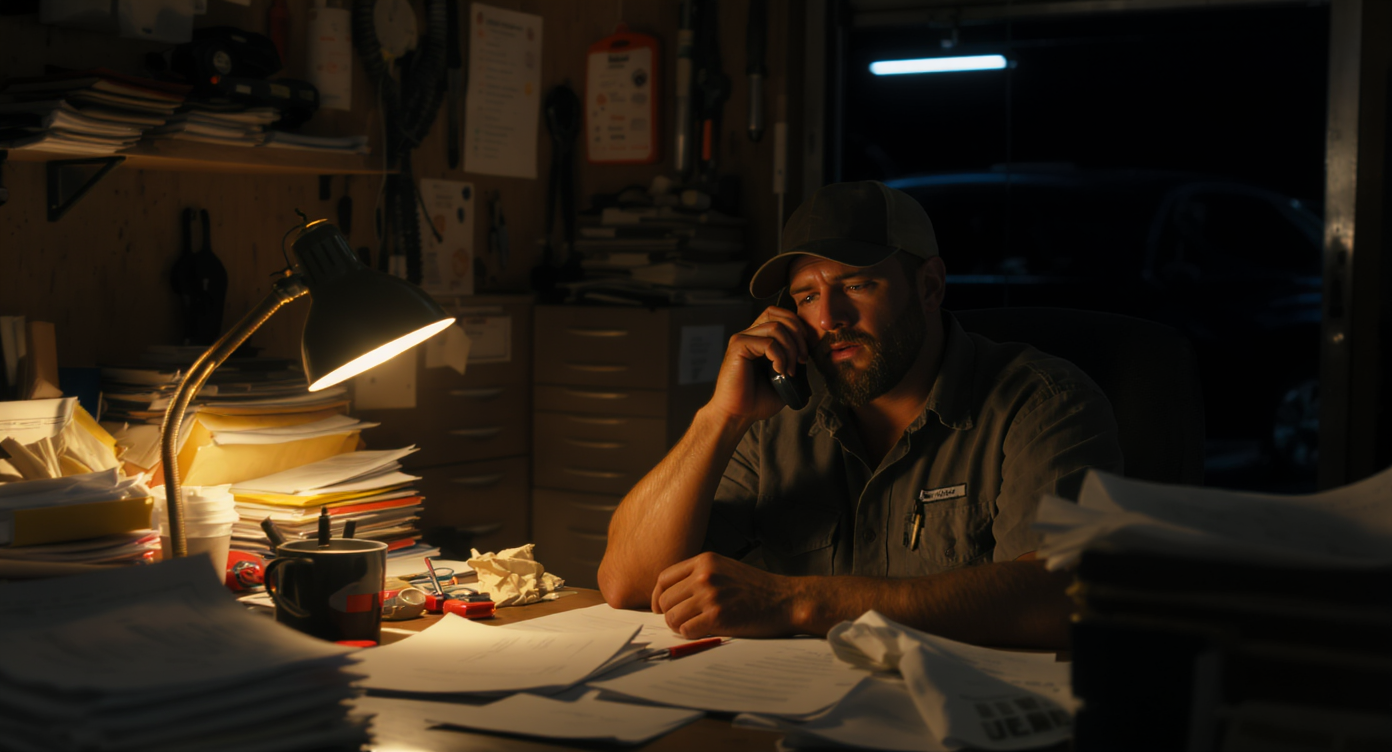
A customer’s car just got sideswiped in a parking lot at 9 PM. They’re stressed. Searching on their phone. They call the first three auto body shops that pop up. Two go to voicemail. One actually answers, books an estimate, and wins the job. If you’re running an auto body shop, you already know which side of that scenario you want to be on. Learning how to handle after hours calls for auto body shops isn’t just about being polite. It’s about capturing revenue that’s slipping through the cracks every single evening and weekend.Handling after-hours calls for auto body shops means having systems in place to capture incoming calls outside regular business hours—typically 6 PM to 8 AM weekdays and weekends. Fresh accident victims often call at night seeking immediate help. Answering these calls, even with voicemail or call forwarding, prevents lost jobs and revenue.
Quick Answer
Set up an automated answering service that captures caller information after hours, then route messages to your team immediately or schedule callbacks for the next business day. Offer customers the option to leave details about their vehicle damage, get a preliminary estimate via text, or book an appointment. This ensures no leads slip through voicemail while your shop is closed.
Free weekly newsletter
Growth tips for auto dealerships & repair shops
Every Tuesday — actionable ideas to get more leads, reviews, and repeat customers. No fluff.
What After-Hours Call Handling Actually Means for Auto Body Shops
After-hours call handling refers to the systems and processes your shop uses to manage incoming phone calls outside of regular business hours. For most auto body shops, that’s roughly 6 PM to 8 AM on weekdays, plus all day Saturday and Sunday. These aren’t just random calls. They’re often from drivers dealing with fresh accidents, insurance questions, or urgent repair needs that can’t wait until Monday morning.What makes auto body different from other service businesses is the emotional state of the caller. Someone whose car just got rear-ended isn’t casually browsing. They need reassurance. Next steps. And ideally an appointment. According to research on missed call costs by industry, service businesses lose significant revenue annually from unanswered calls. For collision repair shops, each missed call could represent a $2,000 to $5,000 repair job. That math adds up fast.Why After-Hours Calls Matter More Than You Think
The Revenue You’re Leaving on the Table
Here’s something most shop owners underestimate: a large percentage of calls to auto body shops come outside business hours. Accidents don’t follow a 9-to-5 schedule. Neither do the phone calls that follow them. Small business missed call data consistently shows that most callers won’t leave a voicemail, and they won’t call back. They’ll just move on to the next shop in their search results.Think about your own behavior as a consumer. When you call a business and hit voicemail, do you wait? Or do you try someone else? Your customers do the same thing. Every unanswered after-hours call goes straight to your competition.Speed Beats Everything in Collision Repair
Insurance companies often encourage policyholders to get multiple estimates, but research from the U.S. Chamber of Commerce Small Business Index shows that consumers increasingly prefer the business that responds first. In collision repair, speed of response often outweighs price. A caller who reaches your shop at 8 PM and gets an estimate appointment booked for the next morning won’t keep calling around. You’ve already won.📺 Watch: After-Hours Call Routing Setup: Never Miss a Lead
Practical Strategies for Managing After-Hours Calls
Separate Emergencies from Routine Inquiries
Not every after-hours call needs the same response. Before you set up any system, create two lists. The first covers genuine emergencies or time-sensitive situations. The second covers everything that can wait until morning.Needs immediate response:- Fresh accident or collision, and the caller needs towing or next-step guidance
- Insurance-related calls with a filing deadline
- Customers stranded without transportation who need rental car coordination
- Calls from insurance adjusters or fleet managers with urgent authorizations
- General pricing questions or estimate requests
- Status updates on repairs already in progress
- Parts availability inquiries
- Cosmetic repair scheduling for non-urgent damage
Build a Voicemail Strategy That Actually Works
If you’re going to use voicemail as part of your after-hours approach, it needs to be strategic. A generic “leave a message” greeting won’t cut it. Your voicemail should accomplish three things: acknowledge the caller’s situation, set a clear expectation for callback timing, and offer an alternative action they can take right now.A strong after-hours voicemail script for an auto body shop sounds something like this: “Thanks for calling [Shop Name]. We’re currently closed but we return every message by 8:30 AM the next business day. If you’ve been in an accident tonight, text us at this number and we’ll respond right away with next steps.” That last part is critical. It bridges the gap between voicemail and instant engagement.But even the best voicemail has a fundamental problem. According to research on missed call costs from Zadarma, the majority of callers simply hang up without leaving a message. So while voicemail is better than nothing, it shouldn’t be your only line of defense.Missed-Call Text-Back as Your Safety Net
One of the highest-impact tactics for auto body shops is automated missed-call text-back. When a call goes unanswered, the system immediately sends a text message to the caller. Something like: “Hi, this is [Shop Name]. Sorry we missed your call. How can we help? Reply here and we’ll get back to you ASAP.”Why does this work so well? Because texting removes the friction. A stressed-out driver who just got into a fender bender at 10 PM is far more likely to type a quick text than to compose a voicemail. Plus, you’ve got their phone number and a written record of their needs before you even open the shop the next morning.Dedicated After-Hours Coverage Options
Beyond voicemail and text-back, you’ve got several escalation options to consider:- Call forwarding to a personal cell: Simple but unsustainable. You’ll burn out fast, and your family won’t appreciate 11 PM calls about bumper dents.
- Traditional answering services: Human operators take messages, but they can’t book appointments, answer shop-specific questions, or handle insurance pre-qualification.
- AI phone agents: Newer technology that answers calls with a natural-sounding voice, handles FAQs, books estimates, and routes emergencies, all without waking anyone up.
- Rotating on-call staff: Works if you’ve got a team large enough to share the load, but adds payroll cost and scheduling complexity.
Setting After-Hours Pricing Expectations Without Scaring Callers Away
One question that trips up a lot of shop owners is whether to quote prices during after-hours interactions. Here’s the practical answer: don’t try to give final estimates over the phone. Ever. Instead, focus on getting the caller booked for an in-person assessment.Your after-hours system, whether it’s a voicemail greeting, text-back, or AI agent, should communicate three things clearly:- You work with all major insurance companies
- Estimates are free and available same-day or next-day
- You can help coordinate rentals and towing if needed
Preventing Burnout While Staying Available
If you’re the type of shop owner who answers every call yourself, you already know the toll it takes. Weekends feel like workdays. Dinners get interrupted. Sleep suffers. And the irony is that burned-out owners eventually start ignoring calls altogether, which makes the problem worse.Sustainable after-hours coverage requires boundaries built into the system itself. That means automating what can be automated, routing true emergencies to the right person, and letting everything else queue up for morning follow-up. The SBA’s small business profiles highlight that owner burnout is one of the top challenges facing small businesses. Setting up proper call handling isn’t just a customer service move. It’s a self-preservation move.The healthiest approach splits responsibilities clearly. Automation handles the initial interaction and data capture. A morning routine reviews everything that came in overnight. True emergencies, which in collision repair are rare after hours, get forwarded to a designated number with strict criteria for what qualifies.How SalesCaptain Helps
SalesCaptain was built for exactly this kind of problem. Its AI Phone Agent answers after-hours calls with a natural-sounding voice, 24/7. It doesn’t just take messages. It answers common questions about your shop’s services, books estimate appointments, qualifies whether the caller has insurance, and blocks spam calls that waste your time.What sets it apart from traditional answering services or basic voicemail is the depth of automation. The AI agent uses custom call flows that you design with a drag-and-drop builder. So a caller reporting a fresh collision gets routed differently than someone asking about your Saturday hours. Every call gets transcribed and summarized with AI Summaries and Transcriptions, so your team walks in Monday morning with a clear list of who called, what they needed, and what was already handled.Beyond voice, SalesCaptain’s missed-call text-back engages callers the moment they can’t reach you. Its Unified Inbox pulls in texts, webchat, and social media messages alongside call records. For multi-location shops, per-location pricing at $159/month means you can scale without the math getting ugly. And with integrations into tools like HubSpot, Salesforce, and ServiceFusion, the data flows where it needs to go. No manual entry required.Key Takeaways
Handling after-hours calls well isn’t optional for auto body shops that want to grow. Accidents happen around the clock. The shop that answers first wins the job. A layered approach works best: triage emergencies from routine calls, use missed-call text-back as a safety net, and let AI handle the repetitive conversations so you don’t have to.Your voicemail greeting, your text-back message, and your call flow design should all reduce caller anxiety and move them toward booking an estimate. Don’t quote prices after hours. Focus on access, speed, and reassurance. Most importantly, build a system that protects your time and energy so you can show up sharp every morning. The shops that figure this out don’t just capture more leads. They build the kind of reputation that makes marketing almost unnecessary.Frequently Asked Questions
How many after-hours calls does a typical auto body shop miss per week?
It varies by market. But most collision repair shops miss between 10 and 30 calls per week outside business hours. Since each call could represent a repair job worth thousands of dollars, even capturing a few more per week can meaningfully impact your revenue. Tracking your missed call data for a month will give you a clear baseline.Should I answer after-hours calls on my personal phone?
It’s a common approach for solo shop owners. But it’s not sustainable long-term. Answering every call yourself leads to burnout and blurs the line between work and personal life. A better option is using automated call handling that captures the lead and routes genuine emergencies to you only when necessary.What should my after-hours voicemail say?
Keep it short, empathetic, and action-oriented. Acknowledge that the caller may be dealing with an accident, set a specific callback window (like “by 8:30 AM”), and offer an alternative like texting your shop number. Avoid generic greetings. Tell the caller what to do next.Can an AI phone agent really handle collision repair calls?
Yes, modern AI phone agents can answer FAQs about your services, book estimate appointments, ask qualifying questions about insurance, and route urgent calls. They won’t replace your estimators. But they capture the lead and keep the caller engaged instead of letting them hang up and call another shop.Is missed-call text-back effective for auto body shops?
Extremely effective. Callers dealing with vehicle damage are often stressed and in a hurry. When they can’t reach you by phone, getting an immediate text gives them a way to communicate without waiting. Many shops report that text-back converts better than voicemail. It removes the friction of leaving a recorded message.Ready to see it in action?
See how auto body shops use SalesCaptain to capture every after-hours call into bookings.
Book a Free Demo →