
AI-powered customer experience marketing (CXM) platform that helps local businesses win.


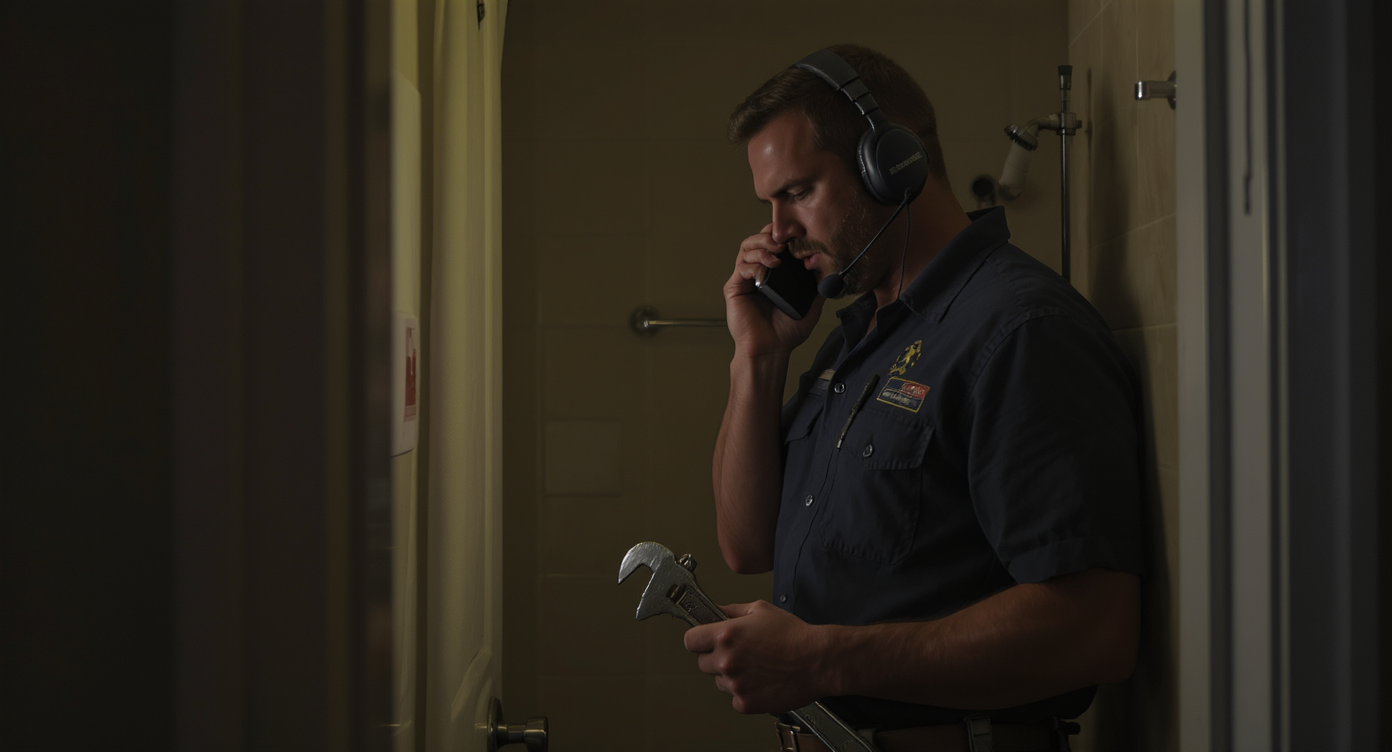
A burst pipe at 11 PM. A flooded basement on a Sunday morning. A commercial kitchen with no hot water right before dinner rush. These emergencies don’t wait for your office to open. When a panicked homeowner can’t reach your plumbing business, they’ll call the next one on Google within seconds. Learning how to handle after hours calls for plumbers isn’t just a nice operational improvement. It’s the difference between capturing emergency revenue and handing it to your competitor down the street.
Handling after hours calls for plumbers means capturing emergency service requests when your office is closed through automated systems, voicemail, answering services, or on-call staff. These calls—from burst pipes to scheduling requests—represent significant revenue opportunities that competitors will claim if you don’t answer.
Quick Answer
Set up an automated answering service that captures emergency calls 24/7, routes urgent plumbing jobs to on-call technicians, and provides callers with immediate confirmation and estimated arrival times. Use voicemail transcription, text alerts to your team, and a scheduling system that logs all after-hours inquiries so nothing falls through the cracks when your office reopens.
What Are After Hours Calls for Plumbing Businesses?
After hours calls are any inbound calls that come in when your front desk or dispatch team isn’t answering the phone. For most plumbing companies, that means evenings, weekends, holidays, and early mornings. These calls range from true emergencies like burst pipes and sewer backups to scheduling requests, quote inquiries, and general questions about your services.
Free weekly newsletter
Growth tips for home service businesses
Every Tuesday — actionable ideas to get more leads, reviews, and repeat customers. No fluff.
What makes them so valuable? Urgency. A homeowner dealing with a plumbing emergency isn’t comparison-shopping. They’re calling the first business that picks up. According to a missed call revenue study by PCN, small businesses lose significant revenue every year from unanswered calls. For plumbers, where a single emergency job can run $500 to $2,000+, even a handful of missed after hours calls per week adds up fast. Really fast.
Why Missing After Hours Calls Costs Plumbers Real Money
Plumbing is one of the most time-sensitive home service verticals. Unlike a roofing estimate or a landscaping consultation, plumbing problems often can’t wait. That creates an unusually high conversion rate on after hours calls. But only if someone actually answers.
The Revenue You Don’t See Disappearing
Most plumbing business owners underestimate how many calls they’re missing. Your phone rings, nobody picks up, and you never even know about it. According to research from SkipCalls, a surprisingly large percentage of business calls go unanswered, with after hours being the worst window. Each of those missed calls? It’s a potential customer who’s already moved on by the time you check voicemail the next morning.
The math is straightforward. If your average emergency plumbing job brings in $800 and you’re missing just five after hours calls per week, that’s potentially $4,000 in weekly revenue walking out the door. Over a year, you’re looking at six figures in lost business. And that’s before factoring in the lifetime value of those customers for future maintenance work, referrals, and reviews.
Speed to Lead Matters More Than You Think
Even for non-emergency calls after hours, response time is critical. Research from Harvard Business Review found that businesses responding to leads within the first hour were seven times more likely to qualify them. When a homeowner calls at 9 PM, the plumber who responds immediately—even with an automated text—has a massive advantage over one who calls back at 9 AM the next day.
📺 Watch: After-Hours Call Routing Setup: Never Miss a Lead
Proven Methods to Handle After Hours Calls
There’s no single right answer for every plumbing business. Your approach depends on your call volume, budget, team size, and how much emergency work you want to take on. Here are the most common strategies, ranked from basic to advanced.
Voicemail and Next-Day Callback
This is what most small plumbing shops default to. You set up a professional voicemail greeting, callers leave a message, and you return calls the next business day. It costs nothing. But it also converts almost nothing. Most callers with urgent problems won’t leave a voicemail at all. They’ll just dial the next plumber.
On-Call Rotation Among Your Team
If you’ve got a team of plumbers, you can rotate who carries the after hours phone. This works for true emergencies, but it burns out your staff quickly. Whoever’s on call gets interrupted during family dinners, wakes up at 2 AM for calls that turn out to be non-emergencies, and still has to show up fresh for their regular shift. It’s also unreliable. People miss calls when they’re sleeping. And there’s no backup if the on-call tech doesn’t answer.
Outsourced Answering Services
Traditional answering services use live human operators to pick up your calls after hours. They can take messages, follow a script, and dispatch emergencies to your on-call plumber. But these services charge per call or per minute. Costs add up quickly during busy periods. Quality also varies. The person answering your calls doesn’t know your business the way your own staff does, which can lead to awkward customer interactions.
AI-Powered Phone Agents
The newest approach uses AI voice agents that sound natural and answer every call instantly. They can do far more than take a message. A well-configured AI phone agent can qualify whether a call is a true emergency, book appointments directly into your scheduling software, answer common questions about your services and pricing, and send a follow-up text to the caller. All without waking anyone up. According to Technology.org’s review of AI answering services, this category has matured rapidly for small businesses.
Best Practices for Setting Up After Hours Call Handling
Whichever method you choose, there are principles that separate plumbing companies that convert after hours calls from those that don’t.
- Define what counts as an emergency. Create clear criteria (burst pipes, sewer backups, no hot water, gas leaks) so your system or team knows which calls need immediate dispatch versus next-day scheduling.
- Always send a text if you can’t connect live. Missed call text-back is one of the highest-ROI automations any plumber can set up. Even a simple “We got your call and will reach out shortly” keeps the customer from dialing your competitor.
- Capture caller information every time. Name, phone number, address, and a brief description of the problem. Whether a human, voicemail, or AI agent handles the call, this data needs to land somewhere your team can act on it first thing in the morning.
- Route true emergencies to an on-call tech. For real plumbing emergencies, there’s no substitute for getting a human on the phone or on-site. Your system should be smart enough to escalate these calls while handling routine inquiries automatically.
- Track your after hours call volume. You can’t improve what you don’t measure. Monitor how many calls come in outside business hours, how many convert, and what the average job value is. This data justifies whatever you invest in better call handling. The U.S. Small Business Administration recommends data-driven decision making as a core practice for growing businesses.
Here’s where most plumbing companies stumble: trying to handle everything the same way. A caller asking about your rates on a Tuesday evening needs a different response than someone with a flooded basement at midnight on Saturday. Build your call handling around these distinctions, and you’ll convert more calls. Plus you’ll keep your team’s sanity intact.
How SalesCaptain Helps
SalesCaptain’s AI Phone Agent was built for exactly this scenario. It answers every call 24/7 with a natural-sounding voice. Your after hours callers hear a professional greeting instead of voicemail. The agent can qualify whether a situation is an emergency, book appointments directly, answer FAQs about your services, and block spam calls. For true emergencies, custom call flows route the caller to your on-call plumber immediately.
Beyond the phone, SalesCaptain’s AI Chat Agents handle the text and messaging side. Missed call text-back goes out automatically. Every unanswered call still gets a response within seconds. All of this feeds into a unified inbox where your morning dispatcher sees every after hours interaction in one place. Whether it came from a call, text, webchat, or Facebook message. No more checking five different apps to figure out what happened overnight.
What does that look like in practice? Here’s a real scenario:
- 11:15 PM call about a burst pipe: AI agent qualifies it as an emergency, gathers the address and details, routes the call to your on-call tech, and sends a confirmation text to the homeowner.
- 7:30 AM Saturday call about a dripping faucet: AI agent books a Monday appointment, sends a text confirmation, and logs the details in your CRM through integrations with tools like HousecallPro or ServiceFusion.
- 2:00 AM spam call: AI agent identifies it and blocks it. Nobody gets woken up.
The AI also generates call summaries and transcriptions. Your team knows exactly what was discussed without listening to recordings. At $0.12 per minute for AI calls and a free startup plan available, it’s a fraction of what traditional answering services would cost. Traditional services charge way more. For plumbing businesses running multiple locations, per-location pricing keeps things affordable as you scale.
Key Takeaways
Handling after hours calls well is one of the fastest ways for a plumbing business to grow revenue. You’re not spending more on marketing. Every missed call is a missed job. And in a trade where emergencies drive premium pricing, the stakes are high.
- Voicemail alone isn’t enough. Most callers with plumbing emergencies won’t leave a message.
- Missed call text-back is the minimum viable response, and it keeps customers engaged until you can call back.
- AI phone agents offer the best balance of 24/7 coverage, cost efficiency, and consistent customer experience.
- Build different workflows for emergencies versus routine calls. Don’t treat every after hours call the same way.
- Track your after hours call data so you can see the real ROI of whatever system you put in place.
The plumbing companies winning the most after hours business aren’t necessarily the biggest or the cheapest. They’re simply the ones that answer the phone.
Frequently Asked Questions
How many after hours calls does a typical plumbing business receive?
It varies by market and season, but most plumbing companies with an active Google Business Profile receive between 10 and 30 calls per week outside normal business hours. Winter months and severe weather events can spike that number significantly. According to research from Voksha, the true cost of these missed calls goes well beyond the immediate job value when you factor in lost referrals and repeat business.
Is it worth offering 24/7 emergency service as a small plumbing company?
Yes, especially if your competitors don’t. Emergency plumbing jobs command premium pricing. Often 1.5x to 2x your standard rates. Even if you only dispatch for true emergencies and schedule everything else for the next business day, being available when others aren’t gives you a powerful competitive edge.
How much does a traditional answering service cost for plumbers?
Most traditional answering services charge between $0.75 and $1.50 per minute of call time. Or $1.50 to $3.00 per call. For a plumbing company receiving 20 after hours calls per week averaging 3 minutes each, that’s roughly $180 to $360 per month. AI-based alternatives like SalesCaptain’s phone agent typically cost significantly less. Plus they offer more functionality.
Can an AI phone agent really handle plumbing emergency calls?
An AI agent can qualify the emergency and collect critical details. It gathers the caller’s address and problem description, then routes the call to your on-call technician. It won’t fix the pipe. But it ensures no emergency call gets lost or delayed. The combination of AI handling the initial intake and a human tech taking the dispatched call gives you reliable coverage. Your team won’t get exhausted either.
What’s the biggest mistake plumbers make with after hours call handling?
Relying solely on voicemail. That’s the killer mistake. According to industry data on missed calls and small business revenue, businesses that don’t respond promptly lose a substantial share of potential revenue. Most customers with urgent needs will call a competitor before they’ll leave a voicemail and wait for a callback.
Ready to see it in action?
See how plumbers use SalesCaptain to capture and book jobs from after-hours calls automatically.
See How SalesCaptain Can Help
Stop losing after hours plumbing jobs to missed calls. SalesCaptain’s AI Phone Agent answers every call, qualifies emergencies, books appointments, and sends instant follow-up texts. All without adding a single employee to your payroll. With a free startup plan and AI calls at just $0.12 per minute, you can test it on your real call volume before committing a dollar.