
AI-powered customer experience marketing (CXM) platform that helps local businesses win.


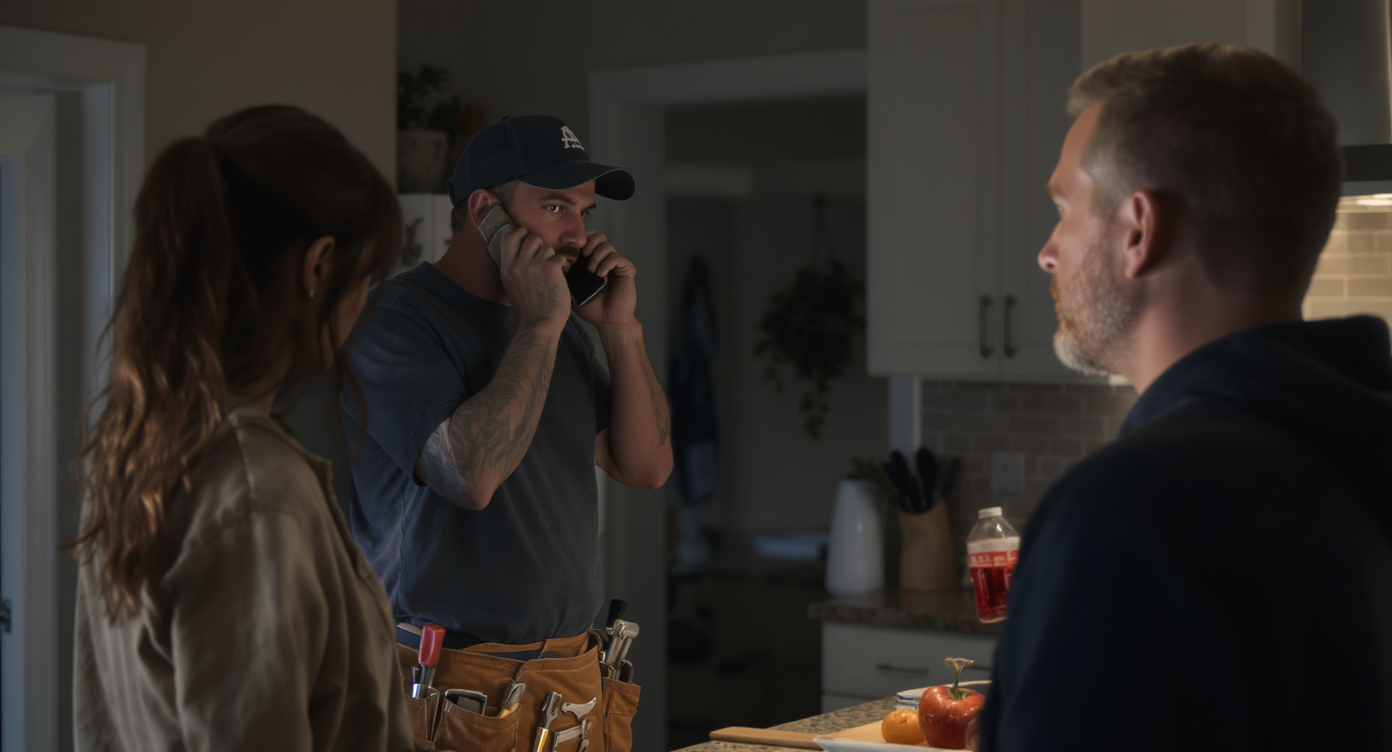
A homeowner’s pipe bursts at 9 PM on a Tuesday. They search for a handyman, find your number, and call. Nobody picks up. Within 30 seconds, they’ve already dialed the next listing. That job is gone. So is every referral it could’ve generated. Understanding how to handle after hours calls for handyman services isn’t just about being available—it’s about protecting revenue you’ve already earned through marketing, reputation, and hard work.
Handling after hours calls for handyman services means capturing customer inquiries outside normal business hours through voicemail, answering services, or automated systems. Since urgent repairs often happen evenings and weekends, responding quickly to these calls prevents lost jobs and referrals to competitors.
Quick Answer
Set up an automated voicemail greeting that captures caller information and callbacks times, then use an answering service or on-call rotation system to respond within two hours. Offer a premium emergency rate for true urgent repairs, use AI transcription to review messages the next morning, and implement a callback schedule that respects your team’s sleep while maintaining competitive response times.
What Are After Hours Calls for Handyman Services?
After hours calls are any customer calls that come in outside your normal business hours—typically evenings, weekends, and holidays. For handyman services, these calls are uniquely valuable because they often involve urgent situations: a broken lock, a leaking faucet, storm damage, or a last-minute repair before a home inspection. The caller isn’t browsing. They need help now. What does that look like in practice? Someone’s desperate. They’re calling you at 8 PM because they can’t wait until tomorrow.
Free weekly newsletter
Growth tips for home service businesses
Every Tuesday — actionable ideas to get more leads, reviews, and repeat customers. No fluff.
What makes this category tricky is the sheer variety of requests. Some callers need emergency dispatch within the hour. Others just want to schedule something for next week but happen to call at 8 PM because that’s when they’re free. A good after hours strategy handles both scenarios without waking you up at midnight for a non-urgent fence repair. And here’s the thing: according to research on the cost of missed calls, even a single unanswered call can represent hundreds of dollars in lost revenue. For handyman businesses with higher ticket jobs, that number climbs even faster.
Why After Hours Calls Matter More Than You Think
Most handyman business owners know they’re missing some calls. Few realize the actual scale. Data from Aira shows that a staggering percentage of business calls go unanswered, with estimated annual losses reaching six figures for some companies. And here’s the uncomfortable truth: your competitors who do answer those calls aren’t necessarily better at the work. They’re just better at picking up the phone.
The Customer Expectation Gap
Today’s customers expect instant responses. They don’t leave voicemails. They don’t wait patiently for callbacks the next morning. Research from SCORE consistently shows that speed of response is one of the top factors in winning local service business. When someone needs a handyman, the first business to respond usually wins the job. Period.
This creates a real problem for solo operators and small teams. You can’t answer the phone while you’re on a ladder replacing a light fixture. You definitely aren’t answering at 10 PM when you’re trying to have dinner with your family. But those are exactly the moments customers are calling.
The Financial Impact on Small Operations
Consider what each missed call actually costs. If your average handyman job is $250 and you miss just three after hours calls per week, that’s roughly $3,000 per month walking out the door. Over a year? You’re looking at $36,000 in potential revenue, likely more when you factor in repeat business and referrals. Analysis from SchedulingKit confirms that missed calls represent one of the largest hidden revenue leaks for service businesses. It’s staggering when you do the math.
📺 Watch: After-Hours Call Routing Setup: Never Miss a Lead
Your Options for Handling After Hours Calls
There’s no single right answer here. The best approach depends on your call volume, budget, and how much of your evening sanity you’re willing to sacrifice. Let’s break down the realistic options.
Handle It Yourself or Rotate On-Call Staff
The cheapest option upfront is simply forwarding calls to your personal phone or rotating between team members. It costs nothing extra, and you get to speak with customers directly. However, the hidden cost is burnout. Every handyman business owner who’s tried this knows the drill: you answer a 9:30 PM call about a “dripping faucet,” spend 10 minutes on the phone, and then can’t fall back asleep. Multiply that across years and it’s unsustainable. Your health and sanity matter too.
If you do go this route, set clear boundaries. Forward calls only during specific windows—like 5 PM to 9 PM—and let voicemail handle anything later. Make sure your voicemail greeting sets expectations for a callback time. That simple step cuts down on frustration.
Hire a Traditional Answering Service
Answering services like AnswerFirst or Smith.ai use live operators to take messages on your behalf. They’re professional and reliable. But there are real limitations to consider:
- Cost adds up quickly, often $1-3 per minute of talk time, which can exceed $500/month easily
- Operators follow scripts but can’t answer specific questions about your services, pricing, or availability
- No ability to actually book appointments or qualify leads in real time
- You still need to call people back the next day, by which point many have already hired someone else
For high-volume operations, an answering service can work as a stopgap. But for most small handyman businesses, you’re paying a premium for glorified message-taking. It’s not ideal.
Use an AI-Powered Phone Agent
AI phone agents represent a fundamentally different approach. Instead of taking a message, they actually handle the conversation. A well-configured AI agent can answer common questions (“Do you handle electrical work?”), qualify the lead (“Is this a commercial or residential property?”), and book an appointment on your calendar, all without any human involvement. No waiting. No callbacks needed.
The technology has matured significantly. Modern AI voice agents sound natural, handle interruptions gracefully, and follow complex call flows. They don’t get tired, don’t call in sick, and cost a fraction of a human receptionist. For handyman services specifically, this matters because your customers aren’t expecting a concierge experience. They want someone to pick up, confirm you can do the job, and get them on the schedule. That’s exactly what an AI agent delivers.
Set Up Missed Call Text-Back
Even if you choose one of the options above, adding an automated text-back for missed calls is a smart safety net. When a call goes unanswered, the system immediately sends a text: “Hey, sorry we missed your call! How can we help?” This keeps the conversation alive until you or your AI agent can follow up. According to Voksha, businesses that respond within five minutes of a missed call are dramatically more likely to convert that lead. Those five minutes matter.
Best Practices for After Hours Call Management
Regardless of which approach you choose, certain principles apply across the board. Getting these right separates the handyman businesses that grow from the ones that plateau.
Define What Counts as Urgent
Not every after hours call deserves an immediate response. Create a clear triage system that categorizes calls into tiers:
- Emergency (respond within 15 minutes): Water damage, gas leaks, broken locks, no heat in winter
- Urgent (respond within 2 hours): Broken appliance, electrical issues, plumbing problems
- Standard (respond next business day): Scheduling requests, estimates, general inquiries
Your after hours system should be able to distinguish between these categories. A customer calling about a burst pipe at midnight needs a different response path than someone asking about deck staining next month. The difference is crucial.
Capture Every Detail the First Time
When your after hours system does engage with a caller, make sure it collects everything you need to act without a callback: name, address, phone number, description of the problem, urgency level, and preferred scheduling window. Missing any of these details means you’re starting the next morning with incomplete information. That slows everything down.
Follow Up Before 9 AM
Whatever comes in overnight, make sure your first task in the morning is reviewing and responding to after hours inquiries. According to the U.S. Small Business Administration, customer responsiveness is one of the key competitive advantages small businesses hold over larger competitors. Don’t waste it by letting leads sit until lunch.
How SalesCaptain Helps
SalesCaptain’s AI Phone Agent was built specifically for service businesses like handyman operations. It answers every call 24/7 with a natural-sounding voice, qualifies callers by asking the right questions, books appointments directly on your calendar, and blocks spam so you’re not wasting time on junk calls. At $0.12 per minute, it costs a fraction of what you’d pay a traditional answering service or live receptionist. That’s the difference between $500 a month and $50-$150.
What makes the platform particularly useful for handyman businesses is the combination of features working together. The AI Phone Agent handles voice calls while AI Chat Agents cover SMS, webchat, and social media messages. Everything flows into one Unified Inbox, so you see all customer communication in a single place when you check in each morning. There’s no switching between apps. No digging through voicemail.
Beyond the AI agents, the platform includes a drag-and-drop Call Flow builder that lets you set up custom routing logic. For example, you can configure emergency calls to ring your personal phone while routing standard inquiries to the AI agent. The Workflow Automation engine handles follow-up texts, appointment reminders, and CRM updates automatically. And with integrations for tools like HubSpot, QuickBooks, and HousecallPro, everything syncs without manual data entry. The free Startup plan lets you test the system with one location before committing.
Key Takeaways
Knowing how to handle after hours calls for handyman services comes down to three principles: never let a call go completely unanswered, capture enough detail to act on the lead quickly, and respond before your competitors do. Whether you use call forwarding, an answering service, or an AI phone agent, the worst option is doing nothing. Hoping customers leave voicemails doesn’t work.
For most handyman businesses, AI-powered call handling offers the best balance of cost, capability, and consistency. It eliminates the tradeoff between personal time and business growth. Your phone gets answered at 2 AM the same way it does at 2 PM, and you wake up to a calendar full of booked jobs instead of a list of missed opportunities.
Frequently Asked Questions
What counts as an after hours call for a handyman business?
After hours calls are any customer inquiries that come in outside your normal business hours, typically during evenings, weekends, and holidays. These calls are uniquely valuable because they often involve urgent situations like burst pipes, broken locks, or leaking faucets where the customer needs help immediately rather than waiting until the next business day.
Why are after hours calls so important for handyman services?
After hours calls represent significant revenue opportunities because research shows that unanswered calls can cost handyman businesses hundreds of dollars per call, with some companies experiencing annual losses reaching six figures. Since many urgent repairs happen evenings and weekends, responding quickly to these calls prevents lost jobs and referrals to competitors who do answer their phones.
What are the best ways to handle after hours calls for a handyman business?
The most effective methods for capturing after hours inquiries include using voicemail systems, professional answering services, or automated systems that can triage urgent versus non-urgent requests. A good strategy should distinguish between emergency calls needing same-day dispatch and routine requests for next-week scheduling, so you’re not interrupted at midnight for non-urgent repairs.
How much revenue can I lose by missing after hours calls?
According to research on missed business calls, even a single unanswered call can represent hundreds of dollars in lost revenue for handyman services, with that number climbing higher for larger ticket jobs. For handyman businesses with multiple missed calls, annual losses can reach six figures when considering both the direct job loss and the referrals that never happen.
What’s the difference between answering services and voicemail for after hours calls?
Voicemail captures messages that you can return later, while professional answering services provide real-time human interaction that can immediately triage urgent calls, gather customer details, and potentially schedule appointments before you even hear about the call. Answering services better meet modern customer expectations for instant responses, whereas voicemail alone may result in the customer calling your competitor while waiting for your callback.
See How SalesCaptain Can Help
SalesCaptain’s AI Phone Agent answers your calls 24/7, books appointments, and qualifies leads while you focus on the work. Pair it with automated text-back, a unified inbox, and workflow automation to make sure no after hours call ever slips through the cracks again.
Start your free plan at SalesCaptain.com and stop losing jobs to missed calls tonight.
Ready to see it in action?
See how handyman services use SalesCaptain to capture every after-hours call and book jobs automatically.