
AI-powered customer experience marketing (CXM) platform that helps local businesses win.


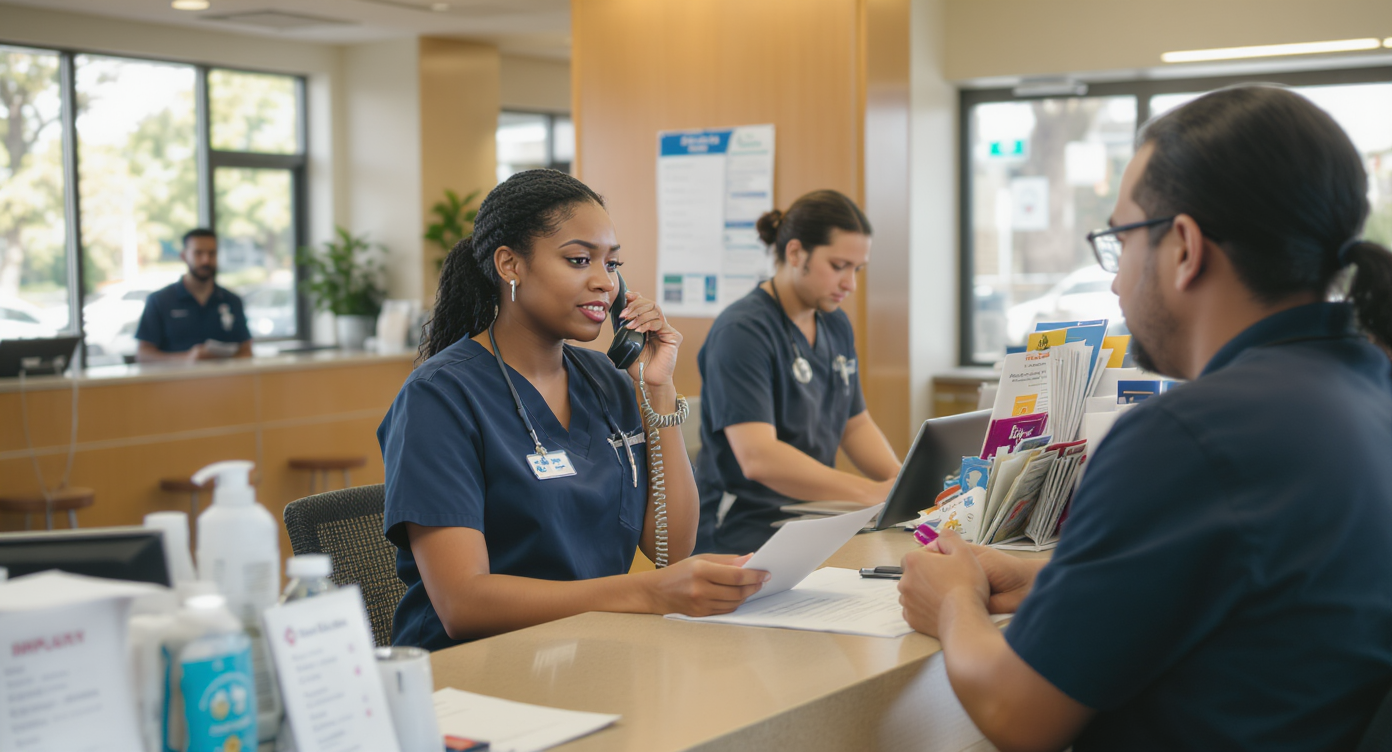
A patient calls your urgent care clinic with chest tightness at 7:45 PM. The line rings five times, then goes to voicemail. They hang up and call the next clinic listed on Google. That’s not just a missed call. It’s a lost patient. Lost revenue too. And a serious liability issue. If you’re searching for how to reduce missed calls for urgent care clinics, you already know the stakes. Every unanswered ring costs you.
Reducing missed calls for urgent care clinics means implementing systems to answer phones consistently, like hiring additional staff, using automated answering services, or deploying call management software. Every unanswered ring in urgent care costs patient trust, revenue, and creates liability risks when patients seek care elsewhere during emergencies.
Quick Answer
Urgent care clinics reduce missed calls by implementing multiple phone lines, hiring dedicated staff for call handling, using call routing systems to distribute incoming calls, setting up automated appointment scheduling, and deploying call center solutions. Training staff on call protocols and monitoring performance metrics also helps capture more patient contacts and prevent revenue loss from dropped calls.
What Are Missed Calls in Urgent Care, and Why Do They Matter?
A missed call in urgent care is any incoming phone call that goes unanswered, reaches a full voicemail box, or gets abandoned by the caller before connecting with a live person. Unlike a dentist’s office or a spa, your clinic handles time-sensitive health concerns. Patients calling urgent care aren’t scheduling a routine checkup. They need answers now. And if they don’t get one, they’ll move on within seconds.
Free weekly newsletter
Growth tips for dental & medical practices
Every Tuesday — actionable ideas to get more leads, reviews, and repeat customers. No fluff.
The financial impact is staggering. According to research on the cost of missed calls, a single unanswered call can cost a business hundreds of dollars in lost lifetime value. Multiply that across the dozens of calls an urgent care clinic receives daily, especially during peak hours and after closing. You’re looking at serious revenue leaks. Beyond the money, data shows that a large percentage of business calls go unanswered, so this isn’t unique to your clinic. But in healthcare? The stakes are higher.
Why Urgent Care Clinics Miss So Many Calls
Most clinic owners assume it’s a staffing problem. More receptionists, fewer missed calls. But that’s usually wrong. The real issue is structural. Understanding the root causes is the first step toward fixing them.
Peak Hour Overload
Urgent care call volume isn’t evenly distributed throughout the day. Monday mornings. Lunch hours. The 5-to-8 PM window after primary care offices close—these create intense spikes. Your front desk staff might handle average volume just fine, yet fall behind during surges. Even two or three simultaneous calls can overwhelm a team of two receptionists, sending the third caller straight to hold or voicemail.
After-Hours and Weekend Gaps
Many urgent care clinics operate extended hours, but few staff their phones for the full window. A clinic open until 8 PM might stop answering calls at 7:30 as staff begin closing procedures. Weekends present an even bigger gap. Patients searching for care on a Saturday evening expect someone to pick up. When nobody does, they’ll find a competitor who will.
Repetitive Calls That Clog the Lines
A surprising portion of inbound calls aren’t emergencies at all. They’re patients asking about wait times, insurance acceptance, hours of operation, or directions. These routine questions eat up minutes that your staff could spend on patients who actually need clinical attention. Meanwhile, the caller with a genuine urgent need sits on hold.
No Structured Call Routing
Without proper call flow, every incoming call hits the same phone or the same person. There’s no prioritization. No overflow routing. No backup plan. According to HHS HIPAA guidelines, healthcare organizations need to handle patient communication with compliance in mind. That adds another layer of complexity to phone handling.
📺 Watch: Missed Call Text Back Setup in 5 Minutes
Proven Strategies to Reduce Missed Calls at Your Urgent Care Clinic
Solving this problem requires a combination of better call infrastructure, smarter automation, and strategic staffing decisions. Here’s what actually works.
Build a Structured Call Flow
A call flow is the step-by-step path every incoming call follows. Instead of ringing a single phone line and hoping your receptionist isn’t already talking to someone else, a well-designed call flow routes calls intelligently. Based on time of day. Caller need. Staff availability. Sound familiar?
- Greeting and IVR menu: A brief automated greeting that lets callers self-select their need (new patient, existing patient, billing question, directions).
- Ring groups: Route calls to multiple staff phones simultaneously so the first available person picks up, rather than calls queuing behind one receptionist.
- Overflow rules: If nobody answers within 15 seconds, automatically forward to a secondary team member or an AI agent.
- After-hours handling: Instead of a generic voicemail, route after-hours calls to an automated system that can answer common questions and capture patient information for a callback.
This structure alone can dramatically cut your missed call rate without hiring anyone new. The key is building it with a visual, drag-and-drop tool. Your office manager can adjust it without needing IT support.
Use Missed Call Text-Back
Even with the best call flow, some calls will still go unanswered. That’s reality. What matters is what happens next. A missed call text-back system automatically sends an SMS to any caller you couldn’t reach, typically within seconds. The message might say: “Thanks for calling [Clinic Name]. We missed your call. How can we help? Reply here or we’ll call you back shortly.”
This approach works because it keeps the patient engaged. They won’t move to a competitor. Research from SchedulingKit on missed calls and revenue loss shows that patients who receive quick follow-up are far more likely to stay with the original provider. For urgent care, that fast text response can be the difference between a visit and a no-show.
Automate Answers to Repetitive Questions
If 40% of your incoming calls are about hours, insurance, wait times, or location, you don’t need a human answering those questions. An AI-powered phone agent or chat agent can handle these FAQs instantly. Your staff can focus on clinical calls. Here’s what’s worth automating:
- Hours of operation and holiday schedules
- Accepted insurance plans
- Current estimated wait times (pulled from your system)
- Directions and parking information
- Pre-visit instructions for common conditions
- New patient intake and registration
The result isn’t just fewer missed calls. It’s shorter hold times for patients who genuinely need to speak with someone.
Staff Your Phones Based on Call Data, Not Gut Feeling
Most clinics schedule front desk staff based on patient volume in the waiting room, not phone volume. These don’t always align. Pull your call logs and identify your peak calling hours. You might discover that your busiest phone window is 4 to 6 PM. Right when your morning receptionist’s shift ends. Adjusting schedules by even 30 minutes can capture dozens of calls per week. According to Biz2Credit’s 2024 industry report, healthcare-related small businesses consistently rank among the highest revenue generators. Protecting that revenue by staffing phones intelligently? It’s a straightforward win.
Why the Problem Is Structure, Not Just Staffing
Hiring more receptionists feels like the obvious fix. But it’s expensive. And it doesn’t solve the fundamental issue. A third receptionist won’t help if your phone system still routes every call to one line. More staff won’t matter if your after-hours coverage is a voicemail box nobody checks until the next morning.
The clinics that actually solve this problem combine structural improvements with automation. Then they use staffing as the final layer. Think of it as defense in depth. Your call flow catches the first wave. Automation handles routine questions. Your human staff focus on the complex, high-value conversations that require clinical judgment or empathy. Voksha’s analysis of missed call costs reinforces this point: businesses that rely solely on adding headcount typically see diminishing returns. Those that invest in process and technology first do better.
For multi-location urgent care groups, this matters even more. You can’t hire your way out of a phone problem across five locations. But you can deploy a consistent call flow and AI agent across all of them. For a fraction of the cost.
How SalesCaptain Helps
SalesCaptain was built specifically for service businesses and healthcare practices that can’t afford to miss calls. Its AI Phone Agent answers calls 24/7 with natural-sounding voice responses, handling appointment scheduling, FAQ answers, lead qualification, and spam blocking. No human intervention needed. For urgent care clinics, that means every after-hours call gets answered. Every Saturday morning call. Every peak-hour overflow call.
The platform’s Call Flows feature gives you a visual, drag-and-drop builder. Design exactly how calls route through your clinic. Set up ring groups so multiple phones ring at once. Configure after-hours rules that forward to the AI agent. Add IVR menus that let patients self-route. No IT department required.
When a call does slip through, SalesCaptain’s missed call text-back automatically sends an SMS within seconds. From there, the AI Chat Agent can continue the conversation via text. It captures intake information. Books appointments. Everything lands in one Unified Inbox, so your staff sees calls, texts, webchat messages, and social media DMs in a single view. With full contact history and AI-generated call summaries.
Pricing starts with a free plan for a single location. The Business plan runs $159/month per location, making it affordable for independent clinics and multi-location groups. With AI virtual receptionist solutions becoming the standard in healthcare communication, SalesCaptain offers the most complete package: voice AI, chat AI, phone system, and unified inbox in one platform.
Key Takeaways
Reducing missed calls at your urgent care clinic isn’t about hiring more people. It’s about building the right infrastructure. So every call gets handled, whether it’s 2 PM on a Tuesday or 9 PM on a Sunday.
- Structured call flows with ring groups and overflow routing catch calls before they hit voicemail.
- Missed call text-back keeps patients engaged even when you can’t pick up.
- AI agents handle repetitive questions, freeing staff for clinical conversations.
- Staffing decisions should follow call data, not assumptions about when patients call.
- The combination of structure, automation, and smart staffing outperforms any single solution on its own.
Every missed call is a patient who needed help. They didn’t get it from you. Fix the system, and you’ll fix the problem.
Frequently Asked Questions
How many calls does a typical urgent care clinic miss per day?
It varies by size and staffing, but many clinics report missing 20-30% of inbound calls during peak hours and after closing. For a clinic receiving 80-100 calls per day, that could mean 20 or more unanswered calls. Each one represents a potential patient who likely called a competitor instead.
Can an AI phone agent handle secure patient interactions?
Yes, but it depends on the platform. SalesCaptain’s AI Phone Agent can answer general questions, book appointments, and capture intake information. For clinical conversations that involve protected health information, calls can be routed to a qualified staff member through the call flow’s routing rules.
What’s the difference between an IVR and an AI phone agent?
An IVR (Interactive Voice Response) plays pre-recorded menus and routes callers based on keypad selections, like “Press 1 for hours, press 2 for appointments.” An AI phone agent has a natural-sounding conversation with the caller. It understands spoken requests and can take actions like booking appointments without rigid menu trees.
Will patients be frustrated by talking to an AI instead of a human?
Most patients prefer getting an immediate answer from an AI over waiting on hold. Or leaving a voicemail that may not get returned for hours. Modern AI voice agents sound natural and resolve common requests quickly. For callers who need a human, the system can transfer them directly.
How quickly can a missed call text-back system be set up?
With a platform like SalesCaptain, you can configure missed call text-back in minutes using the visual workflow builder. You write the message template. Set the trigger (any missed call). Activate it. There’s no coding or technical setup involved.
Ready to see it in action?
See how urgent care clinics use SalesCaptain to capture every missed call and book more patients.
Book a Free Demo →See How SalesCaptain Can Help Your Urgent Care Clinic
Stop losing patients to missed calls. SalesCaptain gives your clinic an AI Phone Agent, structured call flows, missed call text-back, and a unified inbox, all in one platform built for healthcare practices. Start with the free plan and see the difference in your first week.