
AI-powered customer experience marketing (CXM) platform that helps local businesses win.


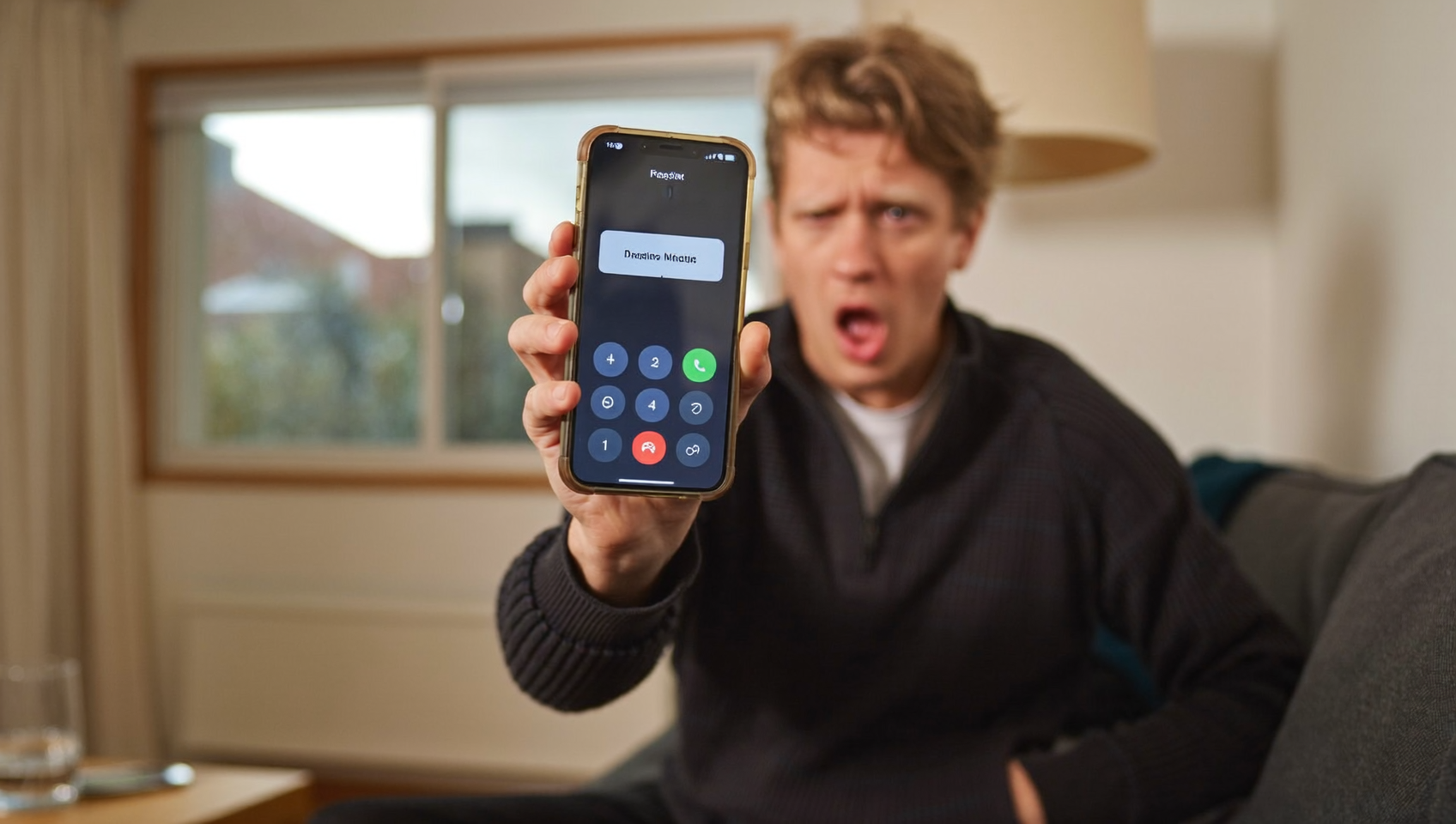
Your phone rings. It’s the third robocall this morning, and your receptionist just wasted two minutes on a fake warranty pitch instead of helping the customer waiting at the counter. Nuisance calls aren’t just annoying for service businesses. They drain staff time, tie up phone lines, and cause real customers to hear a busy signal. Learning how to stop nuisance calls is one of the simplest ways to protect your team’s productivity and your bottom line.
To stop nuisance calls, you need a combination of built-in phone protections and call-filtering tools. Nuisance calls include robocalls, telemarketing pitches, and scam attempts that waste staff time and tie up business phone lines. Implementing call blocking and screening strategies protects your team’s productivity and prevents revenue loss.
Free weekly newsletter
Growth tips for service businesses
Every Tuesday — actionable ideas to get more leads, reviews, and repeat customers. No fluff.
Quick Answer
Register your phone number with the National Do Not Call Registry, enable call filtering on your device or through your carrier, use a call-blocking app, and don’t engage with unknown callers. For businesses, implement call screening software that identifies spam patterns and set up a dedicated voicemail greeting directing legitimate callers to proper channels. Report persistent offenders to the FTC or your phone provider.
What Are Nuisance Calls?
Nuisance calls are any unwanted inbound calls that waste your time without offering legitimate value. They include robocalls, telemarketing pitches, scam attempts, spoofed numbers, and survey calls. For consumers, they’re a daily irritation. For a business owner? They’re a direct hit to revenue. Every minute your staff spends on a junk call is a minute they aren’t serving a paying customer.
The FTC has reported receiving millions of robocall complaints annually, and small businesses bear a disproportionate share of the burden. Unlike large enterprises with dedicated IT teams filtering calls, most SMBs rely on a single phone line or a small front-desk team. A spam call during peak hours can directly cause a missed opportunity. That’s the problem. According to recent missed call benchmarks, lost calls translate to significant revenue leakage over the course of a year.
Why Nuisance Calls Hit Service Businesses Harder
A roofing company, dental practice, or law firm lives and dies by the phone. When a homeowner’s pipe bursts at 7 PM, they’re calling the first plumber they find. If your line is tied up by a spam caller, or if your receptionist is distracted by a spoofed number, that lead goes to your competitor. It’s that simple.
The Real Cost Beyond Annoyance
Staff interruption is the hidden expense most owners overlook. Every nuisance call breaks your team’s focus, and research on task-switching shows it takes several minutes to fully re-engage after an interruption. Multiply that across dozens of junk calls per week. You’ve lost hours of productive work. On top of that, data on the cost of missed calls suggests small businesses can lose tens of thousands of dollars annually from calls they don’t answer. And nuisance calls make the problem worse by keeping lines busy when real customers try to reach you.
Spam Is Getting Smarter
Modern robocallers use neighbor spoofing, which makes calls appear to come from local area codes. Your staff can’t simply ignore local numbers because those could be genuine customers. This creates an impossible situation. Answer everything and waste time on spam, or screen aggressively and risk missing real business. Neither option works well without the right tools in place.
Practical Steps to Stop Nuisance Calls
There’s no single magic fix. But combining several proven strategies can cut junk calls dramatically. Here’s what actually works for service businesses.
Register on the National Do Not Call Registry
Start with the basics. Registering your business numbers on the National don’t Call Registry won’t stop illegal robocallers, but it does reduce calls from legitimate telemarketers. It’s free and takes about two minutes. While scammers obviously don’t care about the registry, reducing even the lawful solicitation calls frees up meaningful phone time.
Enable Carrier-Level Call Filtering
Most major carriers now offer free or low-cost spam filtering tools. AT&T’s ActiveArmor, T-Mobile’s Scam Shield, and Verizon’s Call Filter all use network-level analytics to flag or block suspicious numbers before they reach your phone. If you’re on a business VoIP system, check whether your provider offers similar filtering. Many do, but it’s often turned off by default.
Use Call Screening and IVR Systems
An IVR (interactive voice response) menu acts as a natural spam filter. Most robocallers hang up immediately when they encounter a “Press 1 for sales, Press 2 for service” prompt because automated dialers aren’t programmed to navigate menus. Real customers, on the other hand, are happy to press a button to reach the right person. Even a simple one-level IVR can cut nuisance calls significantly.
Block Known Spam Numbers and Report Them
Build a blocklist over time. When your team identifies a spam number, block it immediately and report it to the FTC at reportfraud.ftc.gov. Some phone systems let you bulk-block entire number ranges, which is especially useful for repeat offenders. The key habits to build include:
- Train staff to note and block spam numbers after each occurrence
- Review your call logs weekly for patterns, like repeated calls from similar number sequences
- Use a shared blocklist across all business lines so blocking one number protects the whole team
- Report persistent offenders to the FTC so enforcement action can follow
Consider AI-Powered Call Handling
The most effective modern approach combines traditional call blocking with intelligent call handling. AI voice agents can answer every call, identify spam patterns in real time, and hang up on robocallers before a human ever gets involved. For legitimate calls, the AI routes them to the right team member or handles the request directly. This two-layer defense catches what carrier filters miss.
Building a Long-Term Defense Against Unwanted Calls
Stopping nuisance calls isn’t a one-time project. Spammers constantly rotate numbers and tactics. So your defense needs to evolve too. Think of it as ongoing hygiene rather than a single fix.
Audit Your Phone Number Exposure
Check where your business number appears online. Spam callers often scrape numbers from business directories, social media profiles, and even your website’s contact page. You can’t remove your number entirely, obviously, but you can reduce exposure on low-value directories. According to SBA data on small business profiles, millions of small businesses are listed across dozens of directories. Many of those listings are outdated or duplicated. That makes them prime targets for scrapers.
Separate Your Public and Internal Lines
One underused strategy is maintaining a dedicated public-facing number that routes through filtering and AI screening, while keeping a separate internal number for outbound calls and known contacts. Spam callers almost exclusively target your public number. So this architecture keeps your team’s direct lines clean.
Track and Measure the Impact
You can’t improve what you don’t measure. Keep a simple log of how many spam calls your team handles each week. Watch that number after you put new filters in place. Most business phone platforms offer call analytics that categorize calls by type, making this easy to track over time. If you’re still seeing high spam volume after carrier filtering and IVR setup, that’s a signal you need a more active solution.
How SalesCaptain Helps
SalesCaptain’s AI Phone Agent was built with exactly this problem in mind. It answers every incoming call 24/7, instantly identifies and blocks spam callers, and handles legitimate calls by booking appointments, qualifying leads, or answering FAQs. Your staff never has to pick up a junk call again because the AI catches them first.
Beyond spam blocking, SalesCaptain’s Call Flows feature lets you build custom call routing with a drag-and-drop builder. You can set up IVR menus, after-hours rules, and forwarding logic that naturally filters out robocallers while giving real customers a smooth experience. Every call is transcribed and summarized by AI. So you’ve got a searchable record of every conversation.
What makes this approach different from basic call filtering is the unified platform. SalesCaptain combines the AI voice agent, a full business phone system with 99.99% uptime, and a unified inbox that puts calls, texts, webchat, and social messages in one place. You’re not just blocking spam. You’re making sure every real customer interaction gets captured and followed up on, even the ones that come in at 10 PM on a Saturday.
- Spam blocking: AI identifies and ends junk calls automatically
- Call Flows: Custom IVR and routing that repels robocallers
- Missed call text-back: If a real call slips through during high volume, an automatic text goes out immediately
- AI Summaries: Every legitimate call gets transcribed and summarized for easy follow-up
- Free plan available: Start with one location at no cost to see the impact
Key Takeaways
Nuisance calls are more than a minor annoyance for service businesses. They cost real money, waste staff time, and cause you to miss legitimate customers. Start with the fundamentals: register on the don’t Call list, enable carrier filtering, and set up an IVR. Then layer in AI-powered call handling to catch what those basic tools miss.
The businesses that solve this problem don’t just block spam. They build a phone system that handles every call intelligently, whether it’s a robocaller that needs to be hung up on or a high-value lead that needs immediate attention. That combination is what separates businesses that grow from those that stay stuck answering junk calls all day.
FAQ
Can I completely eliminate nuisance calls to my business?
No solution eliminates 100% of spam calls. But combining carrier-level filtering, IVR systems, and AI call screening can reduce them dramatically. The goal is to make sure your team never has to deal with them directly. Even if some still come through to your phone system.
Does the Do Not Call Registry actually work for businesses?
It reduces calls from legitimate telemarketers, which is a portion of the unwanted calls you receive. However, it won’t stop illegal robocallers or scammers who ignore the registry entirely. Think of it as one layer in a multi-layer defense.
How much time do nuisance calls cost a typical small business?
While exact numbers vary, research on missed call costs shows that call disruptions lead to significant revenue and productivity losses each year. Even a few minutes per spam call adds up quickly when multiplied across weeks and months.
Will an IVR menu annoy my real customers?
A simple, well-designed IVR with clear options actually improves customer experience by routing callers to the right person faster. Keep it to one level with three or four choices. Most callers will appreciate getting connected quickly instead of being placed on hold or transferred multiple times.
What’s the difference between carrier spam filtering and AI call screening?
Carrier filtering works at the network level, flagging known spam numbers before they ring your phone. AI call screening goes further by actually answering the call. It analyzes the caller’s intent in real time and decides whether to route it to your team or end it. Together, they catch far more spam than either approach alone.
Ready to see it in action?
See how businesses use SalesCaptain to block nuisance calls and focus on real customers.
See How SalesCaptain Can Help
SalesCaptain’s AI Phone Agent blocks spam calls, answers after hours, and makes sure every real customer gets a response. Try it free with one location and see how many nuisance calls your team stops dealing with in the first week.