
AI-powered customer experience marketing (CXM) platform that helps local businesses win.


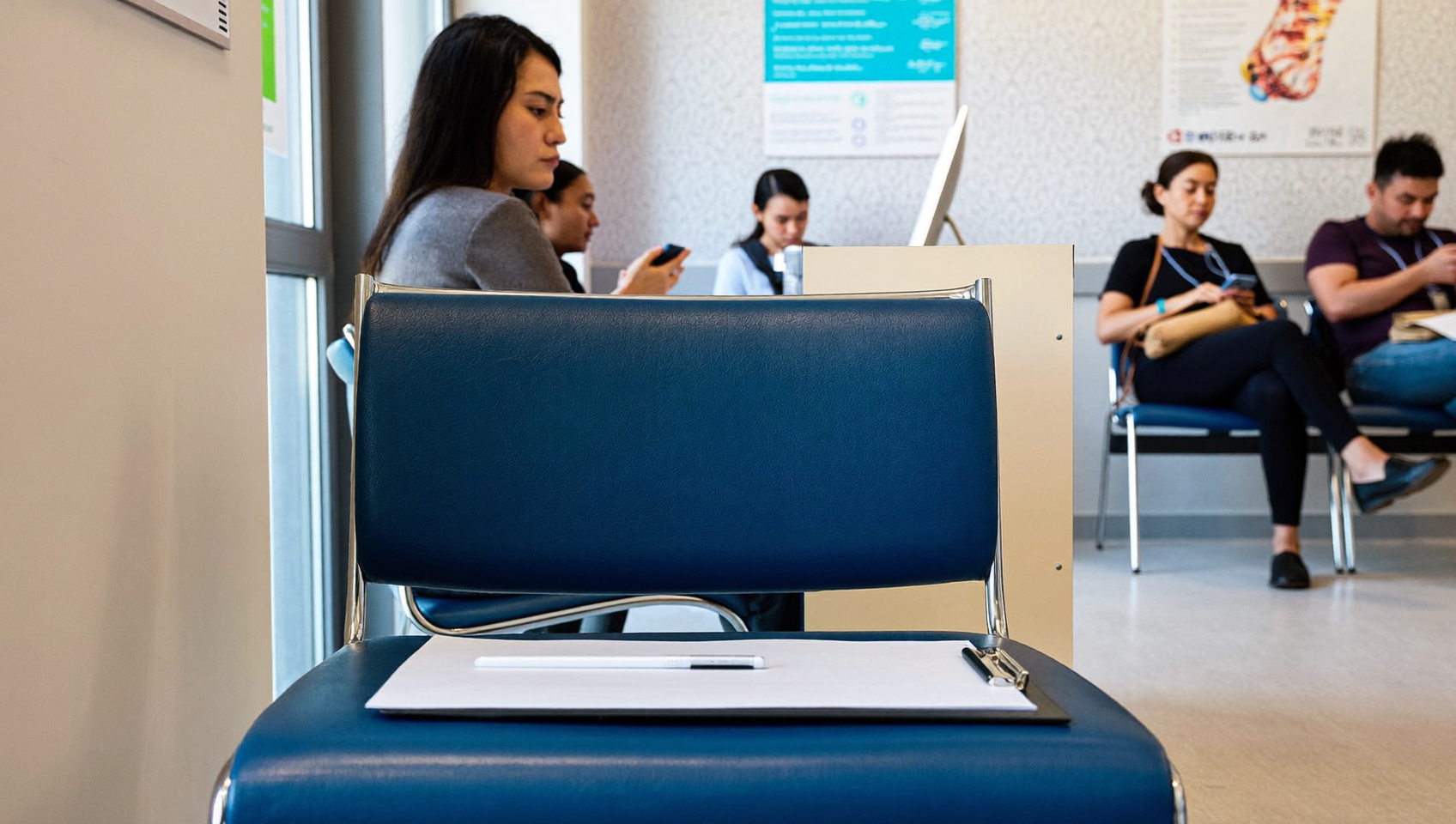
A customer books an appointment, your team blocks off the time slot, and then nobody shows up. That’s money down the drain. An empty chair or wasted service window costs real money. Understanding the no-show rate by industry helps you benchmark your business against peers, spot problems early, and take concrete steps to keep your calendar full. Sound familiar?
No-show rate by industry measures the percentage of scheduled appointments where customers don’t appear without canceling. Calculate it by dividing no-shows by total appointments and multiplying by 100. For service businesses, even small no-show rates significantly impact revenue and waste valuable appointment slots.
Free weekly newsletter
Growth tips for service businesses
Every Tuesday — actionable ideas to get more leads, reviews, and repeat customers. No fluff.
Quick Answer
No-show rates vary significantly by industry, ranging from 15% to 50% depending on sector. Healthcare averages 20-30%, while salons and fitness typically see 10-20%. Professional services and consulting experience 5-15%, while hospitality can reach 40-50%. Higher no-show rates correlate with lower booking friction, lack of deposits, and minimal appointment reminders. Tracking your industry benchmark helps identify if your no-show problem is systemic or operational.
What Is a No-Show Rate?
A no-show rate is the percentage of scheduled appointments where the customer fails to appear without canceling in advance. You calculate it by dividing the number of no-shows in a given period by the total number of scheduled appointments, then multiplying by 100. A 20% no-show rate? That’s one in five booked slots going unfilled.
This metric matters because every no-show carries a double cost. You lose the revenue from that appointment. And you lose the opportunity cost of a different customer who could’ve filled the slot. For service businesses operating on tight margins, even a small improvement in show rates can meaningfully affect the bottom line.
No-Show Rates Across Major Industries
No-show rates vary wildly depending on the industry, the type of appointment, and how (or whether) the business sends reminders. Here’s what the data shows across sectors where missed appointments hit hardest.
Healthcare and Medical Practices
Healthcare consistently sees some of the highest no-show rates of any industry. Research on appointment show-rate statistics shows that medical no-show rates frequently land between 20% and 30%, with some specialties climbing even higher. Mental health and behavioral health appointments tend to run at the upper end of that range. Dental practices often perform slightly better thanks to aggressive reminder systems.
Why so high? Patients forget, feel better before the visit, face transportation barriers, or simply can’t afford copays. According to the CDC, cost and access remain leading barriers to healthcare utilization. And that directly feeds no-show behavior.
Home Services
Roofing, HVAC, plumbing, and landscaping businesses face a different version of the problem. Customers book estimates or service calls and then ghost. Service business benchmarks from Local Business Pro highlight that home service no-show rates commonly range from 15% to 25%, depending on the trade. Estimate appointments no-show more frequently than scheduled repairs because the customer hasn’t committed financially yet.
Speed of follow-up plays a huge role here. When a homeowner requests a quote from three contractors, the first one to confirm and remind usually wins the appointment.
Salons, Spas, and Wellness
Beauty and wellness businesses report no-show rates that typically fall between 10% and 20%. Salons that require deposits or prepayment see rates at the lower end. Those relying on goodwill alone tend to suffer more. And the challenge is compounded by high-value time slots; a 90-minute color appointment that no-shows can wipe out a stylist’s entire afternoon revenue.
B2B Sales and SaaS Demos
If you’re in B2B, demos and discovery calls have their own no-show problem. SaaS demo no-show statistics from Mystery Demo show that demo no-show rates can be remarkably high, sometimes exceeding 30%. RevenueHero’s no-show benchmark data confirms this pattern. Lead source and qualification level significantly affect whether prospects actually show up.
Legal and Professional Services
Law firms and financial advisors typically see no-show rates in the 10% to 15% range. The perceived seriousness of these appointments helps. But initial consultations (especially free ones) still see higher drop-off. Firms that charge a consultation fee or require a brief intake call before booking tend to filter out less committed prospects.
Fitness and Gyms
Group fitness classes and personal training sessions regularly see no-show rates of 15% to 25%. Many gyms have responded by overbooking classes or implementing cancellation fees. Without those guardrails, popular class times can appear full while actual attendance tells a very different story.
📺 Watch: How to Set Up Appointment Reminders with Automation
Why No-Show Rates Stay High (and What Drives Them)
Across every industry, a few root causes keep appearing. Understanding them helps you target your intervention rather than throwing solutions at the wall.
- No confirmation or reminder sent. A surprising number of businesses still don’t send automated reminders. Even a single text 24 hours before the appointment can cut no-shows significantly.
- Long lead time between booking and appointment. The longer the gap, the more likely someone forgets or finds an alternative. Same-day or next-day bookings show much higher attendance rates.
- Low perceived commitment. Free consultations, estimates, and no-deposit bookings remove the customer’s skin in the game. There’s no friction to walking away.
- Difficult rescheduling process. If canceling or rescheduling requires a phone call during business hours, many customers simply won’t bother. They just don’t show up.
- Slow initial response. Data on the cost of missed calls shows that slow callback times hurt lead quality. And low-quality leads are far more likely to no-show because their interest has already cooled.
Notice that most of these causes are communication failures. Not customer malice. People get busy. They forget. And if your business doesn’t make it easy to stay engaged, they drift away.
Proven Strategies to Reduce No-Shows
Lowering your no-show rate doesn’t require a massive budget. It requires consistent, timely communication and a few smart policies. Here are the strategies that work across industries.
Automate Multi-Touch Reminders
One reminder isn’t enough. Best practice is a confirmation immediately after booking, a reminder 24 hours before, and a final nudge 1 to 2 hours before the appointment. Use the channel your customers actually check: SMS outperforms email for open rates and speed. Research from Fronvia on missed-call costs reinforces that businesses using automated text communication recover more appointments than those relying on manual outreach alone.
Make Rescheduling Effortless
Every reminder should include a one-tap option to reschedule or cancel. A rescheduled appointment still has value. A no-show has zero. When you remove friction from the rescheduling process, you convert many potential no-shows into future appointments instead of empty slots.
Respond to New Leads Immediately
Speed to lead is one of the most reliable predictors of show rates. Data from Quo analyzing 16 million+ calls reveals just how quickly customer interest drops when callbacks are delayed. If a prospect books with you but doesn’t hear anything for hours, they’ve likely already contacted a competitor. Instant confirmation and engagement set the expectation that you’re professional and ready.
Use Deposits or Prepayment
Charging a small deposit, even $10 to $25, filters out people who aren’t serious. This works especially well for salons, MedSpas, and home service estimates. Pair it with a clear cancellation policy and you’ll see no-show rates drop without alienating good customers.
Overbook Strategically
Some industries, particularly fitness and healthcare, overbook by a calculated percentage based on their historical no-show rate. If you consistently see 20% no-shows for a 10-person class, booking 12 keeps actual attendance closer to capacity. Just make sure you’ve a plan if everyone does show up.
How SalesCaptain Helps
Reducing no-shows comes down to fast, consistent communication. And that’s exactly what SalesCaptain is built to handle for service businesses. The platform’s AI Chat Agents can send automated appointment reminders across SMS, webchat, and social media DMs, so your customers get timely nudges on the channels they actually use. When a customer wants to reschedule, they can reply directly to the reminder text and the AI handles it without anyone on your team lifting a finger.
SalesCaptain’s AI Phone Agent picks up every call 24/7, which solves the speed-to-lead problem at its root. Instead of a prospect hitting voicemail and moving on, the AI answers immediately, qualifies the caller, and books the appointment. That instant engagement means higher-quality bookings with customers who’ve already had a conversation. And those customers show up at much higher rates than ones who filled out a web form and never heard back.
The Workflow Automation builder lets you create multi-step reminder sequences with a visual drag-and-drop interface. Set up a confirmation text at booking, a reminder 24 hours out, and a final nudge 2 hours before, all triggered automatically. Because everything lives in one Unified Inbox, your team can see the full history of every customer interaction. So if someone responds to a reminder with a question, you’re already in context. For businesses running on platforms like Housecall Pro, ServiceTitan, or Acuity Scheduling, SalesCaptain’s native two-way integrations keep appointment data in sync. This means reminders fire based on real-time booking information rather than stale exports.
Key Takeaways
No-show rates vary significantly by industry. Healthcare, home services, and fitness tend to see the highest rates, often well over 25%. Professional services trend lower. But the underlying causes are remarkably consistent: poor communication, slow follow-up, and low commitment friction. Here’s what to remember.
- Healthcare, home services, and fitness tend to see the highest no-show rates, while legal and financial services trend lower.
- Automated, multi-touch reminders via SMS are the single most effective tactic for reducing no-shows across every vertical.
- Speed to lead directly affects show rates. Faster initial response means more committed appointments.
- Deposits and easy rescheduling convert potential no-shows into revenue instead of empty time slots.
- Your no-show rate isn’t fixed. It’s a communication problem, and communication problems have solutions.
The businesses that treat no-shows as a systems problem rather than a customer problem are the ones that consistently fill their calendars.
Frequently Asked Questions
What is a good no-show rate?
A “good” no-show rate depends on your industry. For most service businesses, keeping it below 10% is a strong target. Healthcare practices that bring their rate under 15% are outperforming the industry average. If you’re above 20%, there’s likely a communication gap worth addressing.
How do you calculate no-show rate?
Divide the number of no-show appointments by the total number of scheduled appointments in the same period, then multiply by 100. For example, if you had 200 appointments last month and 30 were no-shows, your no-show rate is 15%.
Do appointment reminders actually reduce no-shows?
Yes. SMS reminders in particular have been shown to meaningfully reduce no-show rates across industries. The key is timing and frequency. A single reminder helps. But a multi-touch sequence (at booking, 24 hours before, and 1-2 hours before) performs much better.
Why is the no-show rate higher for free consultations?
When a customer hasn’t invested anything financially, they have less incentive to follow through. Free consultations and estimates see higher no-show rates because the perceived cost of skipping the appointment is zero. Adding even a small deposit changes this dynamic significantly.
What does a no-show cost a small business?
The cost depends on your average ticket size and overhead. A no-show doesn’t just mean lost revenue from that appointment. It also means wasted staff time, lost opportunity cost from the customer who could’ve filled the slot, and potential damage to your scheduling efficiency for the rest of the day. For many service businesses, each no-show represents a meaningful hit to daily revenue.
Ready to see it in action?
See how service businesses use SalesCaptain to reduce no-shows and protect revenue.
Book a Free Demo →See How SalesCaptain Can Help
SalesCaptain’s AI agents answer calls, send automated reminders, and book appointments 24/7, so fewer customers slip through the cracks. If no-shows are eating into your revenue, see the platform in action.