
AI-powered customer experience marketing (CXM) platform that helps local businesses win.


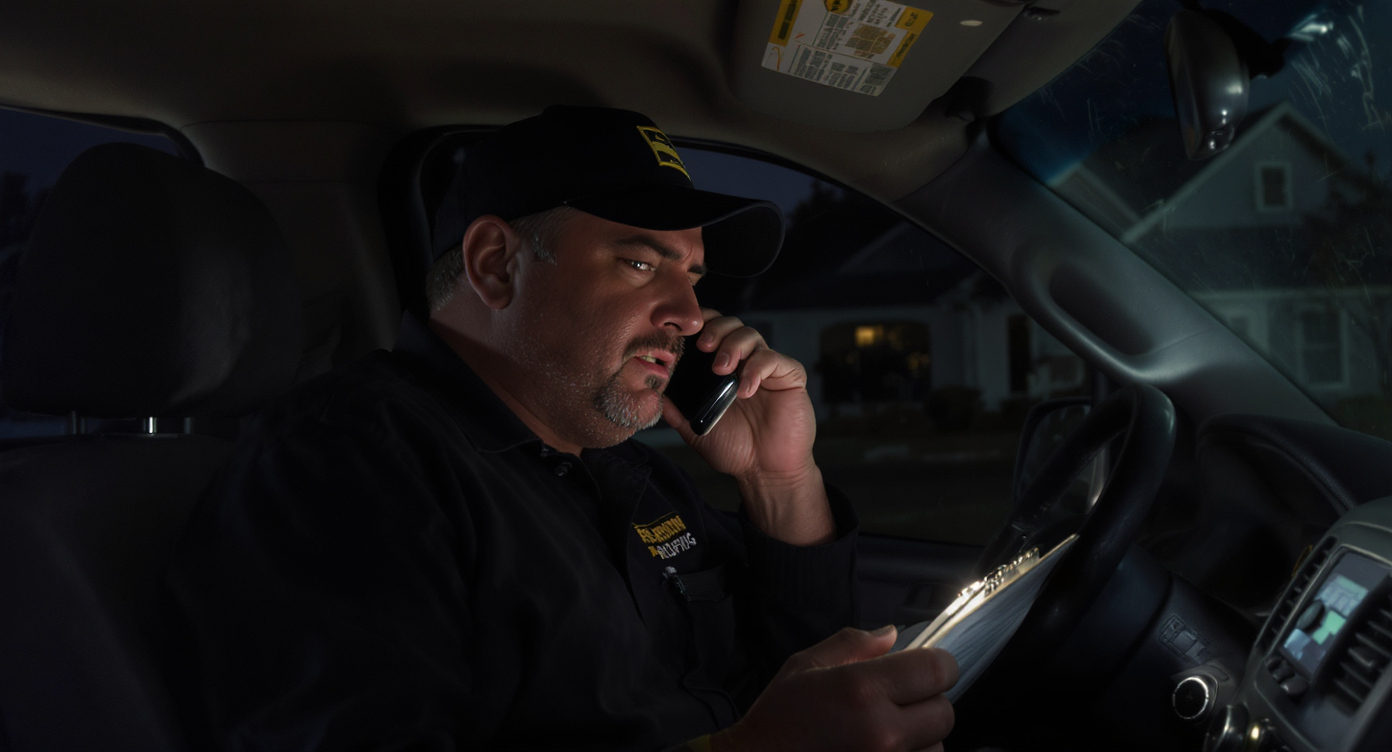
A homeowner discovers a leak at 10 PM during a thunderstorm. They grab their phone and call the first roofer that pops up on Google. Nobody answers. Within 30 seconds, they’ve moved on to the next company on the list. That lost call? Could easily be a $5,000 to $15,000 job. And for most roofing companies, it happens far more often than they realize. Knowing how to handle after hours calls for roofing companies isn’t just a customer service question. It’s a revenue question.
Handling after hours calls for roofing companies means capturing inbound calls outside normal business hours—evenings, weekends, holidays, and early mornings. Since emergencies like storm damage don’t wait for business hours, implementing systems like voicemail-to-text, answering services, or dedicated emergency lines prevents losing thousands in potential jobs to competitors who answer.
Quick Answer
Route after-hours calls to a dedicated team member, answering service, or automated system that captures caller information and schedules appointments for the next business day. Offer emergency callback options for urgent situations like active leaks. Document all messages to ensure no leads slip through, and follow up within 24 hours to demonstrate responsiveness and secure jobs before competitors do.
What Are After Hours Calls for Roofing Companies?
After hours calls are any inbound calls that come in outside your normal business hours. For a roofing company, that’s typically evenings, weekends, holidays, and the early morning hours before crews report. These calls range from true emergencies—like storm damage or active leaks—to scheduling requests, estimate inquiries, and follow-ups on existing work.
Related guide: how to handle after hours calls for cleaning companies.
Free weekly newsletter
Growth tips for home service businesses
Every Tuesday — actionable ideas to get more leads, reviews, and repeat customers. No fluff.
What makes roofing unique? Storm season doesn’t respect business hours. According to research on the cost of missed business calls, a significant percentage of callers won’t leave a voicemail and won’t call back. They’ll just move on to a competitor who picks up. In competitive local markets, every unanswered after hours call is a direct leak in the sales pipeline.
Why After Hours Calls Matter More in Roofing Than Most Industries
Roofing sits at the intersection of high-ticket jobs and urgent need. That combination makes after hours call handling disproportionately valuable compared to many other service trades.
The Revenue at Stake
Consider the math. A single residential re-roof averages between $8,000 and $15,000. Even smaller emergency repairs can run $500 to $2,000. According to data compiled by Aira, a large share of business calls go unanswered, and each one carries a real dollar cost. For a roofing company fielding 20 to 30 after hours calls per month during storm season, converting just a handful of those could mean tens of thousands in additional revenue.
Emergency Versus Non-Emergency Triage
Not every after hours call requires an emergency response. Sound familiar? Effective call handling starts with knowing the difference. Here’s a practical framework:
- True emergencies: Active leaks during rain, structural damage creating safety hazards, tarping needs after storm damage, fallen trees on roofs
- Urgent but can wait until morning: Storm damage without active leaking, missing shingles found during dry weather, gutter damage affecting drainage
- Non-urgent: Estimate requests, scheduling follow-ups, warranty questions, general pricing inquiries
Having a clear triage protocol means your after hours system can route callers appropriately. Emergency calls get escalated. Everything else gets captured, acknowledged, and queued for the next business day. Without this structure, you’re either ignoring all calls or treating every call like an emergency. That leads to burnout fast.
📺 Watch: After-Hours Call Routing Setup: Never Miss a Lead
Practical Strategies for Handling After Hours Roofing Calls
There are several approaches roofing companies use to handle after hours calls. Each has trade-offs in cost, reliability, and customer experience. What does that look like in practice? The right choice depends on your call volume, team size, and growth stage.
Voicemail: Simple but Risky
Voicemail is the default for most small roofing companies. It costs nothing and requires no setup. But the downsides are well documented. According to a Voksha analysis on the true cost of missed calls, most callers won’t leave a message when they reach voicemail, especially when they’re dealing with an active problem. They want to talk to someone. If they can’t, they’ll find someone who will answer.
If you do use voicemail, record a message that sets clear expectations. State your hours. Mention when you’ll return calls. And offer an alternative like texting. A vague “leave a message and we’ll get back to you” inspires zero confidence in a homeowner staring at a dripping ceiling.
Answering Services: Human but Expensive
Traditional answering services use live operators to take messages on your behalf. They’re a step up from voicemail because the caller reaches a real person. But these services have notable limitations for roofing companies:
- Per-minute pricing adds up quickly during high-volume storm weeks
- Operators typically can’t answer roofing-specific questions or book appointments
- Message relay introduces delays, since someone still needs to call the customer back
- Quality varies widely between providers, and turnover among operators is high
For a roofing company handling 50+ after hours calls during a busy storm week, answering service costs can spike unpredictably. Plus, you’re still relying on a human middleman who doesn’t know your pricing, your availability, or your service area.
On-Call Rotation: Effective but Unsustainable
Some roofing companies assign team members to on-call duty, rotating who answers the business phone after hours. This works in the short term because the caller reaches someone who actually understands roofing. Yet the long-term consequences are real.
Burnout is the biggest risk. Roofing is physically demanding work. Asking crew leads or salespeople to field calls from 6 PM to 7 AM creates fatigue that compounds over weeks. Small business research from NAWBO consistently highlights staffing strain as a top challenge for growing service companies. On-call rotations don’t scale, and they put your best people at risk of burning out during your busiest season.
AI-Powered Call Handling: The Modern Approach
AI phone agents represent a fundamentally different model. Instead of routing calls to humans or collecting voicemails, an AI agent answers every call instantly. Available 24/7, it can ask triage questions, qualify the lead, answer common questions about your services, and book appointments directly onto your calendar.
The key advantage is consistency. An AI agent doesn’t get tired during storm week. It doesn’t forget to ask for the caller’s address. And it handles call number 50 with the same quality as call number 1. According to Technology.org’s analysis of AI answering services, small businesses across service industries are increasingly adopting AI call handling to maintain responsiveness without adding headcount.
Building an After Hours Protocol That Actually Works
Whichever approach you choose, the protocol matters as much as the technology. A poorly configured AI agent or a badly briefed answering service will still lose you customers. Here’s what a strong after hours protocol looks like for a roofing company.
Define Your After Hours Window Clearly
Write down exactly when after hours begins and ends. For most roofers, that’s something like 6 PM to 7 AM on weekdays, plus all day Saturday and Sunday. Don’t leave it ambiguous. Your call handling system, your team, and your customers all need to know when the rules change.
Script Your Triage Questions
Whether a human or an AI is answering, they need a consistent set of questions to ask every after hours caller:
- Is there active water entering the home right now?
- What type of damage are you seeing (missing shingles, sagging, holes, leaking)?
- When did the damage occur or when did you first notice it?
- What’s your address and are you within our service area?
- Do you need emergency tarping or temporary protection tonight?
These five questions let you sort emergencies from non-emergencies in under two minutes. They also give your team everything needed to prioritize callbacks in the morning.
Set Emergency Escalation Rules
Decide in advance what triggers an immediate dispatch or callback versus a next-day follow-up. For example, active water intrusion during rain might warrant a same-night response. Cosmetic storm damage can wait. Document these rules so your after hours system—whether it’s an AI agent or on-call person—follows them every time.
Price Transparency Without Sticker Shock
One of the biggest mistakes roofing companies make after hours is avoiding pricing entirely. Callers want at least a ballpark. You don’t need to quote exact numbers. But your after hours script should acknowledge that emergency service may carry additional charges and that a full estimate will follow an inspection. Being upfront builds trust and filters out callers who aren’t serious.
How SalesCaptain Helps
SalesCaptain’s AI Phone Agent is built for exactly this scenario. It answers every after hours call with a natural-sounding voice, asks your custom triage questions, qualifies the lead based on your criteria, and books appointments directly into your calendar. No voicemail. No missed calls. No answering service markup.
What makes this especially practical for roofing companies is how the features work together. The AI agent handles the initial call. But if a caller needs immediate human attention, custom call flows route them to your on-call person. After the call, AI summaries and transcriptions give your team a complete record of what was discussed. Morning callbacks become informed and efficient.
Beyond calls, SalesCaptain’s missed call text-back feature automatically sends a text to anyone whose call wasn’t answered. This keeps the lead warm even if they don’t interact with the AI agent. And because everything flows into a single unified inbox, your team sees calls, texts, and messages from every channel in one place. Here’s what the full after hours toolkit includes:
- AI Phone Agent: 24/7 call answering with lead qualification, FAQ handling, and appointment booking
- Call Flows: Drag-and-drop builder to route emergencies, play custom greetings, and set after hours rules
- Missed Call Text-Back: Automatic SMS follow-up to every unanswered call
- AI Summaries and Transcriptions: Complete call records for next-day follow-up
- Workflow Automation: Trigger CRM updates, reminders, and follow-up sequences automatically
At $0.12 per minute for AI calls and plans starting with a free tier, it’s a fraction of what answering services or additional staff would cost. Plus, integrations with HousecallPro, ServiceFusion, and Zapier mean it fits into whatever systems you’re already running. According to SCORE’s guidance on using data to grow small businesses, the companies that capture and act on customer interactions fastest are the ones that win in competitive local markets.
Key Takeaways
After hours call handling isn’t optional for roofing companies that want to grow. Storm damage doesn’t wait for business hours. Neither do the homeowners dealing with it. The companies that answer those calls—even at 11 PM on a Saturday—are the ones that win the job.
Voicemail loses callers. Answering services are expensive and limited. On-call rotations burn out your team. AI-powered call handling gives you 24/7 coverage that’s consistent, affordable, and scalable, especially during storm weeks when call volume spikes unpredictably.
Build a clear after hours protocol with triage questions, escalation rules, and transparent pricing language. Then pair it with technology that can execute that protocol on every single call without fail. That’s how you stop losing revenue after 6 PM.
Frequently Asked Questions
Should roofing companies charge more for after hours emergency calls?
Yes, and most homeowners expect it. Emergency after hours work involves overtime labor, supply logistics, and safety risks that justify a premium. The key is being transparent about it upfront. Rather than surprising the customer with a bill, mention it early. Your after hours call script should state that emergency service rates apply and that a full estimate will follow the initial inspection.
How many after hours calls do roofing companies typically get?
It varies heavily by season and market. During calm weather, you might see 5 to 10 after hours calls per week. During storm season, that number can jump to 10 to 15 per day. Coastal and storm-prone regions see even higher volumes. The unpredictability is exactly why an automated system works better than staffing up.
Can an AI phone agent really handle roofing-specific questions?
Modern AI agents are trained on your business information, including your services, service area, pricing ranges, and FAQs. They won’t replace a seasoned estimator’s expertise. But they can answer common questions like “Do you handle insurance claims?” or “What areas do you serve?” and collect the information your team needs for a proper follow-up.
What’s the biggest risk of sending all after hours calls to voicemail?
Lost revenue. Research consistently shows that most callers won’t leave a voicemail. Even fewer will call back. In roofing, where callers are often comparing multiple contractors simultaneously, the company that responds first usually wins the job. Voicemail puts you last in line.
How do I handle after hours calls during a major storm event when volume spikes?
Storm weeks require a different playbook than normal after hours handling. An AI phone agent scales instantly because it can handle multiple simultaneous calls without wait times. Pair that with automated text follow-ups and a prioritized callback list sorted by urgency. Your team can work through the queue efficiently each morning instead of scrambling to return 40 voicemails.
Ready to see it in action?
See how roofing companies use SalesCaptain to capture after-hours calls and book emergency jobs.
Book a Free Demo →See How SalesCaptain Can Help
Stop losing after hours roofing leads to voicemail. SalesCaptain’s AI Phone Agent answers every call, qualifies every lead, and books appointments while your team rests. Plans start free, and setup takes minutes, not weeks.
Visit SalesCaptain.com to start capturing every after hours call today.