
AI-powered customer experience marketing (CXM) platform that helps local businesses win.


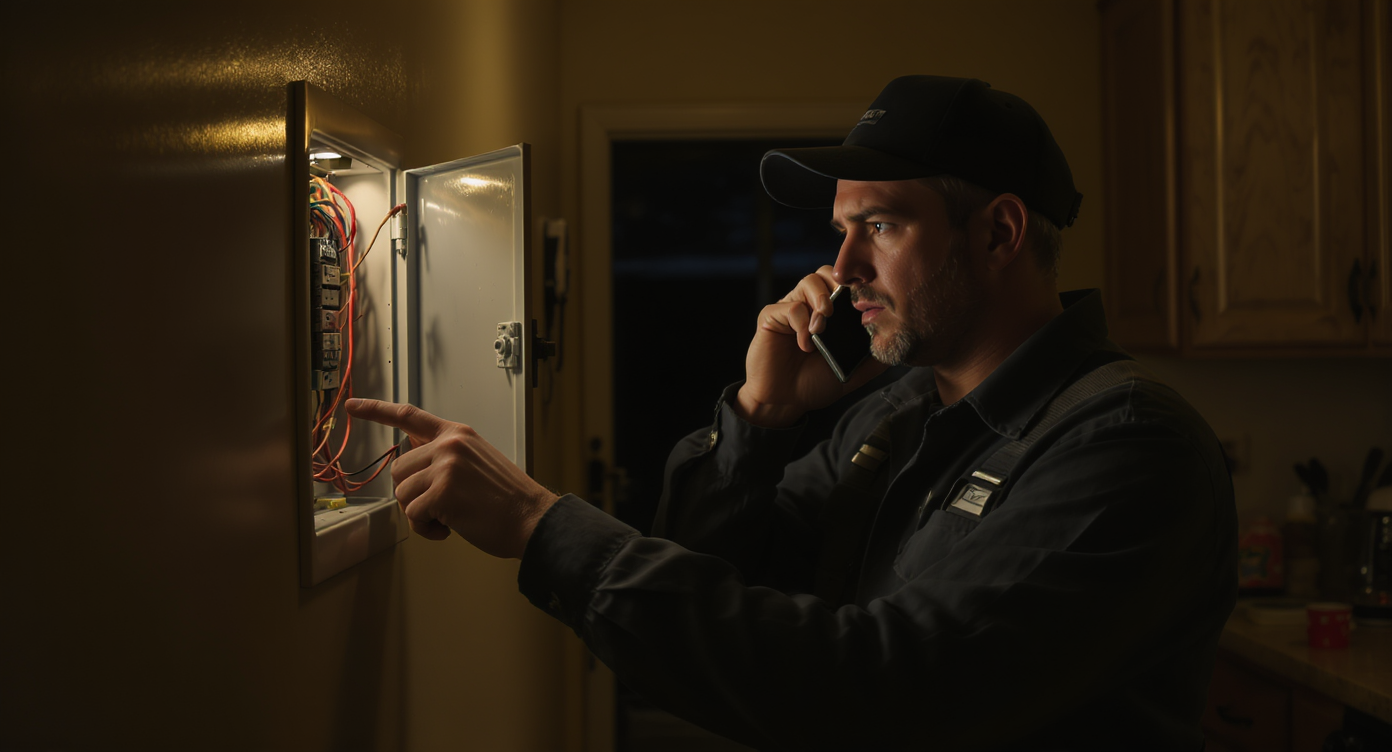
A homeowner’s breaker trips at 10 PM on a Tuesday. They’re searching for an electrician who can actually pick up the phone. Your business doesn’t answer, so they call the next one on Google. That’s not just a missed call—that’s a lost customer, a lost review, and potentially thousands in recurring revenue gone to a competitor. Sound familiar? Understanding how to handle After hours calls for electricians is what separates businesses that grow from ones stuck at the same revenue year after year.
Quick Answer
Electricians can handle after-hours calls by using an answering service, setting up automated voicemail with callback options, or hiring staff to cover night shifts. Route calls to a dedicated phone line, capture caller information through prompts, and ensure someone responds within two hours to qualify leads and schedule emergency appointments. This prevents missed revenue during peak emergency demand.
What Are After Hours Calls for Electricians?
After hours calls are any inbound calls that come in outside your regular business hours. For most electrical contractors, that means evenings, weekends, holidays, and early mornings. These aren’t nuisance calls. They’re often high-intent emergency requests from customers dealing with power outages, sparking outlets, tripped panels, or flickering lights that feel dangerous.
The challenge is obvious: you can’t staff a front desk 24/7 without serious overhead, but you also can’t afford to let those calls ring out. And here’s the thing—according to research from Aira, a significant percentage of business calls go unanswered, and each one carries real revenue consequences. For electricians specifically, emergency work commands premium pricing, so after hours calls often represent your most profitable jobs.
Free weekly newsletter
Growth tips for home service businesses
Every Tuesday — actionable ideas to get more leads, reviews, and repeat customers. No fluff.
Why After Hours Calls Matter More Than You Think
The Revenue Impact of missed calls
Every missed call has a cost attached to it. And it’s higher than most business owners realize. Industry data from CallSetter suggests that missed calls can cost businesses over $100,000 per year in lost revenue. For electrical contractors charging emergency rates of $150 to $300 per hour, even a handful of missed after hours calls per week adds up fast. Five missed calls a week? That’s roughly $130,000 walking out the door annually at an average job value of $500.
But here’s what really stings: revenue isn’t the only thing at stake. A customer who can’t reach you at night won’t call back in the morning. They’ll hire whoever answered first. According to the U.S. Small Business Administration, acquiring new customers costs five to seven times more than retaining existing ones. So losing a potential repeat customer to a missed call hits twice as hard.
Emergency Calls Build Long-Term Customer Loyalty
Here’s what many electricians overlook: the customer who calls you at midnight with a genuine emergency becomes your most loyal customer. You showed up when nobody else would. That experience creates trust that no marketing campaign can buy. These customers leave five-star reviews, refer their neighbors, and call you first for every future project.
On the flip side, a customer who can’t reach anyone after hours feels abandoned. Even if they don’t have a true emergency, being ignored damages your brand. In a service industry built on trust, that perception matters enormously.
📺 Watch: After-Hours Call Routing Setup: Never Miss a Lead
Practical Strategies for Handling After Hours Calls
Set Up a Real 24/7 Call Answering System
The most important step is ensuring every call gets answered, period. You’ve got several options, each with distinct trade-offs:
- Voicemail only: Cheap but ineffective. Most callers won’t leave a message, especially in an emergency. They’ll just call the next electrician.
- Traditional answering service: Human operators take messages and forward them. Better than voicemail, but expensive per minute and often impersonal. Operators don’t know your business, your service area, or your pricing.
- On-call rotation among your team: Works for small shops, but leads to burnout fast. Your best technicians shouldn’t lose sleep answering calls they can’t act on until morning.
- AI-powered phone agents: The newer approach. An AI voice agent answers calls naturally, qualifies the emergency, books appointments, answers common questions, and routes urgent calls to your on-call tech. No human needs to be awake unless the situation truly demands it.
The right choice depends on your call volume and budget. But the trend among growing electrical businesses is clearly moving toward AI-driven solutions. They combine 24/7 coverage with consistent quality at a fraction of the cost of human staffing.
Create a Clear Call Triage Process
Not every after hours call is an emergency. Some callers want to schedule a panel upgrade for next week. Others need a quote for recessed lighting. A few have genuine emergencies like exposed wiring or a burning smell from an outlet. Your system needs to sort these efficiently.
Build a triage framework with three tiers:
- Tier 1, True emergencies: Electrical fires, sparking outlets, complete power loss, exposed wiring, flooding near electrical panels. These get routed to your on-call technician immediately.
- Tier 2, Urgent but not dangerous: Partial outages, tripped breakers that won’t reset, non-functioning HVAC electrical components. Book these for first thing the next morning.
- Tier 3, General inquiries: Quotes, scheduling, questions about your services. Capture their information, send a confirmation text, and follow up during business hours.
This framework protects your team from unnecessary middle-of-the-night dispatches. And it ensures genuine emergencies get immediate attention. Callers also feel confident their situation is handled appropriately, which reduces anxiety and builds trust.
Map Your Service Area and Stock Your Trucks
Answering after hours calls is only half the equation. You also need to be ready to respond. That means knowing exactly which zip codes you’ll serve for emergency calls. Stock your service vehicles with the most common emergency parts: breakers, GFCI outlets, wire nuts, electrical tape, junction boxes, and basic panel components.
According to small business trend data, service businesses that respond faster consistently outperform competitors on customer satisfaction metrics. For electricians, response time isn’t just a competitive advantage—it’s often a safety issue. A well-stocked truck and a clearly defined service radius mean your technician can be on-site in 45 minutes instead of scrambling to find parts at a 24-hour hardware store.
Price Emergency Work Fairly and Transparently
One area where many electricians stumble is pricing. Customers expect to pay more for after hours service, but they don’t want to feel gouged. Be upfront about your emergency rates. Publish them on your website, and make sure your answering system can communicate basic pricing information.
A common structure looks like this:
| Call Type | Typical Rate Structure |
|---|---|
| Standard business hours | Regular hourly rate |
| After hours (evenings/weekends) | 1.5x regular rate + trip charge |
| Holidays | 2x regular rate + trip charge |
| Diagnostic/trip fee | Flat fee ($75 to $150, applied to work if hired) |
Transparency here actually increases conversion. When a homeowner knows the cost upfront, they’re more likely to commit on the call rather than shopping around. And your team avoids awkward price negotiations at the door at 11 PM.
Safety, Documentation, and Team Management
Build a Safety-First Culture for Night Work
After hours electrical work carries unique risks. Technicians are tired, lighting is often poor, and customers may be anxious or hovering. The Bureau of Labor Statistics consistently ranks electrical work among the more hazardous trades, and fatigue only amplifies those risks.
Every vehicle should carry full PPE including arc-rated clothing, insulated gloves, safety glasses, and a headlamp. Beyond equipment, establish firm rules: no technician works alone on high-voltage issues after hours. And nobody gets dispatched if they’ve already worked a full day without adequate rest. Rotating your on-call schedule fairly prevents burnout and keeps your team sharp.
Document Everything
After hours calls need even more documentation than daytime work. The reason is simple: there’s less oversight, communication gaps are more likely, and disputes are harder to resolve. Days later, memories fade.
Your documentation should include call recordings or transcripts, photos of the issue before and after work, a written scope of work signed by the customer, and time stamps for arrival and departure. AI transcription tools can capture the initial call details automatically. Your technician arrives already knowing what the customer described. That alone saves 10 to 15 minutes per job and reduces miscommunication.
Compensate Your Team Appropriately
You won’t keep good technicians if after hours work feels like a punishment. Pay premiums for on-call shifts even if no calls come in. Add bonuses for completed emergency jobs. Some shops offer comp time: work a Saturday night emergency, take Monday morning off. Whatever structure you choose, make sure it’s predictable and written down. Small business research from NAWBO shows that employee retention correlates directly with perceived fairness in compensation, especially for demanding roles.
How SalesCaptain Helps
SalesCaptain’s AI Phone Agent is purpose-built for exactly this scenario. It answers every call with a natural-sounding voice, 24 hours a day, 7 days a week. For electricians, that means no more missed calls at midnight. And no more paying a receptionist to sit by the phone.
The AI agent doesn’t just take messages. It actively qualifies the caller by asking about their issue, determines urgency using your custom call flow logic, and routes true emergencies directly to your on-call technician. For non-urgent calls, it books appointments, answers FAQs about your services and pricing, and sends confirmation texts automatically. Spam calls? Blocked before they waste anyone’s time.
What makes this different from a basic answering service is the intelligence behind it. SalesCaptain’s call flows let you build a visual, drag-and-drop triage system that matches the three-tier framework described earlier. Pair that with AI transcription and summaries? Your technician gets a concise briefing before they even start their truck. Every call becomes a documented record with speaker identification, action items, and follow-up notes.
Everything feeds into a unified inbox where calls, texts, webchat messages, and social media DMs live in one place. So when that emergency customer texts a photo of their sparking outlet after the initial call, your team sees it in the same thread. With integrations for tools like HousecallPro and ServiceFusion, job details sync automatically without double entry. Pricing starts with a free plan for a single location and scales to $159 per month per location for growing businesses, with AI calls billed at just $0.12 per minute.
Key Takeaways
Handling after hours calls effectively isn’t optional for electricians who want to grow. It’s a core business function that directly impacts revenue, customer loyalty, and team morale. Here’s what matters most:
- Every unanswered after hours call is a lost customer, not just a missed message.
- A clear triage system protects your team from burnout while ensuring real emergencies get immediate response.
- Transparent emergency pricing increases conversion rates on after hours calls.
- Safety protocols and proper documentation are non-negotiable for night work.
- Fair compensation keeps your best technicians willing to take on-call shifts.
- AI-powered phone agents now offer 24/7 coverage at a fraction of the cost of human answering services.
The electricians winning the most after hours business aren’t necessarily the best at wiring. They’re the ones who answer the phone. Build the system, protect your team, and capture every opportunity that calls.
Frequently Asked Questions
How many after hours calls does a typical electrical business miss per week?
It varies by market, but research from Voksha indicates that service businesses routinely miss a substantial portion of their inbound calls. For electricians with no after hours system, losing 5 to 15 calls per week outside business hours is common, especially during storm seasons or extreme weather events when electrical emergencies spike.
Should I charge more for after hours electrical work?
Yes. Customers expect premium pricing for emergency and after hours service. A rate of 1.5x your standard hourly rate plus a trip charge is standard in most markets. Be transparent about these rates on your website and during the initial call. That way there aren’t surprises at the door.
Is an AI phone agent better than a traditional answering service for electricians?
For most electrical businesses, yes. Traditional answering services charge per minute and rely on operators who don’t know your business. An AI phone agent can qualify emergencies, book appointments, answer pricing questions, and route urgent calls—all without per-minute staffing costs. The consistency is also better since AI doesn’t have bad days or call in sick.
How do I prevent technician burnout from after hours on-call shifts?
Rotate on-call duties fairly across your team. Pay a standby premium even when no calls come in. And offer comp time after busy nights. Also, use a triage system to filter out non-emergency calls so technicians only get woken up for situations that truly require immediate response.
What should my after hours voicemail say if I don’t have an answering system yet?
At minimum, your voicemail should acknowledge the caller’s urgency, state your callback timeframe, and offer an alternative action like texting your business number. However, missed call research from Safina AI shows that most callers won’t leave a voicemail at all. A voicemail-only approach should be treated as temporary, not a long-term strategy.
Ready to see it in action?
See how electricians use SalesCaptain to capture every after-hours call and book emergency jobs.
Book a Free Demo →See How SalesCaptain Can Help
SalesCaptain gives electricians a 24/7 AI Phone Agent that answers every call, qualifies emergencies, books appointments, and routes urgent jobs to your on-call team. Stop losing after hours revenue to voicemail. Visit SalesCaptain.com to get started today.