
AI-powered customer experience marketing (CXM) platform that helps local businesses win.


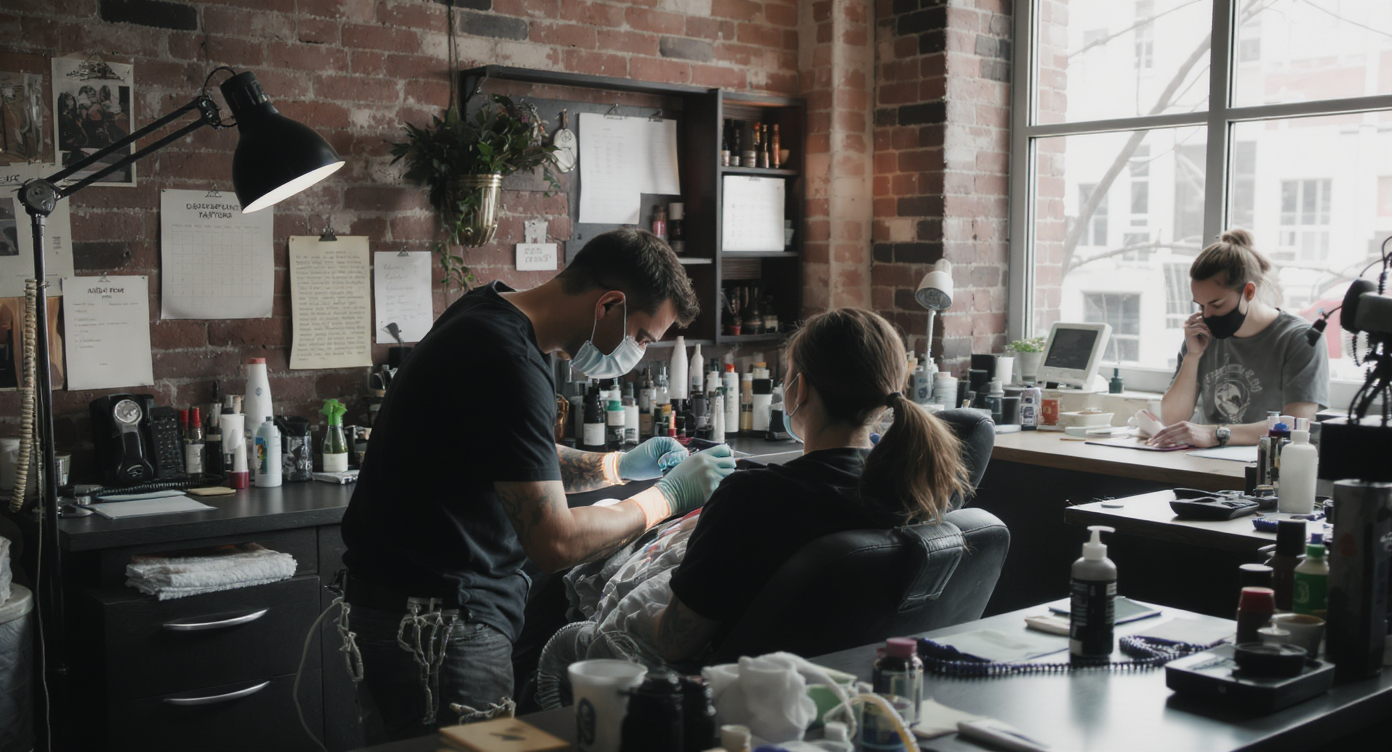
A potential client calls your tattoo studio on a Saturday afternoon while you’re mid-session on a full sleeve. The phone rings four times and goes to voicemail. That caller doesn’t leave a message. Instead, they scroll to the next studio in their search results and book there. Learning how to reduce missed calls for tattoo studios isn’t just about phone etiquette. It’s about protecting revenue that’s quietly walking out your door every single week.Reducing missed calls for tattoo studios means implementing systems to capture and respond to clients when artists are busy with sessions. Solutions include call forwarding, automated text responses, voicemail-to-SMS services, and scheduling software that lets clients book directly online, preventing lost appointments and revenue.
Quick Answer
Tattoo studios lose revenue to missed calls by not having a dedicated receptionist, failing to implement call forwarding, or lacking a system to track incoming inquiries. Solutions include hiring part-time staff, using professional voicemail greetings, setting up call routing to multiple team members, and tracking all client touchpoints. Booking systems that send appointment reminders also reduce no-shows and missed communication opportunities.
Free weekly newsletter
Growth tips for service businesses
Every Tuesday — actionable ideas to get more leads, reviews, and repeat customers. No fluff.
What Are Missed Calls and Why Do They Hit Tattoo Studios Especially Hard?
A missed call is any incoming call your business doesn’t answer live, whether it goes to voicemail, rings out, or gets dropped. For most retail or office-based businesses, missed calls are an inconvenience. But for tattoo studios? They’re a structural problem. Artists spend hours at a time with their hands occupied, unable to pick up the phone. Front desk staff, if you even have any, are often juggling walk-ins, check-ins, and aftercare questions all at once.The financial impact is real. According to research from Zadarma, businesses that fail to answer calls promptly lose a significant share of potential customers who never call back. Tattoo appointments typically range from $150 for small pieces to $1,000+ for large custom work. Even losing two or three bookings a week to missed calls can mean thousands of dollars in monthly revenue that simply vanishes. And because tattoo clients often research multiple studios before committing, the cost of a single missed call compounds when that prospect books with a competitor instead.Practical Strategies to Stop Losing Calls During Sessions
The core challenge for tattoo studios is simple: your best revenue-generating activity (tattooing) directly conflicts with your primary lead-capture activity (answering the phone). What does that look like in practice? You’re booked solid, your phone won’t stop ringing, and you can’t do both. Here’s how to fix that without hiring a full-time receptionist you might not be able to afford.Set Up Missed Call Text-Back
When you can’t answer, an automated text sent immediately to the caller keeps them engaged. Something like “Hey, we’re with a client right now but don’t want to miss you! What can we help with?” buys you time and keeps the prospect from moving on. Most callers today actually prefer texting anyway. Younger demographics especially—and that’s a huge portion of your tattoo clientele.Use an AI Phone Agent for After-Hours and Busy Periods
Rather than relying on voicemail (which fewer and fewer people actually bother with), an AI phone agent can answer calls in a natural, conversational tone. It can handle common questions like pricing ranges, studio hours, artist availability, and deposit requirements. Think of it as a knowledgeable front desk that never takes a break. Never puts anyone on hold either.Create Clear Call Flows
Not every call needs to reach an artist. A well-designed call flow routes callers based on what they need:- New booking inquiries go to an automated scheduling system or AI agent
- Existing appointment questions get routed to a text conversation for quick answers
- Artist-specific requests are forwarded to the right person’s voicemail or text with context
- Aftercare questions trigger an automated FAQ response
Send Appointment Reminders to Cut No-Shows
Missed calls aren’t just about incoming prospects. They’re also about the calls you’ve got to make to confirm existing appointments. No-shows are a massive problem for tattoo studios because your time is booked in multi-hour blocks. One no-show can cost you an entire afternoon of revenue. Automated text and call reminders at 48 hours and 24 hours before the appointment reduce no-shows dramatically. Pair those reminders with a clear cancellation policy, and you’ll recover time slots before they go to waste.📺 Watch: Missed Call Text Back Setup in 5 Minutes
Building Systems That Prevent Revenue Leakage
Reducing missed calls isn’t just a phone problem. It’s a systems problem. The studios that capture the most revenue aren’t necessarily the most talented. They’re the most responsive. According to NAWBO’s small business data, the businesses that grow fastest are those that invest in customer communication infrastructure early. That’s not optional anymore.Require Upfront Deposits Through Text
One of the most effective ways to reduce both missed calls and no-shows is collecting deposits at the time of booking. When clients have money on the line, they’re far more likely to show up. Far less likely to call repeatedly to “check on” their appointment too. Sending a payment link via text right after booking confirmation eliminates the back-and-forth phone calls that eat into your session time. According to the SBA’s guidance on managing business finances, collecting deposits is one of the simplest cash flow improvements small businesses can make.Maintain a Waitlist and Fill Cancellations Automatically
Cancellations happen. Emergencies are real. But an empty chair doesn’t have to mean lost income. A digital waitlist, combined with automated text notifications when a slot opens, lets you fill gaps without making a single phone call yourself. Clients on the waitlist get a text. First to respond gets the slot. It’s fast, fair, and doesn’t require you to stop what you’re doing.Build Relationships That Reduce Inbound Call Volume
Studios with strong client relationships see fewer “checking in” calls because their communication is proactive. Sending a text the day before an appointment with parking info, aftercare prep tips, and a friendly note reduces anxiety-driven calls. Offering referral rewards through text or email gives existing clients a reason to send friends your way. That means warmer leads who are easier to convert. These small touches add up. Research from Voksha shows that businesses lose far more revenue to poor follow-up than to poor service quality.Why Most Phone Solutions Fall Short for Tattoo Studios
You might be thinking, “I’ll just hire an answering service.” But here’s the problem: traditional answering services charge per call or per minute, and the people answering don’t know the difference between American Traditional and neo-traditional. They don’t know your studio’s specific policies on cover-ups or touch-up windows either. The result is generic messages that frustrate callers and still require you to call everyone back.Basic phone systems from providers like Grasshopper or OpenPhone offer voicemail and call forwarding. But they don’t solve the fundamental problem: someone still needs to answer. OpenPhone has minimal AI capabilities and only seven integrations, which means you’re still doing most of the work manually. Similarly, virtual receptionist services like Ruby and Smith.ai rely on human staff. Costs scale linearly with call volume. That’s the opposite of what a growing studio needs.What tattoo studios actually need is different. You need a system smart enough to handle calls independently, with enough context about your business to give callers real answers. According to Technology.org’s review of AI answering services, the shift toward AI-powered call handling is accelerating specifically because small businesses can’t afford the staffing models that enterprises rely on.How SalesCaptain Helps
SalesCaptain was built for exactly this kind of problem: service businesses where the people doing the work can’t also be on the phone. Its AI Phone Agent answers calls 24/7 with a natural-sounding voice, handles appointment booking, answers FAQs about your studio, qualifies leads, and blocks spam. You don’t need any technical expertise to set it up. Just tell it about your business, your policies, and your availability. It handles the rest.But the phone agent is only one piece. Here’s what actually makes SalesCaptain different from a basic answering service or VoIP tool:- Missed call text-back automatically sends a text to any caller you can’t answer, keeping prospects engaged
- Unified inbox pulls calls, texts, webchat, Instagram DMs, and Facebook messages into one place so nothing falls through the cracks
- Payments via text lets you collect deposits directly through SMS, no app downloads or complicated checkout flows
- Workflow automation handles appointment reminders, follow-ups, and waitlist notifications without manual effort
- AI transcriptions and summaries give you a record of every call so you can review what was discussed without listening to full recordings
- Call flows with drag-and-drop builder route incoming calls based on time of day, caller intent, or artist availability
Key Takeaways
Tattoo studios lose revenue to missed calls not because they don’t care about clients. It’s because the nature of the work makes it nearly impossible to answer every ring. Fixing this requires more than a better voicemail greeting. It requires systems: automated text-back for missed calls, AI-powered call answering during sessions and after hours, smart call routing, deposit collection via text, and proactive appointment reminders that cut no-shows.The studios that thrive treat their phone system as revenue infrastructure. Not an afterthought. Every unanswered call is a client booking somewhere else. Build the systems now, and you’ll capture the business you’re currently losing.Frequently Asked Questions
How many calls does a typical tattoo studio miss per week?
It varies by studio size and volume. But shops with one or two artists and no dedicated front desk commonly miss 30-50% of incoming calls during business hours. After hours? That number jumps to nearly 100% since most studios don’t have anyone answering phones in the evening or on days off. Even studios with a receptionist miss calls during busy periods, lunch breaks, and shift changes.Will an AI phone agent sound robotic to my clients?
Modern AI voice agents use natural language processing to carry on fluid, conversational calls. They don’t sound like the robotic phone trees from ten years ago. SalesCaptain’s AI Phone Agent is specifically designed to sound natural and can be customized with information about your studio’s policies, pricing, and personality. Your callers get a response that actually represents your brand.Can I still take calls personally when I want to?
Absolutely. AI call handling works alongside your existing phone setup, not as a replacement. You can configure call flows so the AI only picks up after a certain number of rings, during specific hours, or when all lines are busy. When you’re free and want to talk to a client directly, you answer as normal. The AI is there as a safety net for the calls you’d otherwise miss.How do upfront deposits reduce missed calls?
Deposits reduce the volume of follow-up calls in both directions. Clients who’ve paid a deposit are less likely to call repeatedly to confirm details because they’re already committed. You’re less likely to need to chase them down for confirmations either. On top of that, deposits dramatically cut no-shows, which means fewer wasted time slots and fewer frantic calls trying to fill last-minute openings.What’s the cost difference between hiring a receptionist and using an AI phone agent?
A part-time receptionist typically costs $1,500-$2,500/month depending on your market. They only cover limited hours though. SalesCaptain’s Business plan is $159/month plus $0.12/minute for AI calls. So even a studio handling 500 minutes of AI calls per month would spend around $219 total. That’s roughly 90% less than staffing, with 24/7 coverage instead of limited shift hours.Ready to see it in action?
See how tattoo studios use SalesCaptain to capture every missed call and book more appointments.
Book a Free Demo →