
AI-powered customer experience marketing (CXM) platform that helps local businesses win.


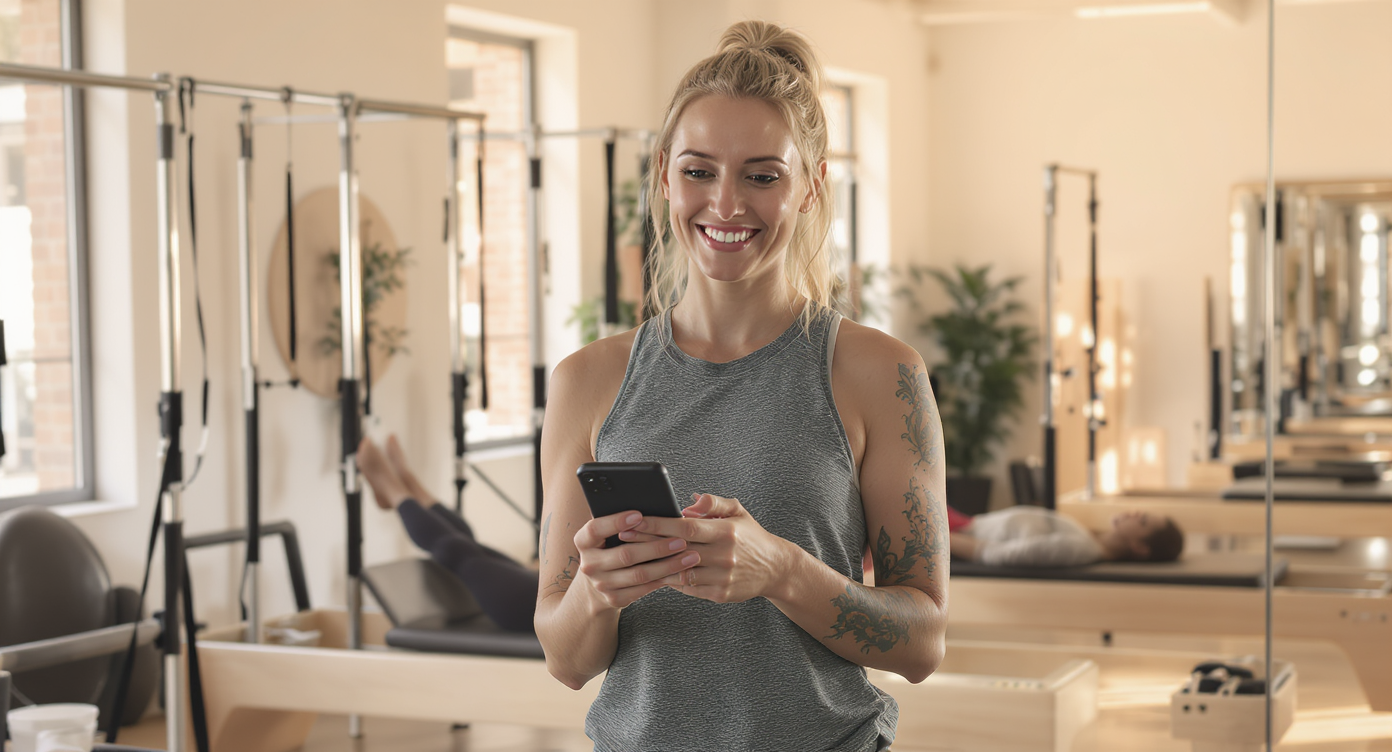
You’re between reformer classes, the front desk is empty, and your phone rings four times before going to voicemail. The caller wanted to book a private session. She won’t leave a message. Instead, she’ll Google the next studio down the street. That missed call? It just cost you $200 or more. Sound familiar? According to recent small business data, nearly 62% of calls to small businesses go unanswered. Finding the best phone system for pilates studios isn’t just a tech decision. It’s a revenue decision.
A phone system for pilates studios is cloud-based infrastructure that manages incoming and outgoing calls, routes them to the right staff member, and captures missed calls automatically. Modern systems eliminate the need for traditional desk phones and ensure no potential clients are lost when your front desk is busy with classes.
Free weekly newsletter
Growth tips for salons, gyms & beauty businesses
Every Tuesday — actionable ideas to get more leads, reviews, and repeat customers. No fluff.
Quick Answer
A cloud-based phone system designed for service businesses captures missed calls through intelligent routing, voicemail-to-text transcription, and automated scheduling integrations. Look for systems offering local numbers, call recording for quality assurance, and seamless connection to your studio’s booking software so every inquiry converts to a scheduled session.
What Is a Phone System for Pilates Studios?
A phone system for a pilates studio goes way beyond a desk phone that rings. It’s the infrastructure that manages every incoming and outgoing call, routes them to the right person or service, and makes sure no potential client falls through the cracks. Modern systems are cloud-based. They work over the internet rather than traditional phone lines. You don’t need hardware bolted to a wall.
For pilates studios specifically, a good phone system handles class inquiries, appointment bookings, package questions, cancellations, and general information requests. Many of these calls are repetitive and predictable. Perfect candidates for automation. The right system ties your phone, text messages, and even social media messages into one place so your front desk staff (if you even have one) isn’t juggling five different apps. According to FinancesOnline’s research on business phone systems, companies that use unified communication platforms see measurable improvements in both response time and customer satisfaction.
Why Pilates Studios Have Unique Phone Needs
The Scheduling-Heavy Nature of the Business
Pilates studios aren’t retail shops. Almost every dollar you earn depends on someone booking and showing up. That makes your phone system a direct link to revenue. When a prospective client calls to ask about your intro package or class schedule, their intent is high. They’re ready to commit. But if nobody answers, or if they’re put on hold while your instructor finishes a session, that intent evaporates fast.
Unlike larger businesses with dedicated call centers, most pilates studios operate lean. The owner is often teaching. The front desk person is checking clients in, processing payments, and restocking towels all at once. So the phone system needs to do heavy lifting on its own, especially during peak class times when the staff is busiest and the phone rings most.
After-Hours Inquiries Are the Norm
People research studios in the evening, on weekends, and during lunch breaks. These are the exact hours when your studio is either closed or fully occupied with classes. Research on missed call revenue loss shows that businesses lose thousands of dollars monthly from calls that go unanswered outside business hours. A phone system that only works when your front desk is staffed isn’t really working at all.
Features That Matter Most for Pilates Studios
Not every feature in a business phone system is relevant to a five-instructor pilates studio. Here’s what actually moves the needle. Based on how pilates businesses operate day to day.
Automated Call Answering and Routing
Your system should answer every call, even when you can’t. At minimum, that means an IVR (interactive voice response) menu that greets callers and directs them: press 1 for class schedules, press 2 to book a session, press 3 for billing. Better yet? An AI-powered agent can handle the entire conversation naturally without forcing callers through a phone tree.
Appointment Booking Without Human Involvement
If someone calls to book an intro class and your system can handle that booking automatically, you’ve just eliminated a task that takes your front desk 3 to 5 minutes per call. Multiply that across 20 calls a day. You’re saving over an hour of staff time daily.
Missed Call Text-Back
When a call does go to voicemail, the system should immediately send the caller a text message. Something like: “Sorry we missed your call! Reply here to book a class or ask a question.” This keeps the conversation alive. It prevents the prospect from moving on to a competitor.
Unified Messaging Across Channels
Your clients reach out via Instagram DMs, Facebook messages, website chat, text, and phone. If each channel lives in a different app, messages get lost. A unified inbox pulls everything together so whoever’s working the desk can see and respond to all messages in one view. According to IDC’s 2024 SMB Communications survey, unified communication adoption continues to grow among small businesses precisely because of this consolidation benefit.
The Features Checklist
Here’s what to look for when evaluating systems:
- 24/7 call answering through AI or automated routing, so no call goes unanswered regardless of the hour
- Appointment scheduling integration that connects to your booking software like Mindbody or similar tools
- SMS and text-back capabilities for missed calls and follow-up reminders
- Call recording and transcription so you can review conversations for training and quality
- Multichannel inbox combining calls, texts, social media DMs, and webchat
- Spam blocking to keep robocalls from wasting your time
- Voicemail transcription so you can read messages instead of listening to them between classes
- Simple setup that doesn’t require an IT consultant or hours of configuration
How Popular Phone Systems Compare for Studio Use
Several business phone systems serve small businesses. But they aren’t all built for appointment-heavy, service-based operations like pilates studios. Here’s an honest look at some common options.
Grasshopper is a virtual phone system that works well for solo entrepreneurs who just need a business number. However, it’s voice-only with no AI, no texting automation, and no unified inbox. For a studio handling dozens of daily inquiries across multiple channels, it’s simply too basic.
OpenPhone offers a solid entry point at $15 per user. But it only provides 7 integrations and its AI capabilities are minimal. There’s no call coaching, no power dialer, and no review management. It works as a basic phone app for very small teams. Studios with growth plans will outgrow it quickly.
Nextiva starts at $20 per user and offers strong VoIP features. But its SMS is capped at 250 messages per user per month. For studios sending appointment reminders, follow-ups, and promotional texts, that cap becomes a real bottleneck. Plus, onboarding can be complex, and it doesn’t offer payments via text or a leads form. This 2025 guide to SMB phone systems provides additional context on how these platforms stack up for small operations.
Aircall sits at the higher end at $30 per license per month and focuses heavily on call center workflows. It lacks webchat, missed-call text-back, and real-time AI for calls. It’s built for sales teams, not for a studio owner who needs every call converted into a booking.
The consistent gap across these platforms? None of them combine an AI voice agent, AI chat agents, and a unified inbox in a single tool designed for service businesses.
How SalesCaptain Helps
SalesCaptain was built for exactly this scenario: service businesses that can’t afford to miss calls but also can’t afford to hire a full-time receptionist. Its AI Phone Agent answers calls 24/7 with a natural-sounding voice, books appointments, answers FAQs about your class schedule and pricing, qualifies new leads, and blocks spam. No human needed.
But phone calls are just one piece. SalesCaptain’s AI Chat Agents handle SMS, webchat, Instagram DMs, and Facebook Messenger simultaneously. When someone DMs your studio at 10 PM asking about your reformer intro package, they get an instant response. They can book right then. Everything flows into the Unified Inbox, where your team sees calls, texts, social messages, and notes in one place.
What makes it particularly practical for pilates studios:
- Missed call text-back ensures every unanswered call gets an immediate SMS follow-up
- Call flows with a drag-and-drop builder let you customize exactly how calls are routed during class times, after hours, and on weekends
- AI transcription and summaries turn every call into a searchable record with action items, so nothing falls through the cracks
- Workflow automation triggers follow-up reminders, CRM updates, and appointment confirmations without manual effort
- Native integrations with Mindbody and 50+ other tools connect your phone system directly to your booking and business software
Pricing starts with a free plan for a single location. The Business plan runs $159 per month per location. AI calls are billed at $0.12 per minute. That’s a fraction of what you’d pay a part-time receptionist. And it works around the clock without breaks, sick days, or scheduling conflicts. As industry research on missed call costs shows, the average service business loses significant revenue to unanswered calls, making even a modest investment in automation pay for itself quickly.
Key Takeaways
The best phone system for pilates studios solves a specific problem: high call volume, small staff, and the need to convert every inquiry into a booked session. Generic VoIP tools leave gaps in automation, texting, and after-hours coverage. Traditional systems with desk phones and voicemail aren’t enough anymore.
What to remember:
- Your phone system directly impacts revenue because missed calls mean lost bookings
- AI-powered call answering and missed-call text-back are no longer optional for studios that want to compete
- A unified inbox across phone, text, and social media eliminates the chaos of managing multiple channels
- Automation of appointment booking, reminders, and follow-ups saves hours of staff time every week
- Per-location pricing is more affordable and predictable than per-user models for small studio teams
Choose a system built for how your studio actually operates. Not one designed for call centers or enterprise sales teams.
Frequently Asked Questions
How much does a business phone system cost for a pilates studio?
Costs vary widely. Basic VoIP systems start around $15 per user per month. More comprehensive platforms with AI and automation range from $100 to $300 per month per location. Per-location pricing often works out cheaper for studios since you’re not paying separately for each instructor or desk worker who needs access. This small business phone system guide breaks down common pricing models in more detail.
Can an AI phone agent really handle pilates studio calls?
Yes, because most studio calls follow predictable patterns: class schedules, pricing, booking requests, cancellations, and location questions. AI agents are trained on your specific business information. They can handle these conversations naturally. They book appointments, answer FAQs, and route complex calls to a human when needed.
Do I need a separate business phone number for my studio?
You should have one. Using a personal cell phone for business calls looks unprofessional. It makes it impossible to route calls, track performance, or automate responses. Most modern phone systems provide a business number as part of the plan. You can often port your existing number if you already have one.
What happens to calls when my studio is closed?
With a basic system, calls go to voicemail. With an AI-powered system, calls still get answered. Questions get resolved. Appointments get booked, even at midnight. The difference in lead capture between these two approaches is significant. Many potential clients call outside normal business hours.
Can I manage Instagram and Facebook messages from the same system as my phone calls?
Some platforms offer this through a unified inbox. Not all phone systems include social media messaging. You’ll want to verify this before choosing. Having all your communication channels in a single view prevents messages from being overlooked. It’s critical when you’re managing a busy studio with limited staff.
Ready to see it in action?
See how pilates studios use SalesCaptain to book classes from every incoming call.
See How SalesCaptain Can Help Your Pilates Studio
SalesCaptain gives pilates studios an AI-powered phone system, chat agents, and unified inbox in one platform, so you never miss a call or booking again. Plans start free for a single location.
Visit SalesCaptain.com to explore how it works for your studio.