
AI-powered customer experience marketing (CXM) platform that helps local businesses win.


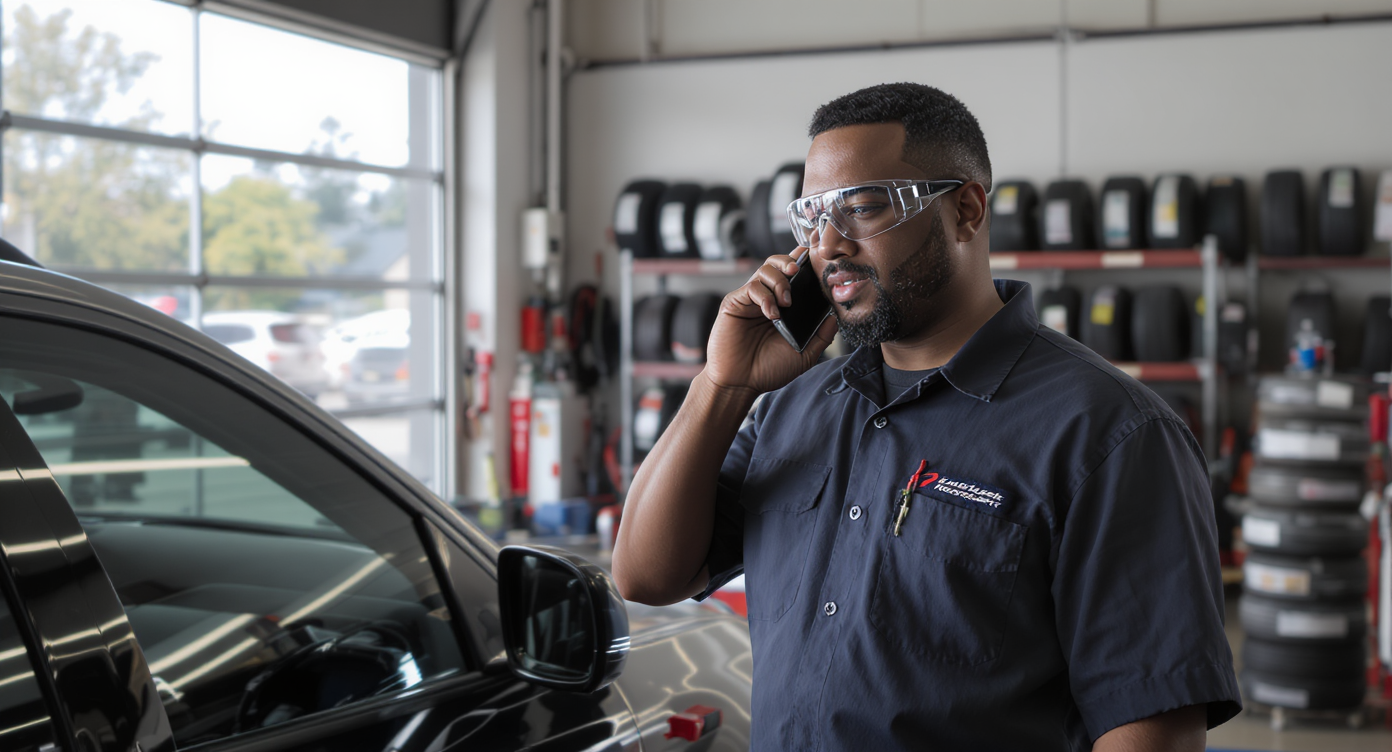
A customer pulls into your lot with a flat tire. They call ahead to ask about availability. The phone rings five times, nobody picks up, and they drive to the shop down the street instead. Sound familiar? That scenario plays out more often than most tire shop owners realize, and each missed call is lost revenue you can’t recover. Choosing the best phone system for tire shops isn’t about fancy features or enterprise-grade complexity. It’s about making sure every call gets answered, every appointment gets booked, and your front counter staff can focus on the customers standing right in front of them.
The best phone system for tire shops is a VoIP-based platform that routes incoming calls to available staff, books appointments automatically, and reduces missed calls. It replaces landlines with internet-based calling, eliminates expensive hardware, and ensures customers reach you instead of competitors.
What Makes a Phone System Right for Tire Shops
A business phone system replaces personal cell phones and outdated landlines with a centralized platform that handles inbound and outbound calls, routes them to the right person, and keeps a record of every interaction. No more copper lines. Modern systems run over the internet (VoIP), which means you don’t need expensive PBX hardware in a back office. According to Voksha’s guide to small business phone systems, VoIP solutions now offer call routing, voicemail transcription, and integration with scheduling tools at a fraction of what legacy systems used to cost.
For tire shops specifically, the requirements go beyond basic calling. Your system needs to handle high call volumes during seasonal rushes—think winter tire changeovers—and route calls between the front desk and service bays. It also needs to capture after-hours inquiries so you don’t lose them overnight. A good phone system ties into your appointment workflow too, because every tire installation, rotation, or alignment starts with a phone call or text message.
Why Tire Shops Lose Revenue on Phone Calls
Most tire shops run lean. You’ve got one or two people at the counter handling walk-ins, processing payments, and answering calls all at once. When the shop gets busy, the phone becomes the first thing that gets ignored. That’s a real problem. According to research on the cost of missed calls, a significant percentage of callers who reach voicemail won’t leave a message and won’t call back. They just move on.
The After-Hours Gap
Tire emergencies don’t follow business hours. Someone blows a tire at 7 PM and starts calling shops to find one that’s open in the morning. If your phone just rings and rings, they’ll move on to a competitor. Even a simple after-hours greeting that captures their name and vehicle info can make the difference. Yet many tire shops still rely on a basic answering machine or, worse, no after-hours system at all.
Seasonal Call Spikes
Spring and fall bring massive spikes in call volume as drivers switch between all-season and winter tires. During these peaks, a single phone line becomes a bottleneck. Customers calling to schedule changeovers hear a busy signal and try the next shop on Google. Missed call data for small businesses consistently shows that slow response times push potential customers to competitors who pick up faster.
Features That Matter Most for Tire Shop Phone Systems
Not every phone system feature is equally important for a tire shop. Some capabilities sound impressive on a sales page but won’t change your daily operations. Here’s what actually moves the needle.
Call Routing and IVR
An IVR (interactive voice response) menu lets callers press a number to reach the right department. For a tire shop, that might mean “Press 1 for appointments, Press 2 for pricing, Press 3 for an existing order.” Simple routing keeps your counter staff from fielding calls that could be handled automatically. Look for a system with a visual, drag-and-drop call flow builder so you can set this up without hiring an IT consultant.
Missed Call Text-Back
This single feature can recover a surprising number of lost leads. When a call goes unanswered, the system automatically sends the caller a text message: “Sorry we missed you. How can we help?” Most people are already on their phones, so they’ll often reply by text and you can continue the conversation from there. It’s faster than voicemail for the customer and easier to manage for your team.
Appointment Booking and Reminders
Tire installations require bay time, specific tire inventory, and sometimes special equipment. Double-booking a bay or having a no-show wastes your most limited resource: technician hours. A phone system that connects to your scheduling tools, or handles booking directly, reduces these problems. Automated reminders via text cut no-show rates significantly.
Core Features to Prioritize
- 24/7 call answering or AI-powered call handling for after-hours and overflow
- Call recording and transcription so you can review customer requests and train new staff
- Voicemail-to-text for quick scanning instead of listening to long messages
- Multi-channel messaging including SMS, since many customers prefer texting
- CRM or shop management integration to pull up customer history during calls
- Spam call blocking to keep your lines clear for real customers
Comparing Popular Phone System Options
There’s no shortage of business phone systems available. But not all of them are built with service businesses like tire shops in mind. Here’s how some of the most common options stack up on the features that matter most to your operation.
| Feature | SalesCaptain | OpenPhone | Dialpad | Nextiva | Aircall |
|---|---|---|---|---|---|
| Starting Price | Free (1 location) | $15/user | $15/user | $20/user | $30/license |
| Missed Call Text-Back | Yes | No | No | No | No |
| Call Coaching & Whispering | Yes | No | No | No | Yes |
| Unified Inbox (Calls + SMS + Chat) | Yes | Limited | Limited | Limited | No |
| Voicemail Drop | Yes | No | No | No | No |
| High Volume SMS | Yes | No | No | Capped at 250/user | No |
| Visual Call Flow Builder | Yes | No | No | Yes | Yes |
A few things stand out from this comparison. Per-user pricing models get expensive fast if you’ve multiple people answering phones. For a tire shop with three counter staff and a manager, Aircall alone would run $120/month before you add any features. According to FinancesOnline’s analysis of business phone system data, cost predictability ranks among the top priorities for small businesses selecting a phone platform.
Here’s the real gap: none of the traditional options listed above include a native AI voice agent that can actually answer calls, qualify the caller, and book appointments without human involvement. That’s significant for tire shops that can’t always staff the front desk during peak hours or after closing time. Also worth noting—Nextiva caps SMS at 250 messages per user per month, which won’t cut it during a seasonal promotion push when you’re sending appointment reminders and follow-ups to hundreds of customers.
How SalesCaptain Helps Tire Shops Handle Every Call
SalesCaptain was built specifically for service businesses that can’t afford to miss calls but also can’t afford to hire a full-time receptionist. The platform combines a full business phone system with AI-powered agents that handle the calls your team can’t get to. We’re talking 99.99% uptime, IVR, call routing, and voicemail.
What does that look like in practice? A customer calls at 6:30 PM, after your last technician has left. SalesCaptain’s AI Phone Agent picks up, greets them naturally, answers their question about whether you carry a specific tire size, and books them for an 8 AM appointment the next morning. The call gets transcribed and summarized automatically. Your morning crew sees exactly what the customer needs before they walk in the door.
Beyond voice calls, SalesCaptain handles inbound texts, webchat from your website, and even Facebook messages. Everything flows into a single Unified Inbox, so your front desk doesn’t need to toggle between five different apps. According to IDC’s SMB Communications Services Survey, unified communication platforms reduce the time employees spend managing customer interactions across channels.
Key capabilities that tire shops find most valuable include:
- AI Phone Agent answering calls 24/7 with natural-sounding voice conversations
- Spam blocking that filters out robocalls before they tie up your lines
- Drag-and-drop call flow builder for creating custom routing without technical help
- AI Summaries and Transcriptions turning every call into searchable, actionable notes
- Workflow Automation triggering appointment reminders, follow-up texts, and CRM updates
- Integrations with HubSpot, Salesforce, Zapier, and 50+ other tools your shop may already use
Pricing starts with a free plan for a single location. Paid plans run $159/month per location. That’s per location, not per user, so your whole team can use the system without stacking up seat fees. AI calls run at $0.12/minute, and since the agent resolves most routine calls in under two minutes, the math works out to pennies per interaction compared to the revenue each answered call can generate.
Key Takeaways
The best phone system for tire shops solves a simple but expensive problem: making sure every customer who calls gets a response, whether it’s 10 AM on a Tuesday or 8 PM on a Saturday. Traditional phone systems handle basic routing. But they still require a human to pick up. AI-powered platforms close that gap entirely.
When evaluating options, prioritize missed call text-back, after-hours AI answering, appointment booking integration, and per-location pricing that won’t balloon as your team grows. Avoid systems that charge per user, cap your SMS volume, or lack native AI call handling. Your phone system shouldn’t just connect calls. It should convert them into booked appointments while your team focuses on the work happening in the bays.
Frequently Asked Questions
How much does a business phone system cost for a tire shop?
Costs vary widely. Per-user systems like Aircall ($30/license) or Nextiva ($20/user) add up quickly with multiple staff members. SalesCaptain uses per-location pricing starting with a free tier. Paid plans cost $159/month regardless of how many team members use the system. AI call minutes are billed separately at $0.12/minute.
Can an AI phone agent really handle tire shop calls?
Yes, absolutely. Modern AI voice agents sound natural and can answer common questions about tire availability, pricing ranges, and shop hours. They can qualify callers and book appointments too. They’re especially effective for after-hours calls and overflow during busy periods when your counter staff can’t pick up. As noted in a buyer’s guide to AI receptionists, these systems now handle multi-turn conversations reliably enough for most service business scenarios.
What’s the difference between a VoIP phone system and a traditional landline?
VoIP runs over your internet connection instead of copper phone lines. It’s cheaper, more flexible, and way more powerful. You get call routing, SMS, voicemail transcription, and AI agents—things landlines simply can’t offer. Recent business phone statistics show that small businesses are overwhelmingly adopting cloud-based VoIP over traditional systems.
Do I need technical expertise to set up a phone system for my tire shop?
Not with modern platforms. SalesCaptain, for example, uses a drag-and-drop call flow builder and doesn’t require any coding or IT background. You can set up IVR menus, after-hours routing, and AI agent responses yourself in under an hour.
How do I handle seasonal call spikes without hiring temporary staff?
An AI voice agent and missed call text-back system together handle most of the overflow. Calls that go unanswered get an instant text reply, and the AI agent can field routine questions and bookings without any human involvement. This lets your existing team focus on in-shop customers while the system captures phone leads automatically.
See How SalesCaptain Can Help Your Tire Shop
Stop losing customers to missed calls and after-hours voicemail. SalesCaptain gives your tire shop a 24/7 AI phone agent, unified inbox, and automated workflows, all in one platform built for service businesses. Start with the free plan and see the difference in your first week.