
AI-powered customer experience marketing (CXM) platform that helps local businesses win.


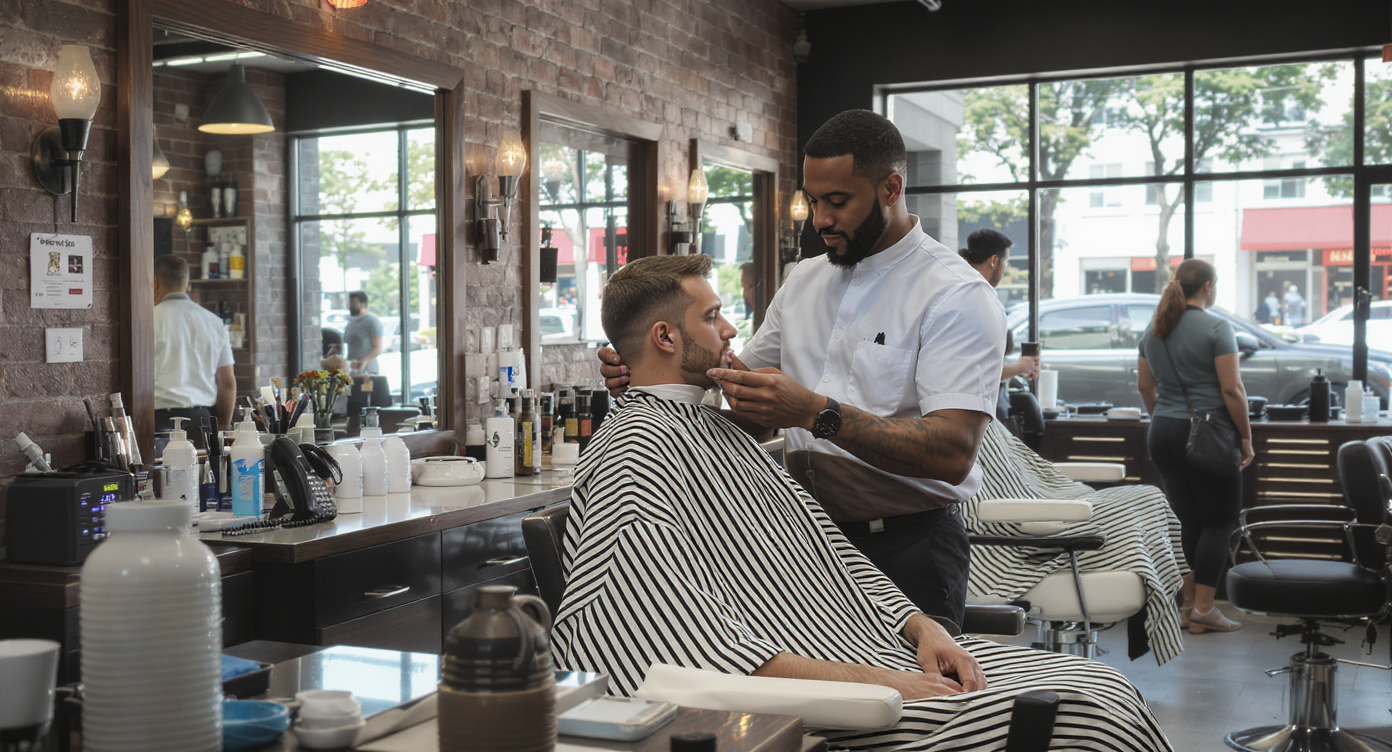
A client calls your barbershop at 6:47 PM on a Tuesday. You’re mid-fade, both hands busy, music playing. The phone rings four times and goes to a generic voicemail. That caller books with someone else down the street. Sound familiar? It happens more often than most shop owners realize, and according to recent missed call statistics, a significant percentage of business calls go unanswered every day. Your phone system isn’t just a number on your card. It’s the difference between a booked chair and lost income.
The best phone system for barbershops is a VoIP-based solution that handles call routing, voicemail transcription, and automated responses—allowing you to capture missed calls and book appointments even when you’re busy cutting. Modern systems eliminate lost revenue from unanswered phones without expensive hardware.
Free weekly newsletter
Growth tips for salons, gyms & beauty businesses
Every Tuesday — actionable ideas to get more leads, reviews, and repeat customers. No fluff.
Quick Answer
A barbershop phone system should handle appointment scheduling, call routing to stylists, and voicemail-to-text capabilities. Cloud-based solutions work best since they’re affordable, require minimal setup, and let you manage calls from anywhere. Look for systems offering 24/7 automated booking, caller ID, and integration with scheduling software to reduce missed appointments and streamline operations.
What Is a Business Phone System for Barbershops?
A business phone system is the technology that handles how your shop receives, routes, and manages calls. For barbershops, that’s way more than a basic landline or your personal cell. Modern systems run over the internet (VoIP), which means you get call routing, voicemail transcription, automated text replies, and AI-powered call answering. No expensive hardware needed.
Think of it as your shop’s communication backbone. When a client calls to book a cut, ask about your hours, or reschedule, the phone system decides whether they get an answer or hit a dead end. The business phone systems market has grown significantly as small businesses wake up to that outdated phone setups cost real money. For a barbershop? A missed call isn’t just annoying. It’s lost revenue.
Why Barbershops Have Unique Phone Needs
Barbershops aren’t call centers, but they deal with a lot of phone-based interactions. Walk-in culture is still strong, yet more clients now call or text ahead, especially younger ones. Your phone system needs to match how your clients actually communicate.
Hands Are Always Busy
Barbers can’t drop a clipper to answer the phone. That’s the real problem. Unlike an office worker who can pick up between emails, you’re physically working with a client every 20 to 45 minutes. Calls stack up fast. This happens especially during peak hours like lunch breaks and after-work rushes. A system that only rings on the wall won’t work.
After-Hours Demand Is Real
Most barbershops close by 7 or 8 PM, but clients call in the evening when they’re planning their week. If your phone just rings out or plays a recording, you’re hoping they’ll try again tomorrow. Most won’t. According to Voksha’s analysis of missed call costs, the revenue lost from unanswered calls adds up fast for small businesses. An effective phone system captures those after-hours callers automatically.
Appointment-Centric Operations
Nearly every inbound call falls into one of three buckets: booking a new appointment, changing an existing one, or asking a quick question about hours, pricing, or walk-in availability. These are predictable, repeatable interactions. And that’s actually your advantage because the right phone system can handle most of these calls without you lifting a finger.
Key Features to Look for in a Barbershop Phone System
Not every feature matters equally. Enterprise-grade analytics sound impressive. But they won’t help you book more fades. Here’s what actually works for shop owners.
- Missed call text-back: When you can’t answer, the system automatically sends a text to the caller. This keeps the conversation alive instead of letting the lead go cold.
- Appointment booking by phone or text: Clients should be able to book without you touching your phone. Whether through an AI voice agent or an automated text flow, the booking happens while you work.
- After-hours call handling: Your phone system shouldn’t sleep when you do. Custom call flows, voicemail transcription, or an AI agent that answers at 10 PM all ensure 24/7 coverage.
- Simple setup and management: You’re a barber, not an IT admin. The system should be easy to configure without technical expertise.
- Business phone number: Keep your personal number private. A dedicated business line looks more professional and separates work from life.
- SMS and text messaging: Many clients, especially younger ones, prefer texting over calling. Built-in SMS lets you confirm appointments, send reminders, and follow up on no-shows.
- Affordable per-location pricing: If you run one shop or three, the pricing should scale without breaking your budget.
Features like call recording and AI transcription also matter for quality and training. This is especially true if you’ve got a front desk person or junior barber handling calls. According to SoundCurve’s guide on small business phone systems, choosing a system that matches your actual workflow beats picking one based on the longest feature list.
Common Phone System Options and Where They Fall Short
Most barbershop owners look at a few categories of solutions. Each has trade-offs worth understanding.
Traditional Landlines
Reliable but limited. You get a phone number. That’s it. No texting, no call routing, no automation. When you’re with a client, the phone just rings. When you close for the night, it rings into nothing. For a modern barbershop? Landlines are a dead end.
Personal Cell Phone
Many barbers start here. It works until it doesn’t. Your personal number is now your business number. Clients text you at midnight. There’s no separation between work and personal life. Plus, you can’t scale it. If you hire another barber or open a second location, this approach falls apart.
Basic VoIP Platforms
Tools like OpenPhone ($15/user) or Grasshopper give you a business number with some modern features. But they often lack deeper automation. OpenPhone doesn’t offer call coaching, call queueing, or sentiment analysis. Grasshopper is voice-only with no texting automation, no AI, and no unified inbox. These beat a cell phone, but they won’t automate the repetitive booking and FAQ calls that eat into your day.
Full-Scale Enterprise Systems
Platforms like RingCentral or 8×8 are built for larger organizations. They’re powerful, but they’re overkill for a three-chair barbershop. The complexity and per-user costs don’t make sense. You’d pay for features you’ll never use while missing barbershop-specific capabilities like missed call text-back or AI appointment booking. Research from Calilio on business phone statistics confirms that small businesses increasingly prefer cloud-based systems with built-in automation over traditional enterprise setups.
How SalesCaptain Helps
SalesCaptain was built for this exact situation: appointment-heavy, small team, high call volume, no time to babysit a phone. It combines an AI Phone Agent, AI Chat Agents, a unified inbox, and a full business phone system into one platform. No need to stitch together three or four different tools.
What does that look like in practice? A client calls at 7:30 PM after you’ve closed. SalesCaptain’s AI Phone Agent picks up, sounds natural, answers their question about pricing, and books them for Thursday at 2 PM. No voicemail. No missed opportunity. The booking syncs to your calendar, and the client gets a confirmation text automatically.
During business hours, when you’re mid-cut and can’t answer, the system sends a missed call text-back. The caller can book via text instead. Every interaction—whether it’s a call, text, Instagram DM, or webchat message—lands in one unified inbox your whole team can see. No more wondering if someone called back that guy from Tuesday.
- AI Phone Agent answers calls 24/7, books appointments, qualifies new clients, answers FAQs about services and hours, and blocks spam calls.
- Call Flows let you build custom routing with a drag-and-drop builder: greetings, menu options, after-hours rules, voicemail-to-text, and SMS follow-ups.
- AI Summaries and Transcriptions turn every call into a searchable text record with key takeaways, so you can review what was discussed without listening to recordings.
- Workflow Automation handles appointment reminders, follow-ups for no-shows, and CRM updates without manual effort.
- Unified Inbox pulls calls, texts, webchat, and social DMs into one team-friendly view with full contact history.
Pricing starts with a free plan for a single location. The Business plan runs $159/month per location. AI call minutes are $0.12/minute. Compare that to hiring even a part-time receptionist. The math is obvious. SalesCaptain also integrates with HousecallPro, Zapier, and QuickBooks, so it fits into the systems you already use. With 99.99% uptime and no technical setup required, it’s designed for barbers who’d rather cut hair than troubleshoot phone software.
Key Takeaways
The best phone system for barbershops solves one core problem: making sure every client call gets handled, even when your hands are busy or the shop is closed. Traditional landlines and personal cell phones can’t keep up. Basic VoIP tools help but still leave gaps around automation and after-hours coverage.
What actually works is a system combining a professional business number, AI-powered call answering, automated text follow-ups, and appointment booking into one platform. Look for missed call text-back, after-hours AI handling, and SMS capabilities as non-negotiable. Keep your pricing per-location, not per-user, so it scales as you grow.
Your shop’s reputation is built on the experience you deliver in the chair. Your phone system should deliver that same level of care before a client ever walks through the door.
Frequently Asked Questions
How much does a phone system for a barbershop typically cost?
Costs vary. Basic VoIP tools start around $15/user/month. More complete platforms with AI and automation range from free (single locations) up to $159-$300/month per location. Traditional landlines cost $20-$50/month but offer very limited functionality. The real cost to evaluate isn’t the monthly fee. It’s the revenue you lose from missed calls without proper automation.
Can an AI phone agent really book appointments for a barbershop?
Yes, it can. Modern AI voice agents handle predictable, repetitive conversations like appointment booking. They check availability, confirm a time slot, and send the client a text confirmation. Because barbershop calls follow a small set of patterns (booking, rescheduling, pricing questions, hours), AI handles them reliably without sounding robotic.
Do I need a separate business phone number?
You don’t need one, but you should. A dedicated business number keeps your personal life separate and looks more professional. It lets you use call routing, missed call text-back, and AI answering. If you ever sell the business or bring on partners, having a business number you control makes the transition much simpler.
What happens to calls when I’m with a client and can’t answer?
With a basic phone, the call goes to voicemail or rings out. With a modern system, you’ve got options: an AI agent can answer and handle the call, or the system can automatically text the caller so they can book via text instead. Both approaches keep the lead warm rather than pushing them to your competitor.
Will this work if I have multiple barbershop locations?
Absolutely. Per-location pricing models are designed for multi-location businesses. Each shop gets its own number, call flows, and AI agent. You manage everything from one dashboard. As recent data on small business revenue gaps shows, consistent communication across locations is one of the biggest factors in converting leads to paying customers.
Ready to see it in action?
See how barbershops use SalesCaptain to book more clients without missing a single call.
See How SalesCaptain Can Help Your Barbershop
Stop losing clients to missed calls. SalesCaptain’s AI Phone Agent answers every call, books appointments, and texts back missed callers, so you can focus on what you do best.