
AI-powered customer experience marketing (CXM) platform that helps local businesses win.


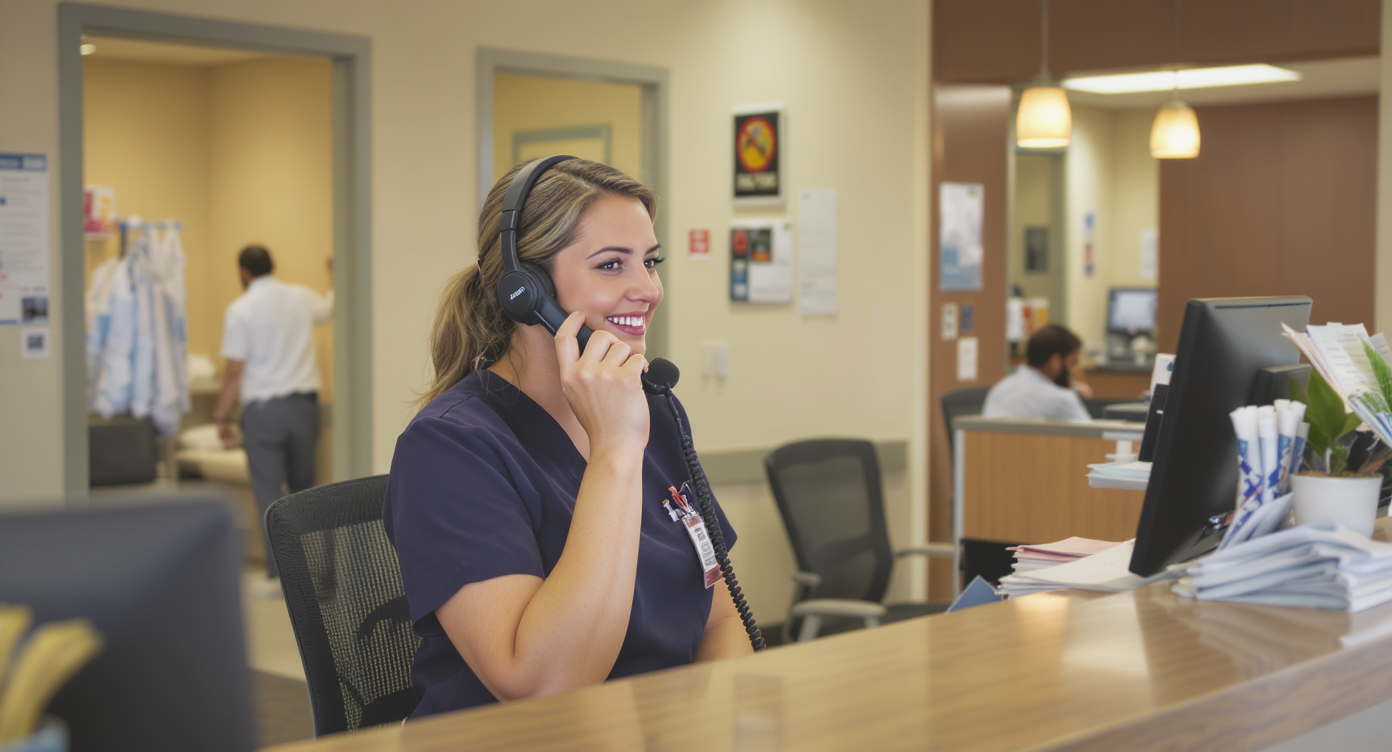
A patient walks into your urgent care clinic with a sprained ankle. But your front desk? They’re fielding three phone calls, checking in two other patients, and trying to confirm tomorrow’s schedule. Meanwhile, the fourth caller hangs up and heads to the competitor down the street. That lost call isn’t just an inconvenience. It’s lost revenue. According to recent research from Aira, over 60% of business calls go unanswered. Sound familiar? For urgent care clinics where every call could be a patient in need, finding the best phone system for urgent care clinics isn’t optional. It’s essential to staying competitive and delivering quality care.
The best phone system for urgent care clinics is a communication platform designed to handle high-volume, unpredictable call traffic with intelligent call routing, automated scheduling, and after-hours capabilities. These systems reduce missed calls and keep patients from going to competitors.
What Is a Phone System for Urgent Care Clinics?
A phone system for urgent care clinics is a communication platform designed to handle the high-volume, unpredictable call traffic that walk-in medical facilities deal with daily. Unlike a standard office phone setup, these systems need to route calls intelligently, manage after-hours inquiries, support multiple locations, and integrate with practice management or EHR software. They go way beyond basic dial tone.
Free weekly newsletter
Growth tips for dental & medical practices
Every Tuesday — actionable ideas to get more leads, reviews, and repeat customers. No fluff.
Modern clinic phone systems are typically cloud-based (VoIP). That means they run over the internet rather than through traditional copper phone lines. And that shift brings significant advantages: lower costs, easier scaling, remote access for staff, and the ability to add AI-powered features like automated call answering and real-time transcription. According to a market research report from PW Consulting, the small business phone systems market continues to grow as more organizations move to cloud-based solutions. For urgent care specifically, the stakes are higher because patients calling often have time-sensitive health concerns. A missed or poorly handled call can directly affect outcomes and patient satisfaction.
Key Features Urgent Care Clinics Should Prioritize
Not every phone system fits the urgent care environment. A system built for a corporate sales team or a retail store won’t address the specific pressures your clinic faces. What does that look like in practice? Here’s what actually matters when you’re evaluating options.
Intelligent Call Routing and auto-attendant
Patients calling an urgent care clinic typically need one of a few things. They want to know if you’re open. They need directions. They’re asking about wait times. Or they’re trying to schedule a visit. A well-designed IVR (interactive voice response) or auto-attendant can handle these common queries without tying up your front desk staff. Look for systems that let you build custom call flows so you can route callers based on their needs, whether that’s reaching a nurse triage line, billing, or a specific location.
After-Hours Call Handling
Urgent care clinics often operate on extended hours. But you can’t staff phones 24/7 without serious overhead. Your phone system needs a reliable after-hours strategy. Some clinics use voicemail, but data from Synvola shows that missed calls carry a steep revenue cost. Most callers won’t leave a voicemail at all. AI-powered answering, missed-call text-back, and automated appointment booking are far more effective at capturing those patients before they go elsewhere.
HIPAA Compliance and Data Security
Any phone system handling patient communication must comply with HIPAA regulations. That means encrypted calls, secure voicemail storage, access controls, and audit trails. According to the U.S. Department of Health and Human Services, covered entities are responsible for ensuring that all electronic protected health information (ePHI) transmitted or stored by their communication tools meets security standards. Don’t assume every VoIP provider meets this bar. You’ve got to ask specifically about their Business Associate Agreement (BAA), encryption protocols, and data residency.
Must-Have Capabilities at a Glance
- Call recording and transcription for quality assurance and documentation
- Multi-location support so all your sites run on one system with unified reporting
- SMS and text messaging for appointment reminders, follow-ups, and patient communication
- EHR/EMR integration or at least CRM sync to keep patient records connected
- Scalability to add new lines, locations, or features without a system overhaul
- Mobile access so providers and staff can manage calls from anywhere
- Uptime reliability of 99.9% or better, because downtime in a medical setting isn’t acceptable
How to Evaluate and Compare Phone Systems for Your Clinic
Once you know the features you need, the real work begins. That’s comparing vendors. The urgent care phone system market includes everything from legacy telecom providers to modern AI-first platforms. Here’s a practical framework for narrowing your choices.
Pricing Models That Actually Make Sense
Per-user pricing sounds straightforward. But it adds up fast in a clinic with nurses, front desk staff, billing coordinators, and providers who all need access. Some platforms charge $20 to $30 per user per month, which can balloon quickly for a busy clinic. Per-location pricing is often more predictable for multi-site urgent care operations. As FinancesOnline reports, understanding the total cost of ownership, including add-ons, integration fees, and overage charges, is critical when comparing business phone systems.
Also watch for hidden costs. Some vendors charge extra for call recording, SMS, or integrations that should be standard. A free tier or trial period can help you test the system before committing. But make sure the trial includes the features you’ll actually use in production.
Comparing Popular Options
Several platforms compete in this space. And each has trade-offs worth understanding. Here’s how some of the most common names stack up for urgent care use cases.
| Feature | SalesCaptain | Nextiva | Weave | Aircall |
|---|---|---|---|---|
| Missed-Call Text-Back | Yes | No | Yes | No |
| Unified Inbox (All Channels) | Yes | Limited | Limited | No |
| Per-Location Pricing | Yes (from Free) | Per user ($20+) | Not public | Per license ($30) |
| Multi-Location Support | Yes | Yes | Yes | Yes |
| Call Coaching and Whispering | Yes | No | No | No |
| SMS Campaigns | Yes (High volume) | Capped at 250/user | Yes | Limited |
| Workflow Automation | Yes (Visual builder) | Limited | Limited | Limited |
Weave has traditionally targeted dental and healthcare practices. But its feature set remains narrow for clinics needing social chat, WhatsApp support, or advanced AI automation. Nextiva is a solid general-purpose VoIP, but it caps SMS at 250 messages per user per month. That’s restrictive for patient communication at scale. Aircall, at $30 per license, focuses on call center use cases and lacks real-time AI features or a unified inbox for multi-channel patient conversations.
Integration With Your Existing Tools
Your phone system doesn’t exist in a vacuum. It needs to connect with your scheduling software, patient management system, and CRM. Check whether a vendor offers native integrations with the tools you already use. Or whether you’ll need Zapier or custom API work to bridge the gap. For many urgent care clinics, integration with platforms like HubSpot, Salesforce, or specialized healthcare tools is the difference between a phone system that saves time and one that creates more work.
Why AI-Powered Communication Matters for Urgent Care
The biggest shift in clinic phone systems over the past two years isn’t better call quality. It’s not fancier IVR menus either. It’s AI. And for urgent care clinics specifically, AI-powered communication addresses the core operational challenge: handling unpredictable call volume without proportionally scaling staff.
Think about your busiest hours. Front desk staff are juggling check-ins, insurance verifications, and phone calls simultaneously. Every unanswered ring is a potential patient lost. Voksha’s analysis of missed call costs shows that the revenue impact compounds quickly, especially for healthcare businesses where each patient visit carries significant value.
AI voice agents can answer overflow calls with natural-sounding conversation. They handle FAQs about hours and services, book appointments, and qualify whether a caller needs immediate care or can be scheduled for later. Because they work around the clock, they eliminate the after-hours gap entirely. On the text side, AI chat agents can send appointment confirmations, follow-up reminders, and answer common questions over SMS or webchat without any staff involvement.
This isn’t about replacing your team. It’s about making sure no patient falls through the cracks while your staff focuses on the people standing in front of them.
How SalesCaptain Helps
SalesCaptain combines an AI Phone Agent, AI Chat Agents, a unified inbox, and a full business phone system into one platform built for service businesses, including healthcare and urgent care clinics. Instead of stitching together separate tools for voice, text, chat, and automation, you get everything in a single dashboard.
The AI Phone Agent answers calls 24/7 with natural-sounding conversation. It books appointments, qualifies leads, answers FAQs about your clinic’s hours and services, and blocks spam. For urgent care clinics with unpredictable call spikes, that means every call gets handled, even during your busiest periods or after you close for the night. The platform also provides AI-generated call summaries and transcriptions. So your team can review conversations quickly without listening to entire recordings.
What makes the platform particularly well-suited for multi-location urgent care operations is its per-location pricing model. Plans start at free for a single location and scale to $159 or $300 per month per location for the Business and Enterprise tiers. AI calls run at $0.12 per minute. Compare that to per-user pricing from competitors like Nextiva or Aircall. The math favors SalesCaptain quickly as your team grows.
On the communication side, the unified inbox pulls calls, texts, webchat, social media DMs, and email into one collaborative workspace. Your staff sees every patient interaction in context, regardless of which channel it came through. And the drag-and-drop workflow automation builder handles follow-ups, appointment reminders, and CRM updates automatically. With 50+ native integrations including HubSpot, Salesforce, Zoho, and Zapier, connecting your existing practice management tools is straightforward. The system runs on 99.99% uptime with crystal-clear audio, IVR, call routing, and voicemail. So you’re covered on reliability too.
Key Takeaways
Choosing the best phone system for urgent care clinics comes down to a handful of non-negotiable requirements: reliable call routing, after-hours coverage, secure security, multi-location support, and integration with your existing tools. Beyond those basics, AI-powered features like automated call answering, missed-call text-back, and intelligent transcription are rapidly becoming the standard. Clinics that want to grow without proportionally growing headcount need these features.
Per-location pricing models offer better value than per-user structures for most urgent care operations. And a unified communication platform that handles voice, text, and chat in one place eliminates the complexity of managing multiple disconnected tools. The clinics that invest in modern, AI-ready phone systems now will be the ones capturing more patients, reducing staff burnout, and operating more efficiently in the years ahead.
Frequently Asked Questions
Do urgent care clinics need a secure phone system?
Yes, absolutely. Any phone system that transmits or stores patient health information must meet HIPAA security requirements, including encryption, access controls, and a signed Business Associate Agreement (BAA) with the vendor. Using a non-compliant system puts your clinic at risk of fines and data breaches.
How does an AI phone agent work for a medical clinic?
An AI phone agent answers incoming calls using natural-sounding voice AI. It can handle common questions (hours, location, accepted insurance), book appointments, and route callers to the appropriate department. Because it operates 24/7, it captures calls that would otherwise go to voicemail or get missed entirely during busy periods.
Is per-location or per-user pricing better for urgent care?
For most clinics, per-location pricing is more cost-effective. Urgent care facilities typically have multiple staff members who need phone access, from front desk to nurses to billing. Per-user pricing can escalate quickly. Per-location pricing keeps costs predictable regardless of how many team members you add.
Can a cloud phone system support multiple urgent care locations?
Absolutely, yes. Cloud-based systems are designed for multi-location businesses. You can manage all locations from a single dashboard, set location-specific call flows and hours, and track performance across your entire operation without separate phone infrastructure at each site.
What happens to calls after my urgent care clinic closes for the day?
With a modern phone system, after-hours calls don’t have to go to a generic voicemail. AI agents can answer those calls, provide basic information, book appointments for the next available time, or send the caller an automatic text message with next steps. This prevents patient loss during nights and weekends.
Ready to see it in action?
See how urgent care clinics use SalesCaptain to handle patient calls instantly without missing appointments.
Book a Free Demo →See How SalesCaptain Can Help Your Urgent Care Clinic
Stop losing patients to missed calls and outdated phone systems. SalesCaptain’s AI-powered phone and communication platform is built for healthcare businesses that need 24/7 coverage, multi-location support, and a unified inbox for every channel.