
AI-powered customer experience marketing (CXM) platform that helps local businesses win.


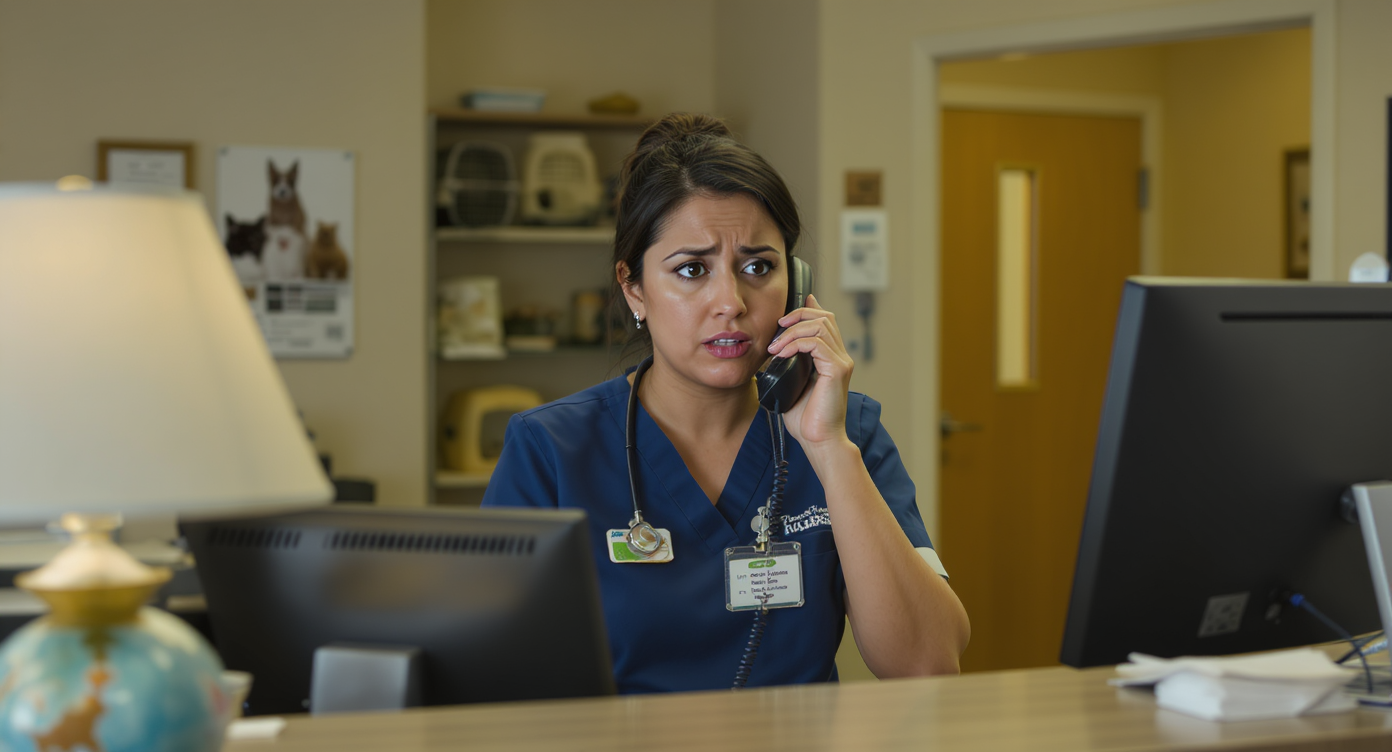
A pet owner’s emergency doesn’t wait until morning. When a dog swallows something dangerous at 11 PM or a cat starts seizing after midnight, that owner is calling your clinic. If they hit voicemail, they’re calling the next practice on Google within seconds. Understanding how to handle after hours calls for veterinary clinics isn’t just about customer service. It’s a revenue and reputation issue that affects everything in your practice.Handling after hours calls for veterinary clinics means having a system in place to manage incoming phone calls outside normal business hours—evenings, weekends, and holidays. Since after-hours represents roughly 75% of a week’s total hours, implementing an automated answering service or on-call protocol ensures pet owners reach help during emergencies and protects your clinic’s reputation and revenue.
Quick Answer
After-hours call management for veterinary clinics requires a combination of voicemail systems, emergency protocols, and staff coordination. Implement an automated greeting directing urgent cases to emergency clinics, capture non-urgent messages for next-day follow-up, and consider hiring an answering service or using call forwarding to ensure critical pet emergencies reach on-call veterinarians immediately while maintaining client satisfaction and preventing lost business opportunities.
Free weekly newsletter
Growth tips for dental & medical practices
Every Tuesday — actionable ideas to get more leads, reviews, and repeat customers. No fluff.
What Does After-Hours Call Handling Mean for Veterinary Clinics?
After-hours call handling is any system or process your veterinary practice uses to manage incoming phone calls outside normal business hours. That includes evenings, weekends, holidays, and any time your front desk isn’t staffed. For most vet clinics, “after hours” represents roughly 75% of the total hours in a week.Here’s the thing: veterinary practices face a unique challenge. Callers almost always believe their situation is urgent. A pet owner calling at 2 AM isn’t shopping around casually. They need guidance, reassurance, and clear next steps. Your after-hours system can’t just take a message. It needs to triage the situation, provide immediate direction, and capture the caller’s information so your team can follow up first thing in the morning. What does that look like in practice? According to research on the cost of missed calls for small businesses, a single unanswered call can cost hundreds of dollars in lost lifetime customer value.Why Missed After-Hours Calls Are Costing Your Practice More Than You Think
The Revenue Impact Is Real
Most veterinary practice owners underestimate how many calls come in outside business hours. Pet emergencies don’t follow a 9-to-5 schedule. Neither do new client inquiries from people browsing online in the evening. Every single call represents potential revenue. Maybe an immediate visit, or maybe a long-term client relationship worth thousands.Missed call statistics from 2026 show that most callers who reach voicemail won’t leave a message and won’t call back. They’ll just move on to the next clinic that answers. And for a veterinary practice where a single client can represent thousands of dollars in lifetime value across multiple pets and years of care, that’s a painful loss from one unanswered ring.Reputation Damage Compounds Over Time
Beyond the immediate revenue hit, there’s a compounding reputational effect. Pet owners talk to each other, both online and in person. A negative experience with your after-hours availability often turns into a one-star Google review. But here’s what really matters: according to the American Veterinary Medical Association, client communication quality is one of the strongest predictors of practice retention and growth. One bad late-night experience can undo months of excellent daytime care.📺 Watch: After-Hours Call Routing Setup: Never Miss a Lead
Proven Strategies for Handling After-Hours Veterinary Calls
Strategy 1: Set Up Intelligent Call Routing and Triage
Not every after-hours call needs a veterinarian. Some callers need the address of the nearest emergency clinic. Others want to schedule a next-day appointment. And some are genuinely urgent cases that need immediate triage guidance. Your system should sort these automatically.An effective after-hours triage system should handle these core functions:- Emergency identification: Ask callers specific questions to determine if the situation requires immediate emergency care, then route them to the nearest 24-hour emergency hospital.
- Appointment capture: For non-urgent concerns, collect the pet owner’s name, contact info, pet details, and symptoms so your team can call back first thing in the morning.
- FAQ responses: Answer common questions like clinic hours, location, accepted insurance, and pricing for routine services without requiring any human involvement.
- Spam filtering: Block robocalls and solicitation calls so your call log isn’t cluttered with noise when your team arrives in the morning.
Strategy 2: Use Missed-Call Text-Back to Capture Every Lead
Even with the best system in place, some calls will go unanswered. Maybe the caller hangs up before the system picks up, or the line is busy during a high-volume period. Missed-call text-back is a simple but powerful safety net.Here’s how it works: when a call goes unanswered, the system automatically sends an SMS to the caller within seconds. That text can include a personalized message like, “Hi, we missed your call at [Clinic Name]. If this is an emergency, please call [Emergency Hospital Number]. Otherwise, reply here and we’ll get back to you first thing tomorrow.” Data on the true cost of missed calls suggests that text-back systems recover a meaningful percentage of callers who would otherwise be gone for good.And here’s why it works so well: people are comfortable texting. A pet owner who won’t leave a voicemail will often reply to a text message, especially when they’re worried about their animal. You’ve now captured their information and opened a conversation. No human needed.Strategy 3: Build Trust Through Consistent, Empathetic Communication
Pet owners calling after hours are almost always anxious. Whether it’s a genuine emergency or a first-time pet parent panicking over normal puppy behavior, the emotional stakes feel high to them. Your after-hours system needs to reflect that.Several elements build trust during these interactions:- Warm, professional greetings: A cold, robotic menu kills confidence instantly. Your greeting should sound like your practice, whether that’s friendly and casual or calm and clinical.
- Clear emergency guidance: Don’t make a panicked caller guess what to do. Provide the emergency hospital’s name, address, and phone number upfront.
- Follow-through: If your system promises a morning callback, deliver it. Every time. Broken promises erode trust faster than anything else.
- Personalization: When possible, reference the caller’s pet by name or acknowledge their specific concern. Even small touches like this make a huge difference in perceived care quality.
Strategy 4: Create a Clean Morning Handoff Process
Your after-hours system is only half the equation. What happens when your team walks in at 8 AM matters just as much. Without a structured handoff process, critical information gets lost, callbacks get delayed, and the goodwill your overnight system built evaporates.A strong morning handoff should include:- Call summaries: Each after-hours interaction should generate a concise summary with the caller’s name, pet details, reason for calling, and urgency level.
- Prioritized callback list: Urgent cases and new client inquiries should be at the top, routine questions at the bottom.
- Full transcriptions: For complex cases, your team should be able to read exactly what the caller said rather than relying on abbreviated notes.
- Channel continuity: If a caller started a text conversation overnight, your team should be able to pick up that thread without the pet owner having to repeat themselves.
How SalesCaptain Helps Veterinary Clinics Handle After-Hours Calls
SalesCaptain’s AI Phone Agent was built for high-stakes, after-hours scenarios that veterinary practices deal with regularly. It answers every call with a natural-sounding voice, 24/7, without any human involvement required. The agent can ask triage questions, direct true emergencies to the appropriate hospital, capture detailed information from non-urgent callers, and book next-day appointments automatically.What makes this particularly valuable for vet clinics? The combination of voice, text, and follow-up in one platform. When a call is missed, the missed-call text-back feature fires immediately. All conversations land in a single Unified Inbox so your morning team sees everything in one place. Whether they happen by phone, SMS, webchat, or social media. AI Summaries and Transcriptions give your staff concise overviews of each overnight interaction, complete with speaker identification and action items.The drag-and-drop Call Flows builder lets you customize exactly how calls are routed. Set different flows for weekdays versus weekends, holiday hours versus regular evenings, or emergency keywords versus routine inquiries. Plus, SalesCaptain integrates with tools like HousecallPro and Zapier, so appointment data flows directly into whatever scheduling system you’re already using. Starting at a free plan for a single location, the pricing scales affordably even for multi-location veterinary groups.Key Takeaways
Handling after-hours calls effectively isn’t optional for veterinary practices that want to grow. Pet owners expect availability, empathy, and fast follow-up, regardless of the hour. The practices that deliver on these expectations retain more clients, generate more revenue, and protect their reputations.Your after-hours system should do four things well: triage emergencies accurately, capture lead information from non-urgent callers, respond instantly via text when calls are missed, and create a clean handoff for your morning team. AI-powered solutions make all of this possible without adding staff cost. They deliver consistent quality at 2 AM just as well as at 2 PM. The clinics that invest in this infrastructure now will be the ones pet owners trust and choose for years to come.Frequently Asked Questions
How many after-hours calls does a typical veterinary clinic receive?
It varies by practice size and location. But most clinics report that 30-40% of their total call volume comes outside standard business hours. This includes evenings, weekends, and holidays. Because pet emergencies are unpredictable, the distribution tends to be more spread out than in other service industries.Can an AI phone agent really handle veterinary triage calls?
Yes, but with an important distinction. An AI agent doesn’t provide medical advice or diagnose conditions. Instead, it asks structured questions to determine the situation’s urgency, then routes the caller appropriately. True emergencies get directed to a 24-hour animal hospital. Non-urgent cases are captured for a morning callback. This mirrors what a trained human receptionist would do.Won’t pet owners be frustrated talking to an AI instead of a real person?
Modern AI voice agents sound natural enough that most callers don’t notice a difference. Especially when the alternative is voicemail. Pet owners care about getting help quickly and being heard. An AI agent that responds with empathy, provides clear next steps, and captures their concerns will outperform a voicemail greeting every time.What’s the cost difference between a human answering service and an AI solution?
Traditional answering services like Smith.ai and Ruby charge per call or per minute. And costs add up quickly for practices with high after-hours volume. AI-powered solutions like SalesCaptain charge $0.12 per minute for AI calls, with no per-agent staffing costs. For most practices, the monthly cost is a fraction of what a human-staffed service would run.How do I make sure my morning staff actually follows up on overnight calls?
The key is a centralized system that organizes overnight interactions into a prioritized list with summaries. SalesCaptain’s Unified Inbox and AI Summaries give your team a clear view of every call, text, and chat from the night before. Action items are highlighted. This eliminates the “I didn’t know we got that call” problem entirely.Ready to see it in action?
See how veterinary clinics use SalesCaptain to capture and qualify after-hours calls automatically.
Book a Free Demo →