
AI-powered customer experience marketing (CXM) platform that helps local businesses win.


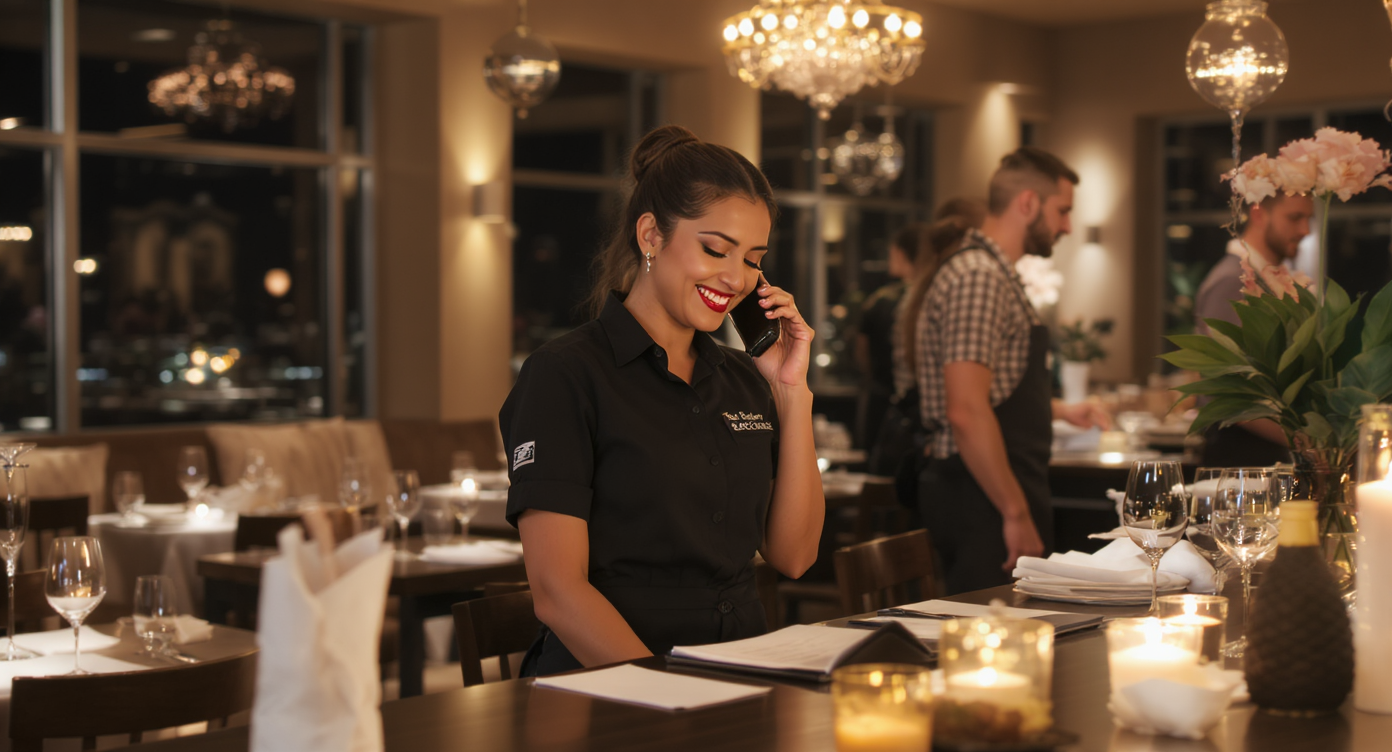
Every unanswered phone call at your restaurant is a lost reservation. A missed catering order. A takeout customer who just called your competitor instead. If you’re wondering how to reduce missed calls for restaurants, you already know the problem’s real. But here’s what most restaurant owners underestimate: how fast those missed calls turn into serious money walking out the door.To reduce missed calls for restaurants, implement a phone system that captures every incoming call through call routing, auto-attendants, or missed call callbacks. These solutions ensure reservations, catering orders, and takeout requests reach staff or get logged automatically, preventing lost revenue from unanswered phones during peak hours.
Quick Answer
Restaurants lose calls due to understaffing, long wait times, and staff distraction during busy service. Solutions include hiring dedicated phone staff, implementing call queuing systems that route calls efficiently, using call forwarding to multiple team members, setting up voicemail-to-text transcription, and training staff on call protocols. Many restaurants also benefit from automated systems that answer calls after hours or during peak times.
Free weekly newsletter
Growth tips for restaurants & cafes
Every Tuesday — actionable ideas to get more leads, reviews, and repeat customers. No fluff.
What Are Missed Calls Costing Your Restaurant?
A missed call in the restaurant business isn’t just an inconvenience. It’s a lost transaction. Phone calls drive reservations, large party bookings, catering inquiries, takeout orders, and questions about dietary accommodations that determine whether a group of six chooses your place or the one down the street. According to industry research on the cost of missed calls, businesses lose significant revenue annually from unanswered phones, and restaurants are particularly vulnerable because their call volume spikes at predictable but hard-to-staff times.The average restaurant receives dozens of calls daily. During lunch and dinner rushes, your staff is plating food, running orders, and managing the floor. Nobody’s standing by the phone. Yet that’s exactly when customers call. They’re placing orders or booking tables. Research from Zadarma confirms that most callers won’t leave a voicemail and won’t call back. They’ll just move on. So every missed call during peak hours represents a customer you’ll likely never hear from again.Why Restaurants Miss Calls Even When Fully Staffed
Understanding the root causes matters more than just throwing bodies at the problem. Hiring another host to answer phones sounds logical. But the issue is structural, not staffing-related.Peak Hour Compression
Restaurants don’t receive calls evenly throughout the day. Call volume compresses into narrow windows, typically 11 a.m. to 1 p.m. and 5 p.m. to 8 p.m. During those hours, your team is already stretched thin. A ringing phone competes with a dining room full of guests who need attention right now. Even the most dedicated staff member can’t answer three calls while running a credit card and seating a party of four.Long Hold Times and Abandoned Calls
When someone does answer, they often put callers on hold. And hold times kill conversion. Most callers will hang up within 60 seconds of being placed on hold, especially for something simple like placing a takeout order. They’re not angry. They’re hungry. Another restaurant is one tap away on their phone.After-Hours Gaps
Many restaurants close their phones when the kitchen closes. But customers plan ahead. Someone at 10 p.m. wanting to book a birthday dinner for tomorrow won’t leave a voicemail. According to data from SchedulingKit, after-hours calls represent a substantial portion of total inbound volume for service businesses. Restaurants that go dark after closing leave that revenue on the table every single night.Competing Priorities on the Floor
Your hosts aren’t phone operators. They’re greeting guests, managing waitlists, coordinating with servers, and handling complaints. Asking them to also field 40 or 50 calls a day creates a lose-lose situation. Phone callers get a rushed, distracted experience. In-house guests feel ignored when the host keeps picking up the phone mid-conversation.📺 Watch: Missed Call Text Back Setup in 5 Minutes
Practical Strategies to Reduce Missed Calls and Capture More Revenue
Here’s the good news: reducing missed calls doesn’t require hiring more staff. You don’t need to overhaul your operations. It requires smarter systems that work alongside your existing team. Below are the highest-impact changes you can make.Set Up Missed-Call Text Back With an Ordering Link
The single most effective tactic is sending an automatic text message to every caller you can’t answer. That text should include a direct link to your online ordering system or reservation page. Why? The caller already showed intent. They want to spend money with you. A text back within seconds keeps that intent alive.This approach works especially well during rush hours when phone pickups are impossible. Instead of losing the customer entirely, you redirect them to a self-service option. It’s faster for them. Zero additional work for your team.Redirect Peak-Hour Callers to Online Ordering
If your restaurant already offers online ordering (and it should), your phone system can actively push callers toward it during high-volume periods. A short, professional greeting that says “For the fastest service, order online at [your URL]” before routing the call gives impatient callers an immediate alternative. Many will prefer it.This doesn’t mean eliminating phone service. It means creating a pressure valve. Phone orders should support your online ordering channel, not compete with it. The NFIB’s research on small business priorities consistently shows that labor quality and availability rank among the top challenges for small businesses. Offloading routine phone orders to digital channels addresses that constraint directly.Replace Voicemail With After-Hours Capture
Voicemail is where leads go to die. Almost nobody leaves one. Instead, set up an after-hours system that either texts callers with your next-day reservation link, captures their name and request automatically, or routes them to an AI agent that can actually handle the conversation. Any of these options dramatically outperforms a generic “leave a message after the beep” recording.Keep Phone Menus Short and Purposeful
If you use an IVR (the “press 1 for…” menu), keep it to two or three options maximum. Restaurants aren’t call centers with ten departments. A simple menu that routes to reservations, takeout, or catering is enough. Every additional menu option increases the chance a caller hangs up before reaching anyone. According to missed call statistics compiled by CallJolt, complex phone trees are a leading cause of call abandonment for small businesses.Why the Real Problem Isn’t Demand
Here’s something worth sitting with: your restaurant probably isn’t short on customers. It’s short on capture. The demand is already there. People are calling. They want to give you money. The breakdown happens between intent and transaction. It’s almost entirely a systems problem.Think about it this way. If 15% of your daily calls go unanswered and your average phone order is $35, that’s hundreds of dollars a day slipping through. Multiply that across a month. You’re looking at a revenue gap that dwarfs the cost of any solution you’d implement. RingReady’s 2026 analysis found that service businesses lose an average of six figures annually from missed calls alone.The businesses winning right now aren’t necessarily busier. They’re not better staffed. They’ve simply closed the gap between a customer’s first contact attempt and a completed transaction. That gap is where automation makes the biggest difference.How SalesCaptain Helps
SalesCaptain was built for exactly this kind of problem. Its AI Phone Agent answers every call 24/7, including after-hours and during peak rushes, with a natural-sounding voice that can handle reservations, answer menu questions, provide hours and location info, and route callers who need a real person. No hold times. No voicemail. No missed revenue.What makes it particularly effective for restaurants is the combination of features working together:- Missed-call text-back sends an instant SMS with your ordering or reservation link whenever a call can’t be answered live
- AI Chat Agents handle incoming messages across SMS, webchat, Instagram DMs, and Facebook Messenger, so customers who prefer texting over calling get the same instant response
- Call Flows with a drag-and-drop builder let you create custom routing for reservations, catering, and takeout without any technical setup
- Unified Inbox puts every call, text, social message, and webchat conversation in one place so your manager can see everything without switching between apps
- AI Summaries and Transcriptions capture the details of every phone conversation, so catering requests and special dietary notes never get lost
Key Takeaways
- Missed calls during peak hours and after closing represent the largest hidden revenue leak for most restaurants
- Callers rarely leave voicemails or call back, so every missed call is effectively a lost customer
- Missed-call text-back with an ordering link is the single highest-ROI fix you can make today
- Redirecting peak-hour callers to online ordering reduces phone pressure without sacrificing sales
- AI phone agents can answer 100% of calls around the clock, eliminating the staffing gap entirely
- The problem isn’t demand. It’s capture. Fix the systems, and you’ll serve more customers without hiring more people
Frequently Asked Questions
How many calls does an average restaurant miss per day?
It varies by size and volume. But studies suggest small businesses miss between 20% and 40% of inbound calls. For a restaurant receiving 50 calls a day, that could mean 10 to 20 unanswered calls daily. Each one is a potential order or reservation that goes to a competitor instead.Does missed-call text-back actually work for restaurants?
Yes. And it works particularly well because restaurant callers have high intent. They’re usually ready to place an order or make a reservation right now. An instant text with a direct link gives them an immediate path to complete that action. Nobody picked up the phone, but they can still complete the transaction.Can an AI phone agent really handle restaurant-specific questions?
Modern AI voice agents like SalesCaptain’s can be trained on your menu, hours, location details, dietary accommodations, and reservation policies. They handle FAQs naturally and can book reservations or route complex requests to a manager. Callers often can’t tell they’re speaking with AI.Won’t customers be frustrated talking to an automated system?
Customers are more frustrated by not reaching anyone at all. A well-configured AI agent that answers on the first ring, provides accurate information, and offers a quick path to what they need actually delivers a better experience than being put on hold. Or sent to voicemail.How much revenue can a restaurant recover by fixing missed calls?
If your average phone transaction is $35 and you’re missing 10 calls a day, that’s $350 in potential daily revenue. That’s roughly $10,000 per month. Even capturing half of those calls through automation represents a significant return. A solution like this costs a fraction of that amount.Ready to see it in action?
See how restaurants use SalesCaptain to capture every missed call and boost reservations.
Book a Free Demo →