
AI-powered customer experience marketing (CXM) platform that helps local businesses win.


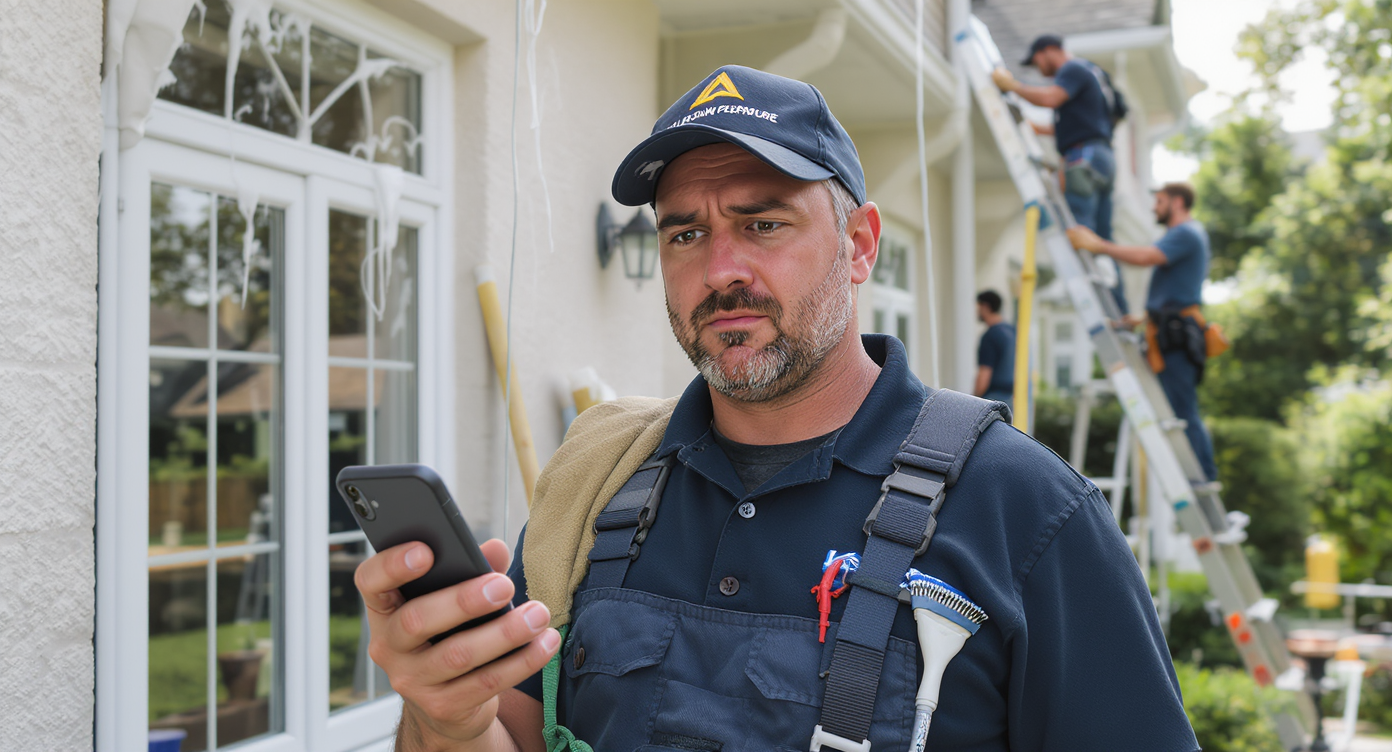
You’re up on a ladder finishing a second-story job, your phone buzzes in your pocket, and by the time you climb down, the caller’s already moved on to another window cleaning company. That scenario plays out dozens of times a week. Understanding how to reduce missed calls for window cleaning companies isn’t just about convenience—it’s about capturing revenue that’s literally ringing and going unanswered.Reducing missed calls for window cleaning companies means implementing systems to capture every incoming call, whether you’re on a ladder or between jobs. Solutions like call forwarding, voicemail-to-text, and answering services ensure potential customers get responses instead of moving to competitors, directly protecting thousands in annual revenue.
Quick Answer
Window cleaning companies miss calls by not having dedicated phone coverage during jobs. Implement a virtual receptionist or call forwarding system to answer inquiries when you’re unavailable, use appointment scheduling software to pre-qualify callers, and train staff to return calls within two hours. Enable voicemail transcription and SMS options so customers can reach you multiple ways, ensuring no opportunity gets lost while you’re working.
Free weekly newsletter
Growth tips for home service businesses
Every Tuesday — actionable ideas to get more leads, reviews, and repeat customers. No fluff.
What Missed Calls Actually Cost a Window Cleaning Business
A missed call isn’t a minor inconvenience. It’s a lost quote, a lost recurring customer, and lost referral potential. For a window cleaning company where the average residential job runs $150 to $350 and commercial contracts can reach thousands per year, even a handful of missed calls per week adds up fast. Really fast. According to research on missed call costs for small businesses, the financial impact can reach tens of thousands of dollars annually for service companies.What makes this especially painful for window cleaners? Most inbound calls come during peak working hours. That’s exactly when your crew is on-site with wet squeegees in hand. Unlike an office-based business where someone sits near a phone all day, your team can’t answer. The caller doesn’t know that though. They just hear ringing, hang up, and Google the next company. Industry data suggests that a significant percentage of callers who reach voicemail won’t leave a message and won’t call back.Why Window Cleaning Companies Miss So Many Calls
Before jumping into solutions, it’s worth diagnosing the root causes. Window cleaning businesses face a specific set of challenges that make missed calls almost inevitable without the right systems in place.The Owner-Operator Bottleneck
Most window cleaning companies start as one-person operations. The owner is the salesperson, the cleaner, the scheduler, and the receptionist. Even as the business grows to 3, 5, or 10 employees, the owner often remains the primary phone contact. That single point of failure means every call competes with active fieldwork, driving, and client meetings.Seasonal Call Surges
Window cleaning is highly seasonal. Spring and fall bring massive spikes in call volume as homeowners and property managers schedule cleanings. During these surges, call volume can double or triple. But your staffing stays the same. You end up missing calls precisely when demand is highest—the worst possible time to lose leads.After-Hours and Weekend Inquiries
Residential customers often call or text in the evening after work, or on weekends when they’re home and notice their windows need attention. If your phone rolls to voicemail at 6 PM, you’re missing a meaningful chunk of potential business. According to small business revenue data, companies that respond to leads quickly capture significantly more of the available market.📺 Watch: Missed Call Text Back Setup in 5 Minutes
Proven Strategies to Reduce Missed Calls
There’s no single silver bullet here. The best approach combines multiple tactics. That way every call gets handled, whether a human answers or not. Here are the strategies that work best for window cleaning operations specifically.Set Up Missed Call Text-Back
This is the single highest-impact, lowest-effort change you can make. When a call goes unanswered, an automatic text message fires off within seconds. Something like: “Hey, thanks for calling [Your Company]. We’re on a job right now but want to help. What can we do for you?” That text keeps the conversation alive. The customer replies at their convenience, you respond between jobs, and the lead doesn’t disappear.Why does this work so well? Because most inbound inquiries are simple. “How much for my house?” or “Can you come this week?” These don’t require a phone call. A quick text exchange can handle qualification, quoting, and even booking.Deploy an AI Phone Agent
An AI phone agent answers every call with a natural-sounding voice. 24 hours a day. It can answer common questions about your services and pricing, qualify the lead by asking about property size and type, book appointments directly onto your calendar, and route urgent calls to you or a team member. This isn’t a clunky phone tree from 2005. Modern AI voice agents sound conversational and can handle the kinds of questions window cleaning customers actually ask.Build Smart Call Flows
A call flow determines what happens when someone dials your number. Without one, you’ve got a single phone ringing. With a well-designed call flow, you can create a system like this:- During business hours: Ring the office phone for 15 seconds, then ring the owner’s cell, then route to the AI agent if nobody picks up.
- After hours: Route directly to the AI agent, which greets the caller, answers FAQs, and books appointments.
- Spam filtering: Block robocalls before they waste your time.
- Seasonal overflow: During peak months, route overflow calls to an AI agent after two rings instead of four.
Use a Unified Inbox for Every Channel
Modern customers don’t just call. They text, DM on Facebook, message through your website chat, and sometimes email. If you’re checking five different apps to keep up, messages slip through the cracks. A unified inbox pulls all of these conversations into one place. So every inquiry gets seen and handled regardless of how it arrived.For window cleaning companies that get a lot of leads through social media, especially from local community groups and neighborhood Facebook pages, this is particularly valuable. You won’t lose the Instagram DM that came in while you were responding to a text.Automate Follow-Up Sequences
Even when you do connect with a lead, many don’t book immediately. They’re price shopping or not ready yet. Automated follow-up sequences ensure these warm leads don’t go cold. A simple workflow might look like this:- Day 0: Initial conversation via text or call.
- Day 1: Automated text, “Still want that free estimate? Just reply YES and I’ll get you scheduled.”
- Day 3: Follow-up text with a seasonal offer or social proof.
- Day 7: Final check-in before closing the lead.
Comparing Your Options for Handling Calls
Window cleaning companies typically consider three routes when they decide to stop missing calls. Each has distinct tradeoffs.Hiring a Dedicated Office Person
A part-time receptionist costs $15 to $20 per hour. That’s $1,500 to $3,000 per month before taxes and benefits. They cover maybe 40 hours a week, leaving evenings, weekends, and holidays unattended. For a growing company with consistent volume, this can make sense eventually. But for most window cleaning businesses doing under $500K in revenue, it’s a heavy fixed cost. Small business industry data consistently shows that labor costs are the number one expense concern for service companies.Traditional Answering Services
Companies like Ruby and Smith.ai use human receptionists to answer your calls. They’re professional, but they charge per call or per minute. Once you factor in the volume a busy window cleaning company generates during peak season, costs climb quickly. Plus, human answering services can’t book appointments directly into your calendar, send follow-up texts, or handle multichannel messages. They answer the phone, take a message. That’s about it.AI-Powered Communication Platforms
This is the newer option. And the economics get interesting. An AI phone agent costs a fraction of a human receptionist and works around the clock including holidays. It can do more than just answer calls. It qualifies leads, books appointments, sends texts, and integrates with your CRM. For window cleaning companies that need coverage without the overhead, AI answering services are becoming the standard for small businesses in 2026.How SalesCaptain Helps
SalesCaptain was built for exactly the kind of problem window cleaning companies face: high call volume, small teams, and zero tolerance for missed revenue. The platform combines an AI Phone Agent, AI Chat Agents, a Unified Inbox, and Workflow Automation into one tool. So you don’t need to cobble together four different apps.Here’s what that looks like in practice for a window cleaning operation:- AI Phone Agent answers every call 24/7 with a natural-sounding voice. It handles FAQs (“Do you clean skylights?”), qualifies leads by property type and size, books estimates directly on your calendar, and blocks spam calls so you aren’t climbing down a ladder for a robocall.
- Missed Call Text-Back fires an automatic SMS the moment a call goes unanswered, keeping the lead engaged until you or the AI can respond.
- Call Flows let you build custom routing with a drag-and-drop builder. Route differently by time of day, day of week, or call volume. No technical skills needed.
- Unified Inbox merges calls, texts, webchat, Facebook DMs, Instagram messages, and email into one screen. Your team sees everything in one place.
- Workflow Automation handles follow-up sequences, appointment reminders, and CRM updates automatically. Connect to tools like HubSpot, Jobber via Zapier, or QuickBooks.
- AI Summaries and Transcriptions give you a written record and key takeaways from every call, so nothing discussed with a customer gets forgotten.
Frequently Asked Questions
How many calls does the average window cleaning company miss per week?
It varies by season and company size. Most small service businesses miss 20% to 40% of inbound calls. During spring and fall surges, that number climbs higher because call volume spikes while crew size stays the same. Even missing 5 to 10 calls a week at an average job value of $200 adds up to $1,000 to $2,000 in potential lost revenue weekly.Does missed call text-back really work for window cleaning leads?
Yes. And arguably better than for many other industries. Window cleaning inquiries are typically straightforward: pricing, availability, and service area. These questions translate perfectly to text. Most customers appreciate the instant response. They’re happy to continue the conversation over SMS rather than waiting for a callback.Can an AI phone agent handle window cleaning-specific questions?
Modern AI phone agents can be trained on your specific services, pricing tiers, service areas, and scheduling availability. So if a caller asks whether you do interior and exterior, handle commercial buildings, or offer gutter cleaning as an add-on, the AI can answer accurately. It’s based on information you provide during setup.What’s the cost difference between hiring a receptionist and using an AI phone agent?
A part-time receptionist typically costs $1,500 to $3,000 per month and covers only 40 hours per week. An AI phone agent through a platform like SalesCaptain costs $159/month plus $0.12 per minute of AI call time. It works 24/7 including weekends and holidays. For most window cleaning companies, the AI option delivers better coverage at a fraction of the cost.Will customers know they’re talking to an AI and not a real person?
Today’s AI voice agents sound natural and conversational. Not robotic. Most callers won’t notice the difference for routine interactions like scheduling, pricing questions, and basic qualification. For complex situations, the AI can transfer the call to you or a team member in real time. So there’s always a human backup available.Ready to see it in action?
See how window cleaning companies use SalesCaptain to capture every missed call and book more jobs.
Book a Free Demo →