
AI-powered customer experience marketing (CXM) platform that helps local businesses win.


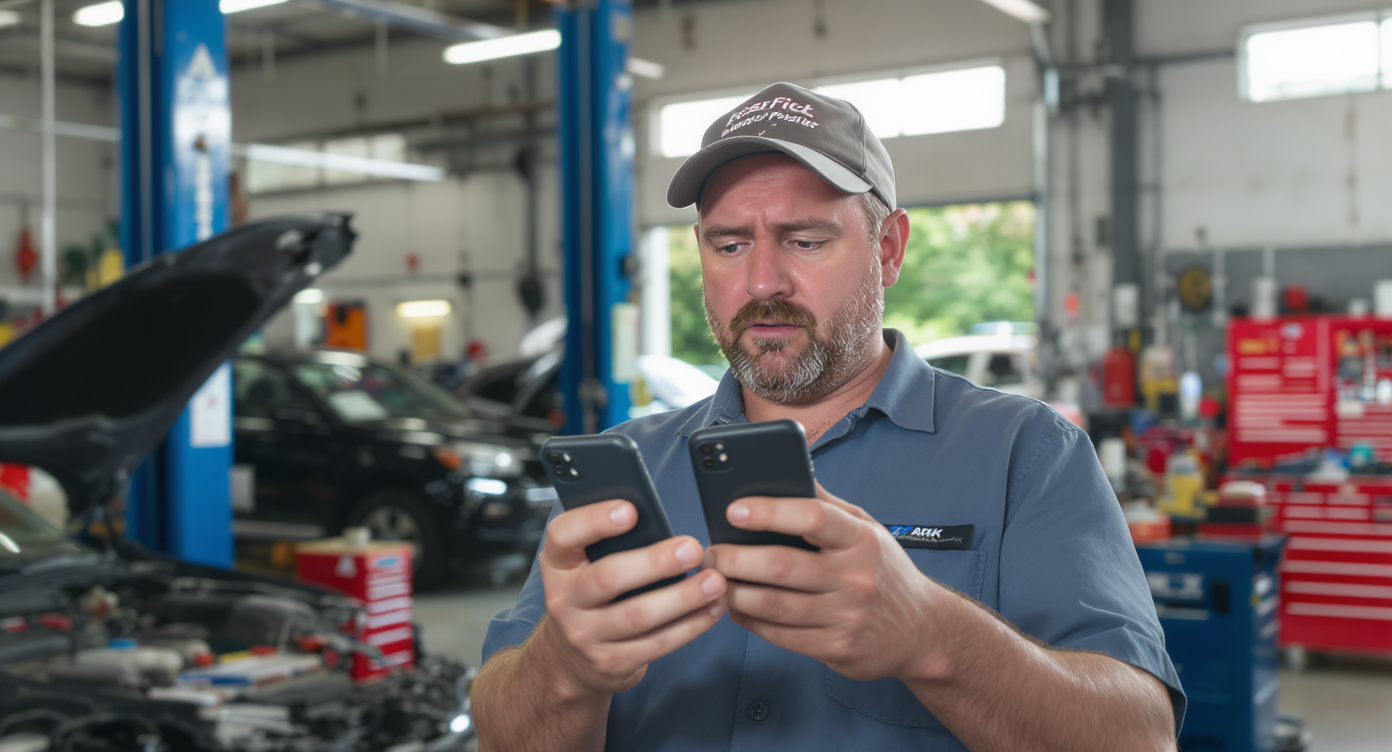
Every missed call at an auto body shop is a potential repair job walking out the door. A customer who just got rear-ended at a stoplight isn’t going to leave a voicemail and wait patiently. They’re calling the next shop on the list. If you’re wondering how to reduce missed calls for auto body shops, you’re already asking the right question. Because those unanswered rings? They’re quietly draining your revenue every single week.Reducing missed calls for auto body shops involves implementing systems like call answering services, call routing software, and automated text-back features. These tools ensure every customer inquiry gets answered promptly, preventing lost repair jobs and revenue that typically cost shops over $100,000 annually.
Quick Answer
Auto body shops lose thousands monthly from missed calls. Implement a dedicated phone system with call queuing, hire a dedicated receptionist or use call answering services, enable call forwarding to mobile devices, set up voicemail-to-text transcription, and install a scheduling system that captures caller information automatically. Training staff on call protocols and monitoring call metrics ensures continuous improvement in capturing every potential job.
Free weekly newsletter
Growth tips for auto dealerships & repair shops
Every Tuesday — actionable ideas to get more leads, reviews, and repeat customers. No fluff.
What Are Missed Calls Costing Your Auto Body Shop?
A missed call isn’t just an inconvenience. It’s a lost estimate. A lost repair. And often a lost long-term customer. According to industry research on missed call costs, service businesses can lose over $100,000 per year from unanswered phone calls alone. For auto body shops, where a single job can range from $1,500 to $5,000 or more, even a handful of missed calls per week adds up seriously.The problem compounds because most callers won’t try again. Missed call statistics for small businesses consistently show that the majority of callers who don’t reach a live person move on to a competitor within minutes. Your front desk staff can only handle one call at a time. During peak hours, that bottleneck becomes a revenue leak. Understanding what’s causing these missed calls is step one toward fixing them.Why Auto Body Shops Miss So Many Calls
Auto body shops face a unique set of challenges that make missed calls almost inevitable without the right systems in place. Unlike a dentist’s office with predictable appointment blocks, collision repair inquiries come in waves. They’re often triggered by weather events, accidents, or insurance claim timelines that nobody can predict.The Front Desk Is Overwhelmed
Your front desk person is doing five jobs at once. They’re checking in vehicles. Coordinating with insurance adjusters. Answering questions from customers picking up their cars. And trying to answer the phone on top of all that. When two calls come in while they’re explaining a supplement to an adjuster, those calls go to voicemail. According to NFIB’s small business priorities research, staffing remains one of the top challenges for small businesses. Auto body shops feel this acutely.After-Hours Calls Go Unanswered
Accidents don’t happen on a 9-to-5 schedule. A driver who gets hit at 7 PM on a Tuesday is searching for a body shop that evening, not the next morning. Yet most shops shut their phones off after business hours. Every one of those after-hours calls represents a customer who’s motivated, ready to book, and willing to commit. If only someone would pick up.Hold Times Drive Callers Away
Even when your team does answer, putting a caller on hold for more than 30 seconds dramatically increases the chance they’ll hang up. Customers calling about collision repair are often stressed. They want quick answers about estimates, timelines, and whether you work with their insurance carrier. A long hold feels like a signal that your shop can’t handle their business.Double-Booking and Scheduling Confusion
Without a proper system, your team might accidentally schedule two estimates for the same bay at the same time. Or they’ll forget to log a call entirely. These scheduling errors don’t just frustrate customers. They create a ripple effect that backs up your entire workflow for days. Small business index data highlights how operational inefficiencies compound growth challenges for service businesses.📺 Watch: Missed Call Text Back Setup in 5 Minutes
Proven Strategies to Reduce Missed Calls
Fixing this problem requires a combination of process changes and technology. Here’s what actually works for auto body shops that have gotten their call handling under control.Set Up Automated Call Routing and IVR
A well-designed call flow ensures that no call hits a dead end. Instead of every call ringing the same desk phone, you can route callers based on what they need. Someone pressing “1” for a new estimate goes to your estimator. Someone pressing “2” for a status update gets routed to the production manager. This simple change can cut your missed call rate significantly. It distributes the load across your team.Effective call routing should include these elements:- A professional greeting that plays immediately so the caller knows they’ve reached the right shop
- Menu options that match your most common call types: new estimates, existing repairs, insurance questions, and parts inquiries
- Overflow routing that forwards to a secondary team member or mobile phone if the primary person doesn’t answer within a set number of rings
- After-hours rules that capture the caller’s information instead of sending them to a generic voicemail
Use Missed-Call Text-Back
This single feature can recover a large portion of your lost calls. When a call goes unanswered, the system automatically sends a text message to the caller within seconds. Something like: “Hi, thanks for calling [Shop Name]. We missed your call but want to help. Can you share what you need and we’ll get right back to you?” That text keeps the conversation alive. Instead of letting the customer drift to a competitor.Most people prefer texting anyway. So even if they called first, many are perfectly happy continuing the conversation via SMS. This approach works especially well for auto body shops. Customers often need to send photos of damage, which is far easier over text than describing dents over the phone.Extend Your Availability Without Extending Payroll
Hiring a night shift receptionist doesn’t make financial sense for most body shops. But you can’t ignore calls that come in after 5 PM. So here’s the solution: automated answering that handles after-hours calls intelligently. It captures the caller’s name, phone number, vehicle details, and insurance information. Your team follows up first thing in the morning.AI-powered phone agents can go even further. Rather than just collecting a voicemail, they can hold a natural conversation. They answer common questions about your services. They even book estimate appointments on your calendar. The caller gets immediate help. And you don’t pay overtime.Automate Appointment Reminders
Missed calls are only half the problem. No-shows waste your estimators’ time and leave bays sitting empty. Automated reminders via text and phone reduce no-shows dramatically. A reminder the day before and a confirmation the morning of the appointment gives customers two chances to reschedule. Rather than simply not showing up.An effective reminder sequence includes:- 48-hour advance text with the appointment date, time, and shop address
- Morning-of confirmation asking the customer to reply “YES” to confirm or call to reschedule
- Automatic follow-up if no confirmation is received, escalating to a phone call or reassigning the slot
What to Look for in a Communication Platform
Not every phone system or answering service is built for the realities of running an auto body shop. Here’s what matters when you’re evaluating tools to reduce missed calls.You need a platform that combines calling, texting, and automation in one place. Juggling separate tools creates gaps. Gaps where calls and messages fall through the cracks. A unified system keeps everything visible to your whole team.Key capabilities to prioritize:- AI-powered call answering that sounds natural and can handle common questions without human intervention
- Missed-call text-back that fires automatically within seconds
- Drag-and-drop call flow builder so you can customize routing without needing a tech consultant
- Unified inbox that shows calls, texts, webchat messages, and social media DMs in one view
- Appointment booking directly from the phone or text conversation
- Integration with your shop management software or CRM so nothing gets lost between systems
How SalesCaptain Helps
SalesCaptain was built specifically for service businesses like auto body shops that can’t afford to miss calls. But also can’t afford to hire more staff. Its AI Phone Agent answers every call 24/7 with a natural-sounding voice. It handles FAQs about your services and insurance partnerships. It qualifies leads. Books estimate appointments. Blocks spam. All without a human touching the phone.When a call does slip through, SalesCaptain’s missed-call text-back sends an instant SMS to keep that customer engaged. And because everything lives in one unified inbox, your front desk can see the full history of every customer interaction. Across calls, texts, webchat, and social media DMs. No switching between tabs or tools.The platform’s drag-and-drop call flow builder lets you set up custom routing in minutes. Route estimate requests to your estimator. Insurance calls to your admin. After-hours calls to the AI agent. You don’t need any technical background to configure it. Plus, with research showing the hidden costs of missed calls across service industries, the ROI becomes clear quickly.AI call summaries and transcriptions mean your team never has to wonder what was discussed on a previous call. Every conversation is transcribed, summarized, and attached to the customer’s record. Workflow automation handles follow-up reminders, CRM updates, and notifications. So nothing falls through the cracks. With 50+ integrations including tools that small businesses already rely on, SalesCaptain connects to your existing stack. Pricing starts with a free plan. Full feature set pricing comes in at $159/month per location, with AI calls at just $0.12 per minute.Key Takeaways
Reducing missed calls at your auto body shop isn’t about working harder or hiring more people. It’s about putting the right systems in place. So every call gets handled, whether it comes in at 2 PM or 2 AM. Automated call routing, missed-call text-back, AI-powered answering, and appointment reminders form the foundation. They’re what it takes to build a shop that never loses a customer to a busy signal.The shops that figure this out grow faster. Because they’re converting more of the demand that’s already coming to them. You don’t need more marketing. You need to stop leaking the leads you already have. A unified communication platform eliminates the chaos of multiple tools. It keeps your team aligned. And ensures that every potential repair job gets the response it deserves.Frequently Asked Questions
How many calls does a typical auto body shop miss per week?
It varies by shop size and call volume, but most small service businesses miss between 20% and 40% of incoming calls during peak hours and after business hours combined. For a shop receiving 50 calls per week, that’s 10 to 20 potential jobs slipping away. Even capturing half of those? That can add significant monthly revenue.Can AI phone agents really handle auto body shop calls effectively?
Yes, modern AI voice agents sound natural. They can be trained on your specific services, insurance partnerships, hours, and pricing. They handle common questions like “Do you work with State Farm?” or “How long does a bumper repair take?” with ease. For complex situations, the AI collects the caller’s details. Then routes them to a team member for follow-up.What’s the difference between a virtual receptionist and an AI phone agent?
Virtual receptionists are real people answering your calls remotely. They’re effective but expensive, especially at scale. AI phone agents use conversational AI to handle calls automatically. They cost a fraction of the price. They don’t call in sick, don’t need training refreshers, and can handle unlimited simultaneous calls during volume spikes like post-storm rushes.Will customers be annoyed by an automated system?
Not if it’s done well. Customers get frustrated by voicemail boxes and endless hold times. A well-configured AI agent answers immediately. It provides helpful information. It books their appointment. That’s a far better experience than ringing six times and getting no answer. Speed of response matters more than whether a human or AI delivers it.How quickly can I set up a system to reduce missed calls?
With a platform like SalesCaptain, most shops can configure their call flows, AI agent, and missed-call text-back within a day. There’s no technical expertise required. The drag-and-drop builder makes it straightforward. You can start capturing previously missed calls the same week you set it up.Ready to see it in action?
See how auto body shops use SalesCaptain to capture every missed call and book more jobs.
Book a Free Demo →