
AI-powered customer experience marketing (CXM) platform that helps local businesses win.


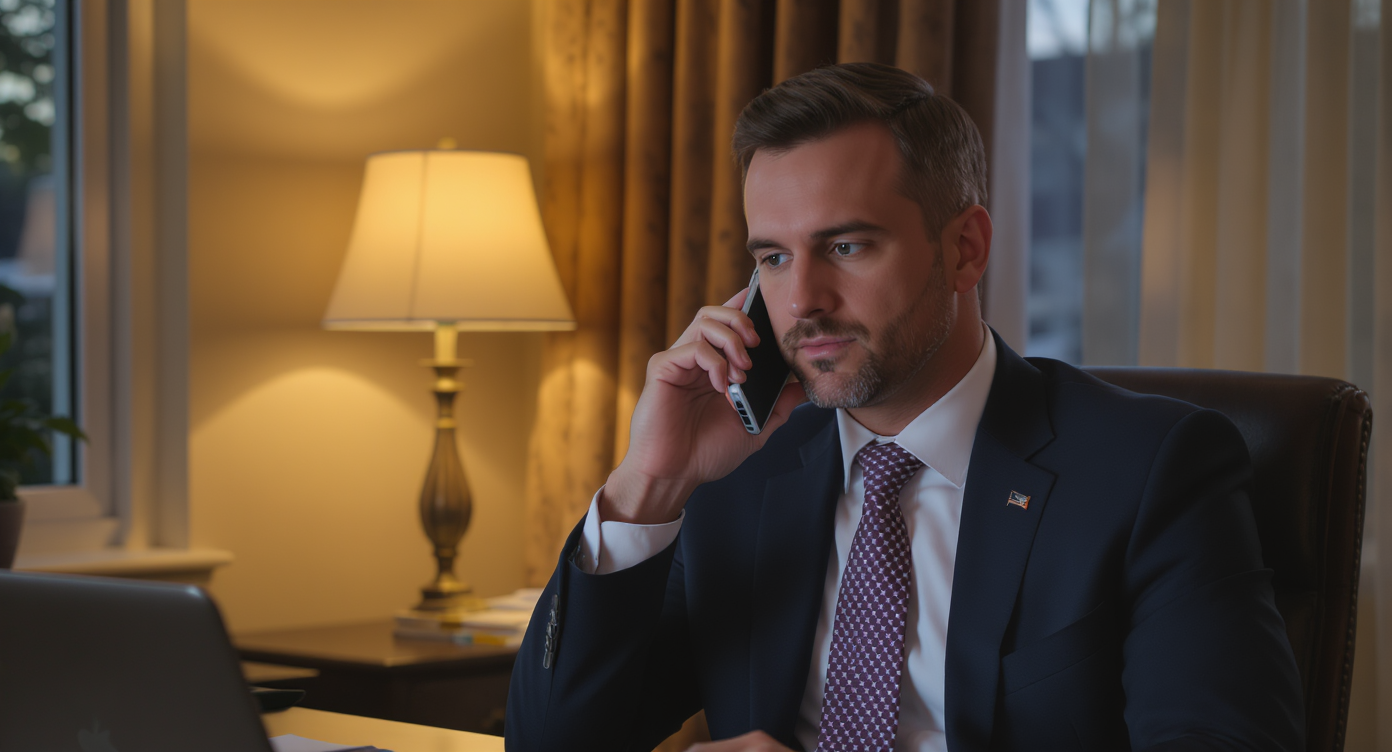
A high-net-worth client watches their portfolio drop 4%. Market volatility hits after hours. They call your office. Nobody picks up. By morning, they’ve already scheduled a consultation with a competitor who answered immediately. Understanding how to handle after hours calls for financial advisors isn’t just about answering the phone; it’s about protecting relationships that took years to build and are worth tens of thousands in recurring revenue.Handling after-hours calls for financial advisors means responding to client inquiries outside standard business hours—typically before 8 a.m. or after 6 p.m., plus weekends and holidays. These emotionally-charged calls spike during market volatility and tax deadlines. Missed responses risk losing clients to competitors who answer immediately.
Quick Answer
Financial advisors can handle after-hours calls by setting clear availability boundaries, using call forwarding to a dedicated line, implementing voicemail systems with callbacks, or employing automated scheduling tools that route urgent matters appropriately. Many advisors use a tiered response system: genuine emergencies connect immediately, routine inquiries receive next-business-day callbacks, and non-urgent messages go to voicemail, allowing you to maintain work-life balance while staying responsive to client needs.
Free weekly newsletter
Growth tips for service businesses
Every Tuesday — actionable ideas to get more leads, reviews, and repeat customers. No fluff.
What Are After-Hours Calls in Financial Advisory
After-hours calls are client or prospect inquiries that come in outside your standard business hours. That’s typically before 8 a.m. or after 6 p.m., plus weekends and holidays. For financial advisors, these calls tend to spike during market volatility, tax season deadlines, and year-end planning periods. They’re not random. They follow predictable patterns tied to financial events and news cycles.What makes these calls unique in financial services is their emotional weight. A client calling at 9 p.m. about a market downturn isn’t asking a casual question. They’re anxious. And the speed of your response directly affects whether they trust you long-term. According to recent missed call research, a significant percentage of callers who don’t reach a business won’t call back. For financial advisors, that missed call could represent a six-figure account walking out the door.Why After-Hours Call Handling Is Critical for Financial Advisors
The Revenue Impact of Missed Calls
Every unanswered call carries a cost. In financial advisory, those costs compound fast. A single high-net-worth client might generate $10,000 to $50,000 or more annually in fees. Lose two or three of those clients per year because they couldn’t reach you during a crisis? You’re looking at a serious revenue gap. According to industry data on missed call costs, businesses across sectors lose substantial revenue annually from unanswered calls. Financial advisory firms sit at the higher end because of the value per relationship.Client Expectations Have Changed
Your clients live in a world where their banking app is available 24/7. Their brokerage platform never closes. Financial news hits their phone at all hours. Yet when they call their advisor, they get voicemail. That disconnect erodes confidence fast. Wealthy clients especially expect service that matches the fees they’re paying, and “call back tomorrow” doesn’t cut it during a market event. According to the U.S. Small Business Administration, competitive analysis shows that service responsiveness is a top differentiator for professional services firms.Compliance and Boundary Concerns
Financial advisors face a real tension here. You need to be available. But you can’t make off-the-cuff investment recommendations at 10 p.m. without proper documentation. Compliance requirements from FINRA and the SEC mean certain conversations need to be recorded, logged, and reviewed. So your after-hours strategy needs to balance responsiveness with regulatory guardrails. A good system captures the call, triages urgency, and creates a documented trail without putting you in a compliance gray area.📺 Watch: After-Hours Call Routing Setup: Never Miss a Lead
Practical Strategies for Handling After-Hours Calls
Build a Triage Protocol That Takes Three Minutes
Not every after-hours call is a genuine emergency. The challenge is distinguishing a panicked reaction to a news headline from a client who actually needs to make a time-sensitive portfolio decision. Before you set up any technology, define your triage categories clearly:- True emergencies: Client needs to execute a trade before market open, beneficiary changes due to a death or divorce, suspected fraud on an account
- Urgent but not immediate: Questions about market movement, concerns about a specific holding, upcoming deadline reminders
- Routine inquiries: Account balance questions, appointment scheduling, document requests, general planning questions
Scripts for Market-Panic Calls
When markets drop sharply, your phone will ring. Callers aren’t looking for investment advice at that moment. They’re looking for reassurance and a plan. Your after-hours system—whether human or AI—should follow a specific script framework:- Acknowledge the concern without dismissing it: “I understand the market movement today is concerning.”
- Avoid making any specific investment recommendations or promises about performance
- Confirm that their portfolio was built for situations exactly like this one
- Schedule a specific callback or meeting time for a detailed review
- Document the call and the client’s concerns for compliance and follow-up
Voicemail vs. Live Answer for High-Net-Worth Clients
Here’s the reality: wealthy clients rarely leave voicemails. They expect live engagement. If they don’t get it, they interpret that as a signal about your service level. A voicemail greeting, no matter how polished, tells a high-value client they aren’t important enough for a live response.That doesn’t mean you personally need to answer every call. But something or someone should. Whether it’s an AI agent, a qualified associate, or an automated system that captures their concern and confirms a rapid callback, the perception of live engagement matters enormously. What does that live response actually communicate versus a voicemail? The gap in client perception is significant.Weekend and Seasonal Coverage Strategies
Certain periods generate predictable call volume spikes. Tax season (February through April), year-end planning (October through December), and any period of significant market volatility will flood your phone. Plan for these instead of reacting to them.- Tax season: Set up automated responses with links to document upload portals and FAQ answers about common tax-related questions
- Year-end planning: Create proactive outreach campaigns in October so clients feel addressed before they need to call
- Market volatility: Pre-record or pre-program reassurance messages that can be activated when markets move beyond a certain threshold
- Weekends: Use automated call flows with escalation paths so only genuine emergencies reach a human
Preventing Advisor Burnout While Staying Available
The biggest risk of “always on” availability is burnout. It destroys the advisor. Burnout in financial services is real, and it’s accelerated by the feeling that you can never fully disconnect. Fortunately, staying available and staying healthy aren’t mutually exclusive. They just require the right systems.Set clear service boundaries and communicate them to clients upfront. Let them know what constitutes an emergency, what your response time commitment is for non-urgent matters, and how they can reach you through different channels. Most clients respect boundaries when they’re communicated confidently and backed by reliable systems.Rotation schedules work well for multi-advisor firms. Each advisor takes one weekend per month as the on-call contact, with clear escalation rules. Solo practitioners need technology that can handle the front line. That means capturing information, triaging urgency, and sending only true emergencies through to the advisor. According to research on the hidden costs of missed calls, the firms that maintain both high responsiveness and low burnout rates use automated triage rather than trying to personally answer every inquiry.How SalesCaptain Helps
SalesCaptain’s AI Phone Agent solves this problem for financial advisors. It answers calls 24/7 with natural-sounding voice AI. Your clients never hear voicemail. Instead, they get a live interaction that can answer FAQs, capture their reason for calling, assess urgency, and book a callback appointment on your calendar.The system’s call flow builder lets you design custom triage paths. Market volatility calls can follow one script. Routine scheduling requests can follow another. Emergency escalation rules can route critical calls directly to the on-call advisor while filtering out spam and low-priority inquiries. Every call gets transcribed and summarized automatically. That gives you a complete compliance-ready record without listening to recordings.Beyond voice, SalesCaptain’s unified inbox pulls together calls, SMS, webchat, and social media messages into one view. So when a client texts at 11 p.m. and then calls the next morning, your team sees the full history in one place. Workflow automation handles follow-up reminders, so nothing slips through the cracks. The platform integrates with CRMs like HubSpot, Salesforce, and Zoho, keeping your client records current without manual data entry. At $0.12 per minute for AI calls and a free startup plan, it’s built to scale with your practice rather than drain your overhead.Key Takeaways
Handling after-hours calls as a financial advisor requires a structured approach. You need to balance client expectations, compliance requirements, and your own well-being. Here’s what matters most:- Define a clear triage protocol with three tiers: emergency, urgent, and routine
- High-net-worth clients rarely leave voicemails, so live or AI-powered engagement outperforms voicemail every time
- Use scripts for market-panic calls that acknowledge emotion without making compliance-risky promises
- Plan proactively for predictable volume spikes during tax season, year-end, and volatility events
- Protect yourself from burnout by letting technology handle the front line and only escalating what truly requires a human advisor
Frequently Asked Questions
What types of after-hours calls should a financial advisor always answer personally?
Calls involving suspected account fraud warrant direct involvement. So do time-sensitive trade instructions before market open. And situations involving a client death or major life event (divorce, disability). Everything else can be triaged through automated systems and addressed during the next business day with a scheduled callback.How can financial advisors stay compliant when handling calls outside business hours?
Record and transcribe all calls. Avoid giving specific investment recommendations without proper documentation. Use scripted responses that acknowledge concerns without making performance promises. AI call handling tools can enforce these guardrails automatically by following pre-approved scripts and logging every interaction for regulatory review.Is it better to use a live answering service or an AI phone agent for after-hours calls?
Live answering services use human receptionists. That means higher per-call costs and limited scalability. AI phone agents provide consistent, natural-sounding responses at a fraction of the cost and can handle unlimited simultaneous calls. For most advisory practices, AI delivers better value and more reliable coverage, especially during call volume spikes.How do I communicate after-hours boundaries to clients without sounding cold?
Frame your boundaries as a service commitment, not a limitation. For example: “To ensure I give your concerns the attention they deserve, I’ve set up a priority response system. Urgent matters are addressed within one hour. All other inquiries receive a personal callback by 10 a.m. the next business day.” Clients respect boundaries when they come with a clear, reliable promise.What’s the cost of missing after-hours calls as a financial advisor?
According to industry research on missed call costs, professional services firms can lose over $100,000 annually from unanswered calls. For financial advisors managing high-net-worth clients, losing even one or two relationships per year due to poor responsiveness can represent a far greater impact given the lifetime value of those accounts.Ready to see it in action?
See how financial advisors use SalesCaptain to capture after-hours calls and qualified leads.
Book a Free Demo →